Story Summary
Relive the power of Cicero's Orations as he defends the Roman Republic against the Catiline conspiracy through the sheer force of his legendary eloquence and wit.
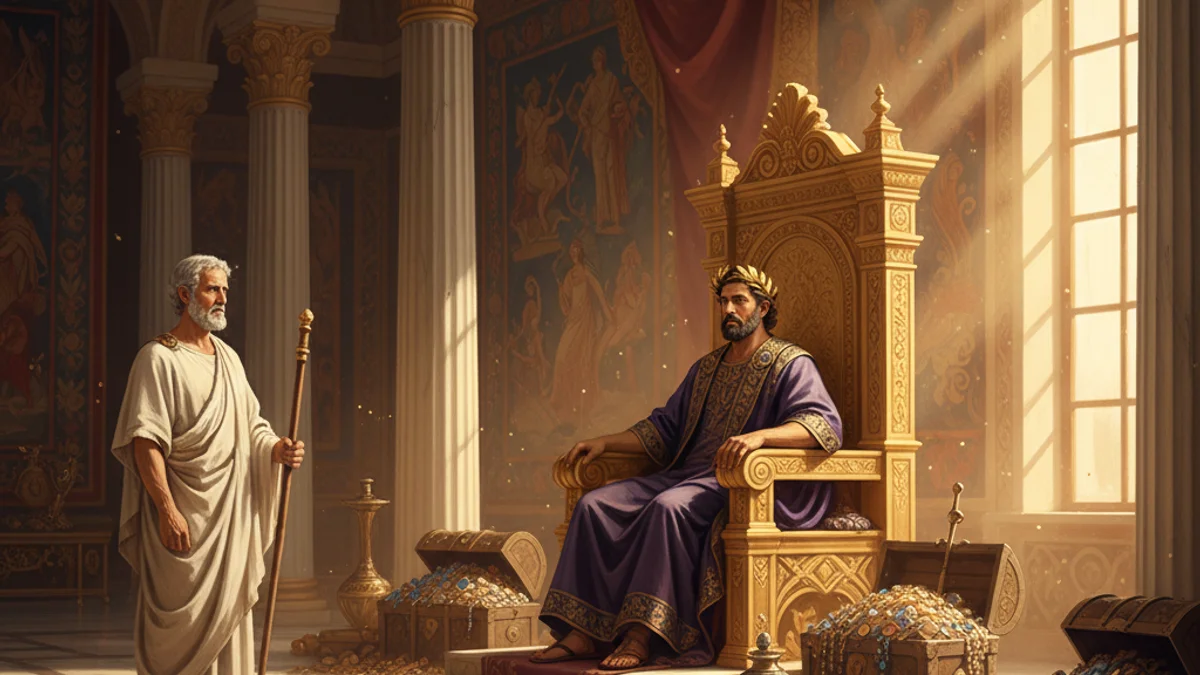
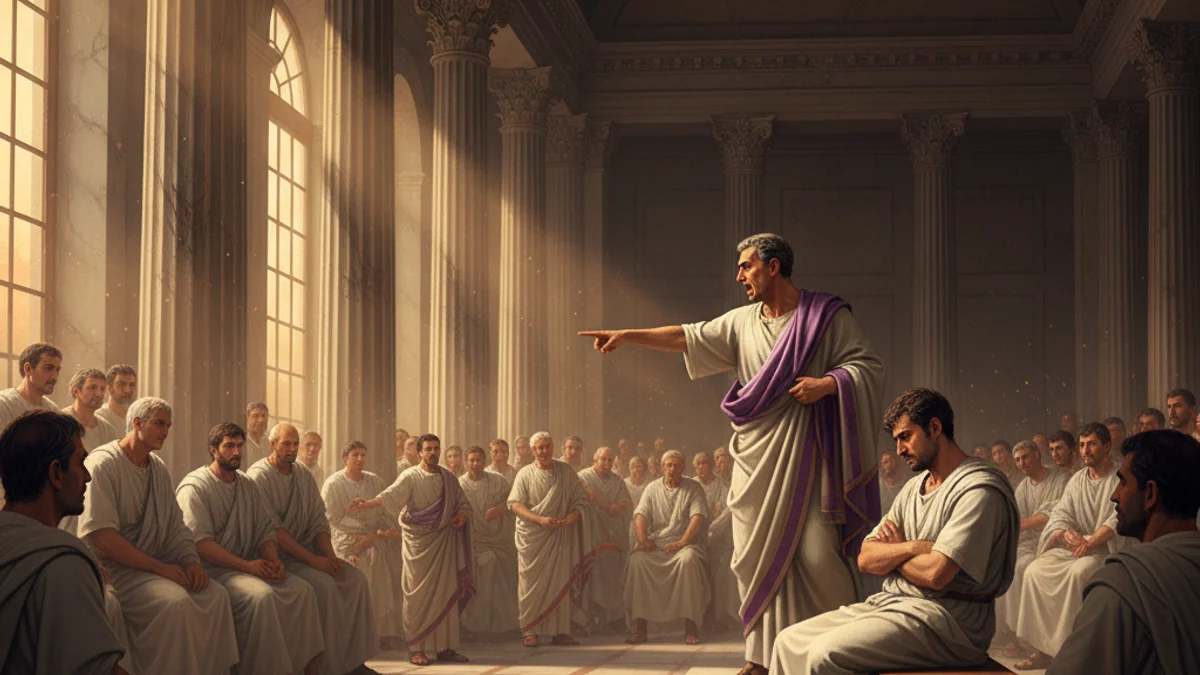
In the twilight of the Roman Republic, Marcus Tullius Cicero stood as the greatest orator of his age. His most defining moment came during the consulship of 63 BC, when he uncovered a dark conspiracy led by the bankrupt aristocrat Lucius Sergius Catilina. Catiline aimed to overthrow the government and burn the city to the ground. Facing his enemy in the Temple of Jupiter Stator, Cicero delivered his first scorching oration, famously beginning, 'How long, Catiline, will you abuse our patience?' His words were so sharp and his evidence so damning that Catiline fled the city in shame. Though Cicero saved the Republic from internal collapse, his commitment to the law and his fiery speeches against Mark Antony eventually led to his downfall. He faced his end with dignity, proving that while a man can be silenced, his words can echo through centuries to define the very concept of justice.
The Moral
The power of truth and eloquence is the strongest defense against tyranny and corruption.
“O tempora, o mores!”
Fun Fact
Cicero's name actually comes from the Latin word for 'chickpea' (cicer), because an ancestor supposedly had a cleft in his nose shaped like one.
Frequently Asked Questions
What is the moral of Cicero's Orations?
The moral is that eloquence and the rule of law are essential for protecting a free society from internal corruption and tyranny. It emphasizes that a single voice, armed with the truth, can change the course of history.
Who was Cicero's main adversary in his most famous speeches?
His most famous early adversary was Catiline, who plotted a coup against Rome. Later in life, he famously opposed Mark Antony in a series of speeches known as the Philippics.
Why are Cicero's orations still studied today?
They are considered the gold standard of Western rhetoric and Latin prose. His techniques for persuasion, structure, and emotional appeal continue to influence lawyers, politicians, and writers.
What does 'O tempora, o mores' mean?
Translated as 'O the times! O the customs!', it was Cicero's famous exclamation lamenting the corruption and decay of the social and political standards of his era.
How did the Catiline conspiracy end?
After Cicero's orations exposed the plot, Catiline fled Rome to join his insurgent army and was eventually killed in battle. His co-conspirators in the city were executed under Cicero's orders.
What was the personal cost of Cicero's eloquence?
His fearless speeches eventually cost him his life. Mark Antony, enraged by Cicero's public denunciations, had him declared an enemy of the state and executed in 43 BC.
Discussion (0)
Share your thoughts on this story
No comments yet. Be the first to share your thoughts!