
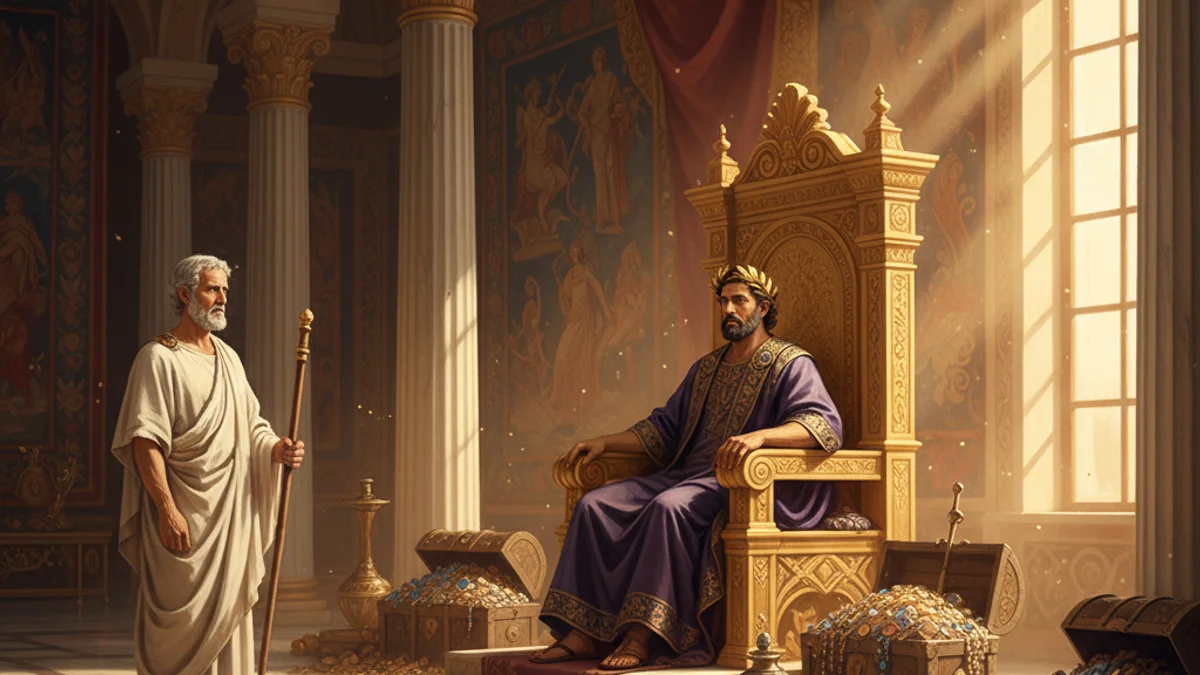
When the Athenian lawgiver Solon visited King Croesus of Lydia, the monarch flaunted his immense treasures, certain he was the world's happiest man. When Croesus asked Solon who deserved that title, Solon named humble men who had lived virtuously and died with honor. Insulted, Croesus dismissed him. Years later, after his kingdom fell to King Cyrus of Persia, Croesus stood atop a funeral pyre. Remembering Solon's warning—that fortune is fickle and one should count no man happy until he has ended his life well—he cried out Solon's name. Hearing this, Cyrus was moved to mercy, realizing that no ruler is immune to the whims of fate, and spared the fallen king.
True happiness and success cannot be judged until a person’s life has concluded, as fortune is ever-changing and unpredictable.
Questions about this story
What is the moral of Solon's Wisdom?
The moral is that wealth and power do not guarantee lasting happiness. One must wait until the end of a person's life to truly judge if they were fortunate, as circumstances can change in an instant.
Who was Solon in Greek history?
Solon was a famous Athenian statesman, lawmaker, and poet. He is remembered for his efforts to legislate against political, economic, and moral decline in archaic Athens.
What did Solon say to King Croesus?
Solon famously told the King, 'Count no man happy until he is dead.' He explained that a person's life is subject to many accidents and only a peaceful end confirms a happy life.
How did King Croesus react to Solon's advice?
Croesus was initially angry and insulted, believing Solon was ignorant for not recognizing his immense wealth as the peak of happiness. He dismissed Solon as a fool before later realizing the truth of his words.
Advertisement

Good night.
