
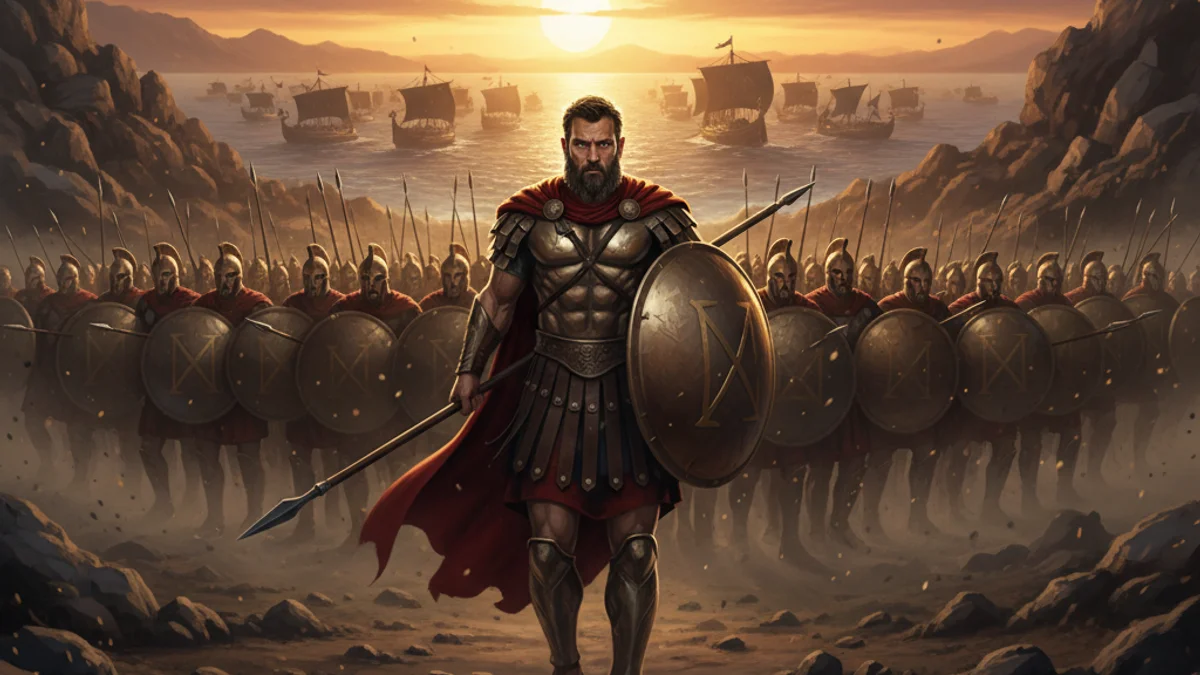
In 480 BC, King Leonidas led a small force of 300 Spartans and several thousand allies to the narrow pass of Thermopylae to block the massive invasion of the Persian King Xerxes. Xerxes, confident in his overwhelming numbers, sent a messenger demanding the Greeks surrender their weapons. Leonidas famously replied with two words: 'Molon Labe'—'Come and take them.' For two days, the Greeks held the bottleneck, using their disciplined phalanx to repel waves of Persian immortals. However, a local named Ephialtes betrayed the Greeks by revealing a mountain path that allowed the Persians to outflank them. Knowing the end was near, Leonidas dismissed the majority of his allies but remained with his 300 Spartans and a few hundred Thespians to fight to the death. They fought with spears, then swords, and finally their hands until the last man fell. Their sacrifice bought valuable time for the rest of Greece to organize its defense, ultimately leading to the defeat of the Persian invasion.
The highest form of leadership is the willingness to sacrifice oneself for the freedom and protection of others.
Questions about this story
What is the moral of Leonidas at Thermopylae?
True leadership and patriotism often require the ultimate sacrifice for the greater good of one's people. It teaches that courage in the face of impossible odds can inspire future generations to achieve victory.
Who betrayed Leonidas at the pass?
A local Greek named Ephialtes of Trachis betrayed the Spartans by showing the Persians a secret mountain path. His name eventually became synonymous with 'nightmare' and 'traitor' in the Greek language.
Did only 300 Spartans fight at Thermopylae?
While 300 Spartans are the most famous, they were supported by several thousand allies from other city-states. Leonidas sent most away when they were outflanked, but the Spartans and Thespians stayed to hold the pass.
What does 'Molon Labe' mean?
'Molon Labe' is a Greek phrase meaning 'Come and take them.' It was Leonidas's defiant response when King Xerxes demanded that the Spartans surrender their weapons before the battle began.
Advertisement

Good night.
