
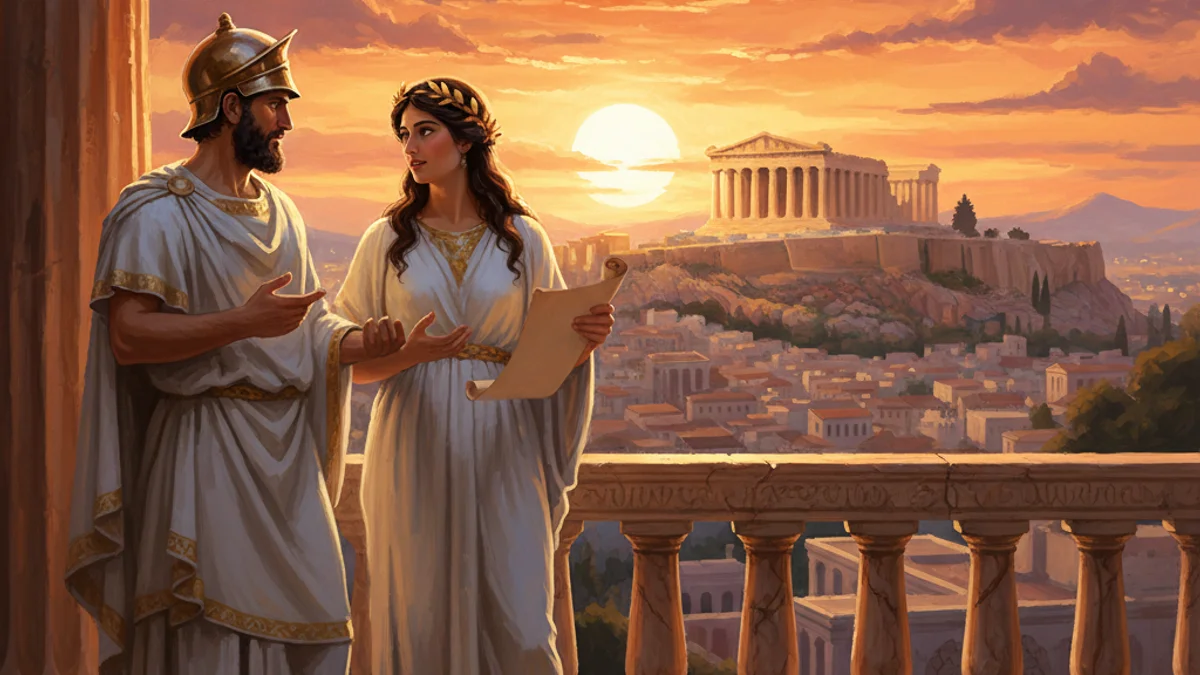
In the heart of Athens’ Golden Age, Pericles stood as the city's most influential statesman, the visionary behind the Parthenon. Yet, the true power behind his throne was Aspasia, a brilliant woman from Miletus. Unlike traditional Athenian wives who lived in seclusion, Aspasia was a 'hetaira' of unparalleled intellect. She transformed Pericles' home into a sanctuary for the era's greatest minds, including Socrates and Anaxagoras. Their bond was more than a marriage; it was an intellectual partnership that scandalized and fascinated the city. When rivals attacked Aspasia with charges of impiety to wound Pericles politically, the stoic leader broke down in tears while defending her in court, proving his devotion. Together, they navigated the complexities of democracy and war, proving that the greatest empire-building is often done through the union of two equal minds.
True partnership is built on intellectual equality and mutual respect, which can withstand even the harshest societal pressures.
Questions about this story
What is the moral of Pericles and Aspasia?
The moral is that love is most powerful when it is rooted in intellectual companionship and shared vision, allowing it to transcend social conventions and political trials.
Who was Aspasia in ancient Athens?
Aspasia was a highly educated woman from Miletus who became the partner of Pericles. She was famous for her rhetorical skills and for hosting the most influential philosophers and artists of the era.
Why was their relationship considered scandalous?
Athenian law, ironically passed by Pericles himself, restricted citizenship to those with two Athenian parents. As a foreigner, Aspasia could not legally marry Pericles, making their union socially unconventional.
Did Aspasia influence Pericles' politics?
Many ancient historians believe she did, with some even suggesting she helped write his famous speeches, including the Funeral Oration, due to her mastery of rhetoric.
Advertisement

Good night.
