
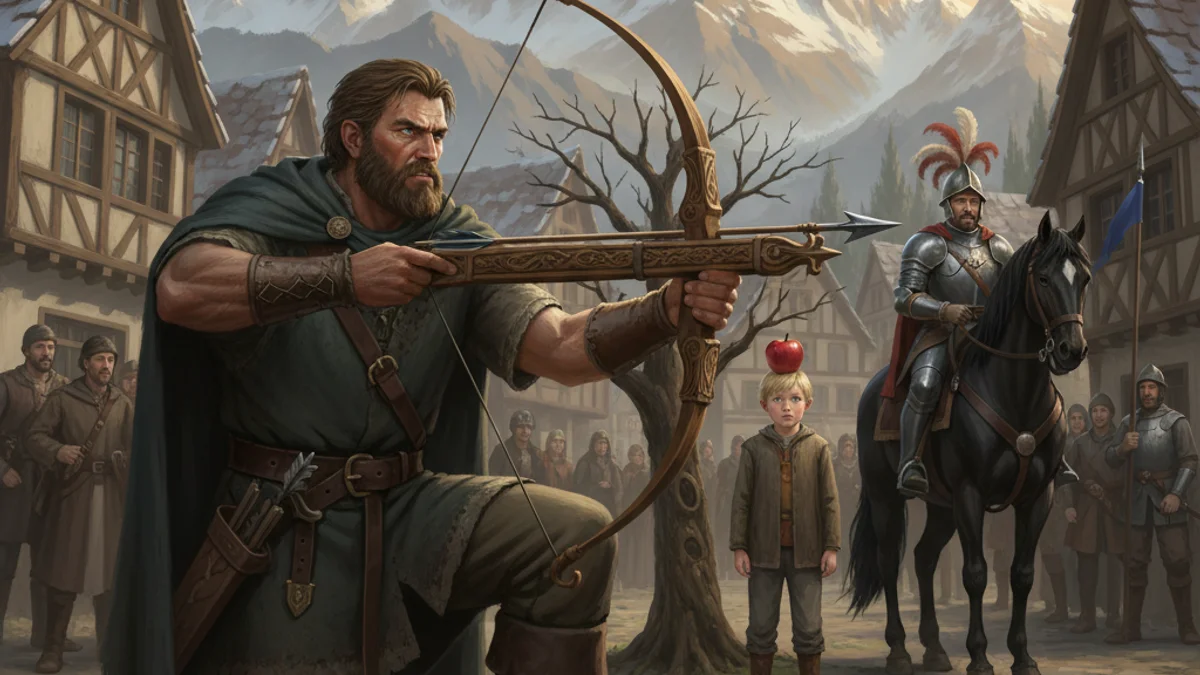
In the Swiss canton of Uri, the cruel governor Gessler placed his hat atop a pole and commanded all citizens to bow before it. William Tell, a renowned hunter and marksman, walked past with his son, Walter, refusing to acknowledge the symbol of tyranny. Gessler arrested them and devised a sadistic punishment: Tell must shoot an apple off his son's head from eighty paces, or both would face death. With steady hands and a heavy heart, Tell notched his crossbow. The bolt flew true, splitting the apple in half without harming a hair on Walter’s head. As Gessler congratulated him, he noticed a second arrow tucked into Tell’s quiver. When asked why, Tell replied boldly: 'If the first had struck my son, the second was for you.' This act of defiance sparked the Swiss rebellion against Austrian rule, turning a simple hunter into a symbol of liberty.
True bravery requires the courage to stand up against injustice, even when the personal cost is high.
Questions about this story
What is the moral of William Tell and the Apple?
The story emphasizes the importance of standing up against tyranny and the power of skill paired with courage. It teaches that one person's defiance can spark a movement for freedom.
Was William Tell a real person?
While Tell is a national hero in Switzerland, there is no historical evidence he actually existed. Most historians view him as a legendary figure representing the spirit of the Swiss independence movement.
Why did Gessler make William Tell shoot the apple?
Gessler wanted to punish Tell for refusing to bow to his hat, which represented Austrian authority. The apple challenge was a cruel way to test Tell's legendary marksmanship while risking what he loved most.
What happened after William Tell shot the apple?
After the shot, Gessler arrested Tell anyway because of his threat regarding the second arrow. Tell eventually escaped, killed Gessler, and led a rebellion that helped free Switzerland.
Advertisement

Good night.
