
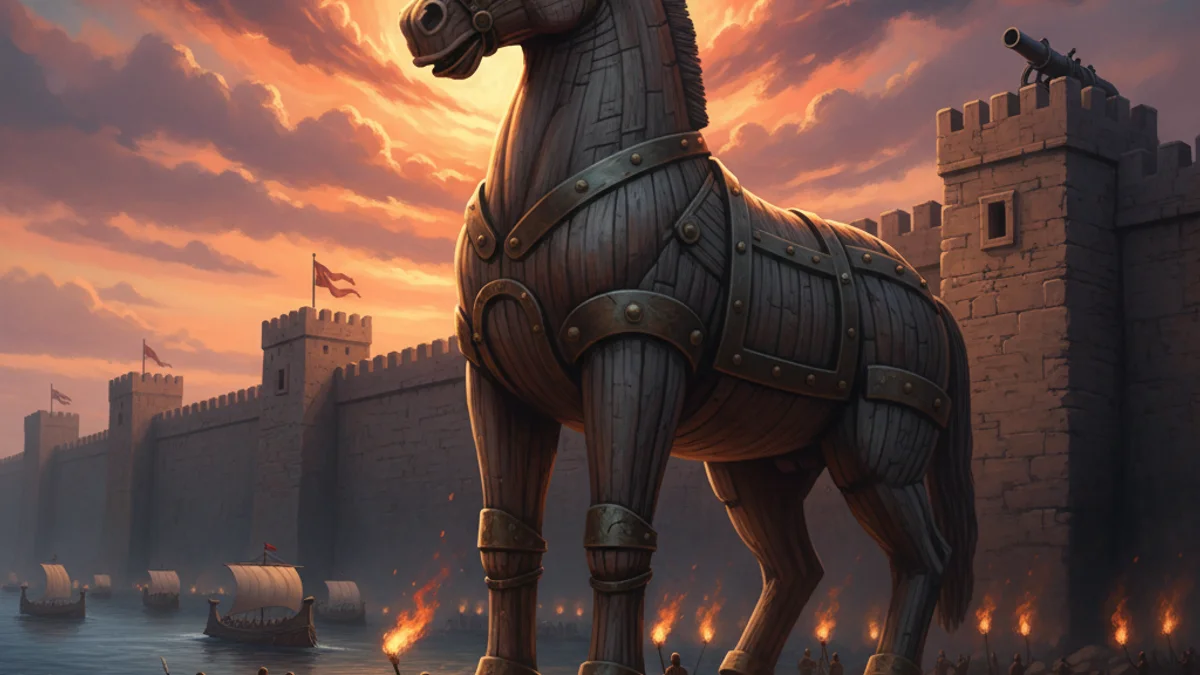
After ten years of grueling stalemate outside the impenetrable walls of Troy, the Greek army appeared to have finally given up. Following a plan devised by the cunning Odysseus, they constructed a massive hollow wooden horse and inscribed it as an offering to the goddess Athena. The Greek fleet burned their camp and sailed away, hiding their ships behind the nearby island of Tenedos, leaving only the horse and a man named Sinon behind. Sinon convinced the Trojans that the Greeks had fled and that the horse was a sacred gift intended to bring divine protection to Troy. Despite the desperate warnings of the priest Laocoön and the prophetess Cassandra, the Trojans, blinded by the hope of peace, dragged the monument through their gates and celebrated their perceived victory. That night, as the city fell into a deep, drunken slumber, Sinon signaled the hidden fleet and released the Greek warriors concealed within the horse’s belly. They slaughtered the guards and threw open the gates for the returning Greek army. By dawn, the legendary city of Troy was in flames, falling not to strength, but to a masterwork of deception.
Victory is often won through wit rather than force, but one must always be wary of gifts from an enemy.
Advertisement
Questions about this story
What is the moral of The Wooden Horse (Detailed)?
The story teaches us to remain vigilant even in victory and to be skeptical of 'gifts' from enemies. It highlights that intellect and strategy can overcome obstacles that brute force cannot.
Who came up with the idea for the Trojan Horse?
The Greek hero Odysseus, known for his cunning and sharp mind, conceived the plan to hide soldiers inside the wooden horse. He was the mastermind behind the deception that finally ended the Trojan War.
Why did the Trojans bring the horse inside their city?
The Trojans were tricked by a Greek spy named Sinon, who claimed the horse was a religious offering to Athena. They believed that bringing it inside would grant their city divine protection and favor.
Who warned the Trojans about the horse?
The priest Laocoön famously warned, 'I fear the Greeks, even those bearing gifts,' and the prophetess Cassandra also foretold the city's doom. However, the Trojans ignored both warnings due to divine intervention and pride.
Advertisement

