
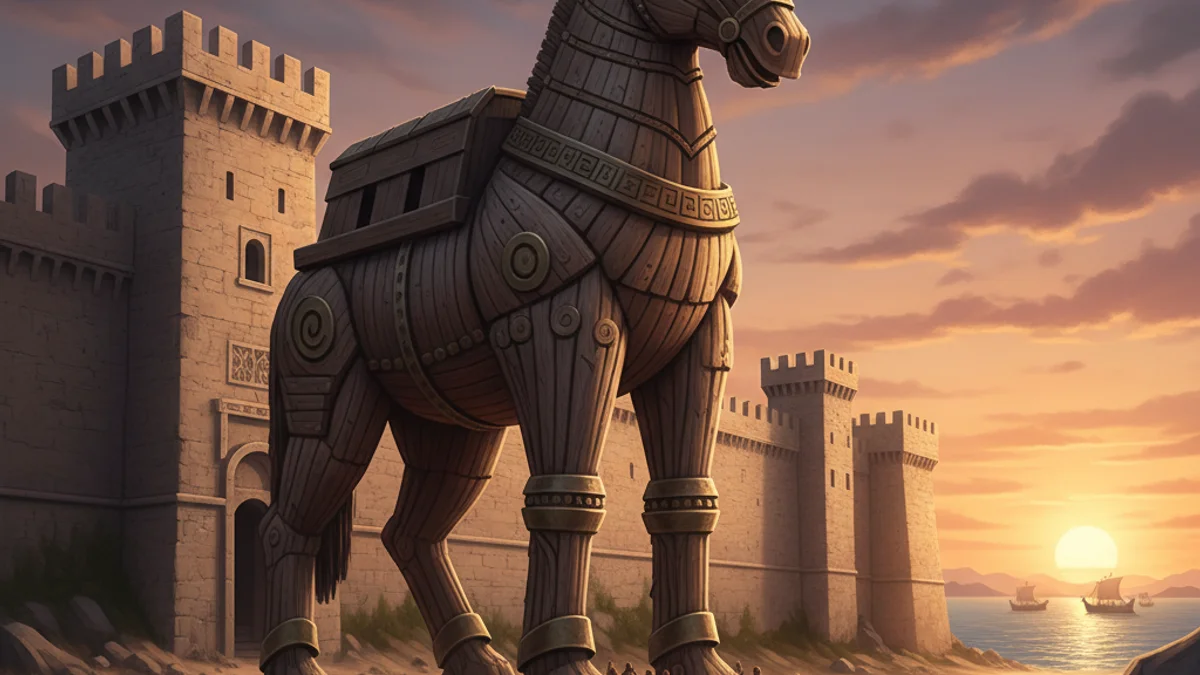
After ten years of grueling siege, the Greeks appeared to admit defeat. Following a brilliant plan by Odysseus, they constructed a massive wooden horse and left it outside the gates of Troy, while their fleet sailed out of sight. A Greek named Sinon convinced the Trojans that the horse was an offering to Athena, intended to bring her favor to Troy. Despite the warnings of the priest Laocoön and the prophetess Cassandra, the Trojans pulled the horse into their city to celebrate their victory. That night, as the city slept in drunken celebration, Odysseus and a band of elite warriors emerged from the hollow belly of the horse. They opened the gates for the returning Greek army, leading to the total destruction of Troy.
Be cautious of unexpected gifts from enemies, as strategy and deception can often succeed where brute force fails.
Questions about this story
What is the moral of The Trojan Horse?
The moral is to be wary of enemies bearing gifts and to remain vigilant even in victory. It teaches that intellectual strategy can be more effective than physical strength alone.
Who came up with the idea for the Trojan Horse?
Odysseus, the king of Ithaca known for his cunning and wit, conceived the plan. He realized that the walls of Troy could only be breached through deception rather than direct assault.
Did the Trojan Horse actually exist in history?
While the Trojan War may have historical roots, there is no archaeological evidence of the wooden horse. Most historians believe it is a literary device or a metaphor for a siege engine.
Who warned the Trojans not to take the horse inside?
The priest Laocoön and the prophetess Cassandra both warned against the gift. Laocoön famously stated he feared the Greeks even when they brought gifts, but his warnings were ignored.
Advertisement


Good night.
