
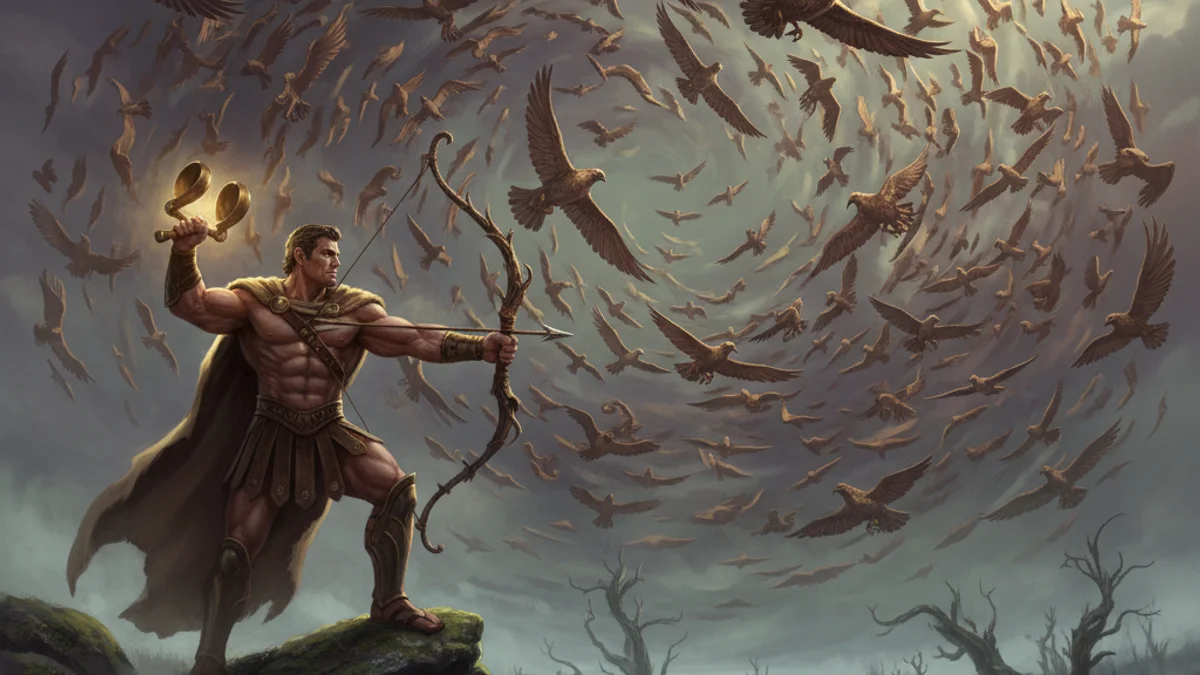
For his sixth labor, King Eurystheus commanded Hercules to drive away the Stymphalian Birds, a flock of man-eating predators with bronze beaks, sharp metallic feathers, and poisonous dung that infested the marshes of Lake Stymphalus. Upon arriving, Hercules realized the ground was too swampy to support his weight, preventing him from reaching the birds nestled deep in the reeds. Seeing his predicament, the goddess Athena provided him with 'krotala'—bronze noisemakers forged by Hephaestus. Hercules climbed a nearby mountain and clashed the instruments together, creating a deafening din that sent the birds spiraling into the air in a blind panic. As they took flight, Hercules used his legendary archery skills to shoot them down one by one, while the survivors fled to the Black Sea, never to return to Greece again.
Resourcefulness and the use of the right tools are often more effective than raw physical strength alone.
Advertisement
Questions about this story
What is the moral of Hercules and the Stymphalian Birds?
The story teaches that even the greatest strength requires strategy and the right equipment to succeed. Hercules could not simply overpower the swamp; he needed to use his intellect and divine tools to complete the task.
How did Hercules kill the Stymphalian birds?
Hercules used bronze noisemakers called krotala to startle the birds into the air. Once they were flying and vulnerable, he shot them down using his bow and arrows.
What were the Stymphalian birds' powers?
The birds possessed bronze beaks and sharp metallic feathers that they could launch like arrows at their prey. Their toxic droppings also destroyed crops and poisoned the surrounding land.
Who helped Hercules in his sixth labor?
The goddess Athena assisted Hercules by providing him with the krotala, which were forged by the smith god Hephaestus. This divine intervention allowed him to overcome the swampy terrain.
Advertisement

