
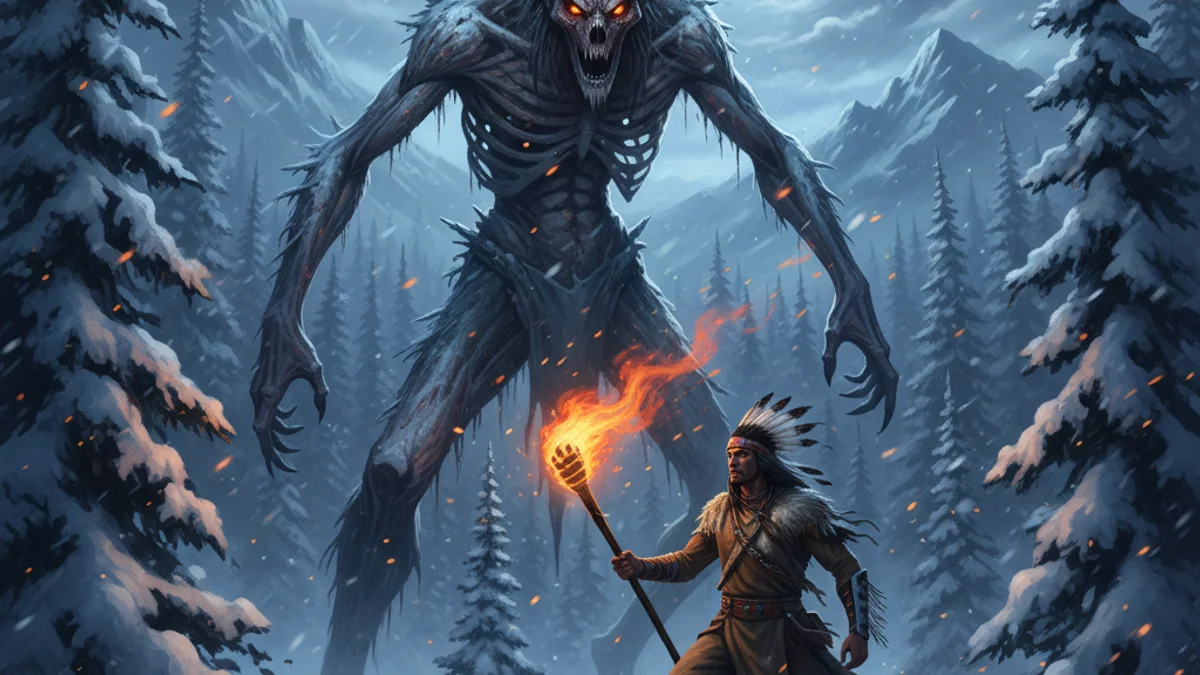
In the deepest winters of the North, when the frost bites the bone and hunger gnaws at the belly, the Windigo rises. Legend tells of a man who, driven by desperate starvation, tasted human flesh and was transformed into a towering, skeletal monster with a heart of ice and an insatiable craving for more. One particularly brutal winter, a Windigo terrorized a village, its shrieks echoing through the frozen pines. A young hunter, chosen for his purity of spirit, set out into the blizzard to confront the beast. Guided by the wisdom of the elders, he carried a basin of boiling tallow and a spear tipped with silver. When the beast lunged with its icy claws, the hunter stood his ground. He cast the hot tallow into the monster's mouth, melting the frozen shard of ice that served as its heart. As the Windigo crumbled into the snow, the eternal winter broke, proving that the warmth of courage and the rejection of greed can conquer the darkest spirits.
Greed and selfishness consume the soul, but bravery and community sacrifice can overcome even the most powerful darkness.
Questions about this story
What is a Windigo in Native American folklore?
The Windigo is a man-eating monster or evil spirit from the folklore of the Algonquian-speaking tribes. It is often depicted as a giant, skeletal creature associated with winter, coldness, and famine.
How does a person become a Windigo?
In most legends, a human transforms into a Windigo by resorting to cannibalism. This transformation serves as a powerful cultural taboo against eating human flesh, even in times of extreme starvation.
What does the Windigo represent symbolically?
Symbolically, the Windigo represents greed, gluttony, and excess. It is a metaphor for how selfish desires can grow out of control, consuming the individual and harming the community.
How is the Windigo typically defeated in legends?
The creature is usually defeated by a hero with a strong spirit, often using fire or boiling fat to melt its heart of ice. Success requires both physical bravery and spiritual purity.
Advertisement


Good night.
