
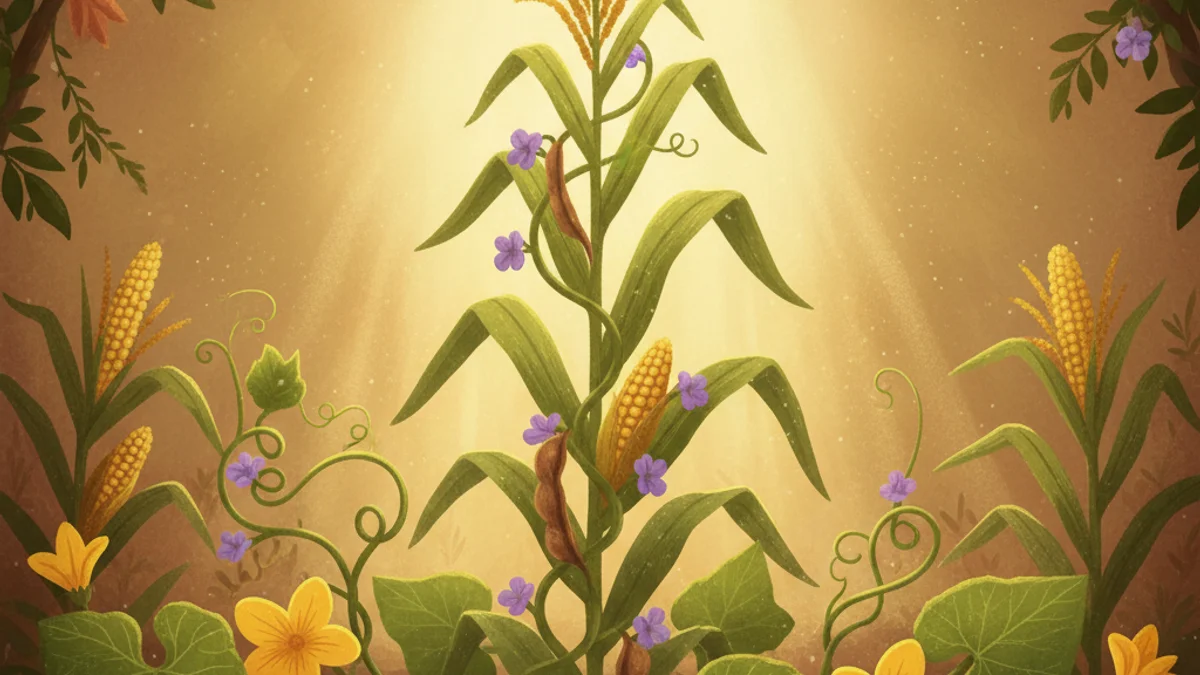
Long ago, three sisters lived in a field. The eldest, Corn, stood tall and graceful with golden hair that rustled in the breeze. The middle sister, Bean, was small and frail, barely able to stand on her own, and she spent her days crawling along the ground. The youngest sister, Squash, was stout and wore a bright yellow dress, staying close to the earth to protect it from the heat. Though they loved each other, they often felt incomplete. One day, they realized their spirits were bound together by the Great Spirit. Bean found strength by winding her vines around Corn's sturdy stalk, reaching toward the sunlight. In return, Squash spread her broad leaves across the soil, keeping the ground cool and moist while choking out the weeds that threatened her sisters. Together, they became the 'Three Sisters' of the harvest. They flourished not by competing, but by sharing their unique gifts, ensuring that the people would never go hungry as long as the sisters remained together.
True strength and survival come from cooperation and valuing the unique contributions of others.
Questions about this story
What is the moral of The Three Sisters?
The moral is that community and cooperation are essential for survival. By supporting one another's unique strengths, we create a system that is stronger than any individual part.
Who are the three sisters in the legend?
The three sisters are Corn, Beans, and Squash. They represent the three main agricultural crops of various Native American groups, most notably the Haudenosaunee (Iroquois).
How do the three sisters help each other grow?
Corn provides a structure for the beans to climb. The beans provide nitrogen to the soil to feed the others, while the squash leaves provide shade to prevent weed growth and retain moisture.
Which tribe originated The Three Sisters story?
The legend is most closely associated with the Iroquois (Haudenosaunee) and Cherokee nations, though many different North American tribes have their own versions of the tale.
Advertisement



Good night.
