
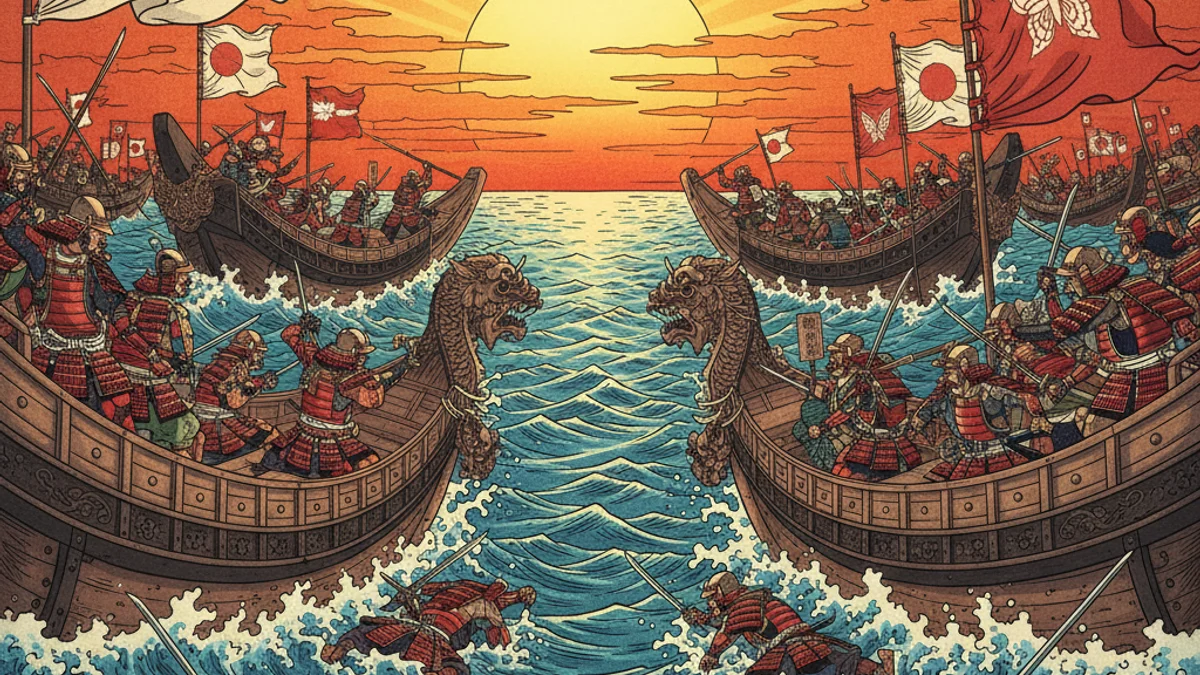
The Genpei War (1180–1185) was a pivotal conflict that reshaped Japan, pitting the dominant Taira clan against the rising Minamoto. For years, the Taira had controlled the Imperial court with an absolute authority under the patriarch Taira no Kiyomori. However, the exiled Minamoto brothers—Yoritomo and the brilliant tactician Yoshitsune—rose to reclaim their family’s honor. The war raged across the islands of Japan, culminating in the epic naval Battle of Dan-no-ura. Amidst crashing waves and swirling tides, Yoshitsune’s fleet utilized superior strategy to outmaneuver the Taira. Seeing defeat was inevitable, the Taira nobles, along with the child Emperor Antoku, chose to leap into the sea rather than face the shame of surrender. This heroic yet tragic end marked the birth of the Kamakura Shogunate, ushering in the age of the samurai and defining the code of bushido through tales of loyalty, sacrifice, and the impermanence of worldly power.
Even the most powerful dynasties eventually fall, teaching us that true legacy is built on honor and resilience rather than temporary political dominance.
Questions about this story
What is the moral of The Genpei War?
The story illustrates the fleeting nature of power and the importance of honor in the face of inevitable change. It teaches that even the mightiest can fall if they lose their way and lose the mandate of the people.
Who were the primary clans in the Genpei War?
The conflict was fought primarily between the Minamoto (Genji) clan, represented by white banners, and the Taira (Heike) clan, who flew red banners. Their rivalry determined the future of Japan's government for the next seven centuries.
What was the significance of the Battle of Dan-no-ura?
This final naval battle resulted in the total destruction of the Taira clan and the tragic death of the child Emperor Antoku. It effectively ended the Heian period and cleared the way for the first Shogunate.
Who was Minamoto no Yoshitsune?
Yoshitsune was a legendary military commander and the younger brother of Yoritomo. He is celebrated as one of Japan’s greatest folk heroes for his brilliant tactics and his eventual tragic betrayal by his own brother.
Advertisement
Good night.
