
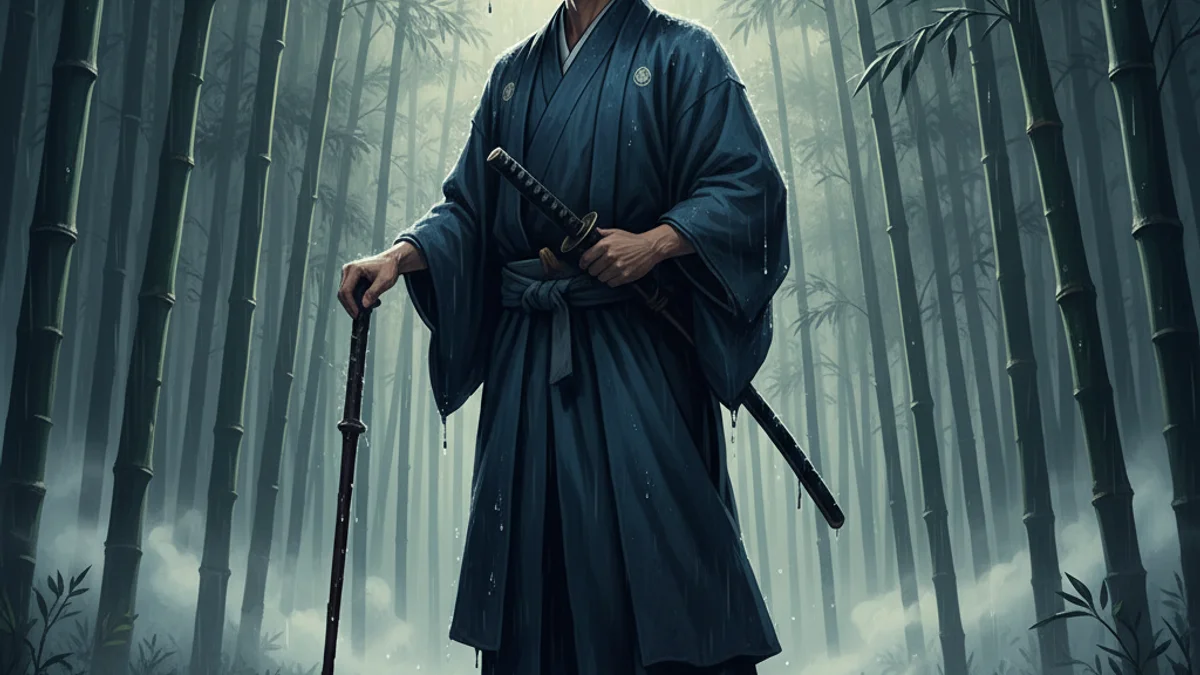
In the heart of Edo-period Japan, a humble man named Zatoichi traveled the dusty roads. To the common eye, he was merely a blind masseur and a mediocre gambler, often mocked for his disability. However, beneath his unassuming exterior lay the soul of a master warrior. Zatoichi carried a simple wooden cane, which secretly housed a deadly, razor-sharp shikomizue blade. One evening, he arrived at a village oppressed by a group of ruthless bandits. When the ruffians surrounded him, laughing at his blindness, Zatoichi remained calm. He closed his eyes—though they saw nothing—and listened to the rhythm of the wind and the nervous heartbeats of his enemies. In a blur of motion, he unsheathed his blade. Before the bandits could even blink, their weapons were sliced in two. With his senses sharpened to a supernatural degree, Zatoichi moved like a ghost, neutralizing the threat without shedding unnecessary blood. He proved that sight is often a distraction, and true clarity comes from the heart.
True mastery and perception come from within, proving that internal discipline and intuition are far more powerful than physical sight.
Questions about this story
What is the moral of The Blind Swordsman?
The story teaches that physical limitations do not define one's potential. It emphasizes that intuition, discipline, and inner clarity are more valuable than what can be seen with the eyes.
Who is the most famous blind swordsman in Japanese legend?
Zatoichi is the most iconic blind swordsman. He was created by novelist Kan Shimozawa and has been featured in dozens of films and television series.
What kind of weapon does the blind swordsman use?
He typically uses a shikomizue, which is a blade concealed within a wooden walking cane. This allowed him to travel unnoticed as a peaceful civilian while remaining armed.
How does Zatoichi fight without his sight?
He relies on his heightened other senses, particularly his hearing and his ability to feel vibrations and air pressure changes. This allows him to track enemies with perfect precision.
Advertisement
Good night.
