
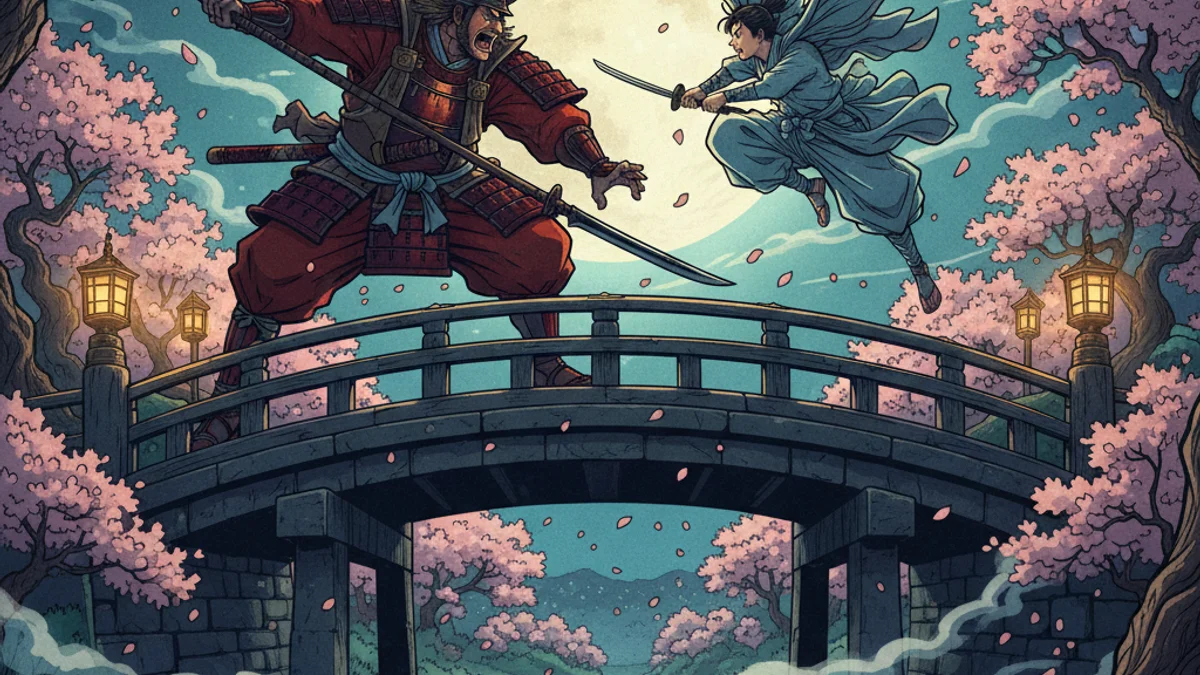
In the twilight of 12th-century Kyoto, the giant warrior monk Benkei stood atop Gojo Bridge. He had vowed to claim one thousand swords from unworthy samurai, and he had already collected nine hundred and ninety-nine. As the moon rose, a slender youth named Yoshitsune approached, playing a flute. Seeing a small target, Benkei challenged him, but the youth moved with the grace of a forest spirit, leaping over Benkei's massive naginata. Defeated by the boy’s superior skill and agility, Benkei realized he had met a true master and pledged his eternal loyalty. Together, they fought through the Genpei War, becoming Japan's most celebrated duo. Their legend culminated at the Koromogawa River, where Benkei stood his ground against an entire army to protect Yoshitsune's ritual suicide, famously dying on his feet while riddled with arrows—a final, heroic act of devotion that terrified his enemies even in death.
True strength is found in humility and the recognition of greatness in others, while loyalty is the highest honor a warrior can achieve.
Questions about this story
What is the moral of Yoshitsune and Benkei?
The story teaches that skill and agility can overcome brute force, and that true greatness is defined by unwavering loyalty and devotion to a worthy cause.
Who was Benkei in Japanese legend?
Benkei was a sōhei (warrior monk) of immense strength and stature who famously sought to collect 1,000 swords before being defeated by Yoshitsune.
Where did Yoshitsune and Benkei first meet?
They famously met on the Gojo Bridge in Kyoto, where Benkei challenged Yoshitsune to a duel for his sword, resulting in Benkei's first and only defeat.
How did Benkei die?
Benkei died at the Battle of Koromogawa, where he stood at the bridge entrance to protect Yoshitsune, dying while standing up to block the enemy's path.
Advertisement
Good night.
