Story Summary
Explore the legendary Kusunoki Masashige's Loyalty. Discover how this iconic samurai sacrificed everything for Emperor Go-Daigo at the Battle of Minatogawa.
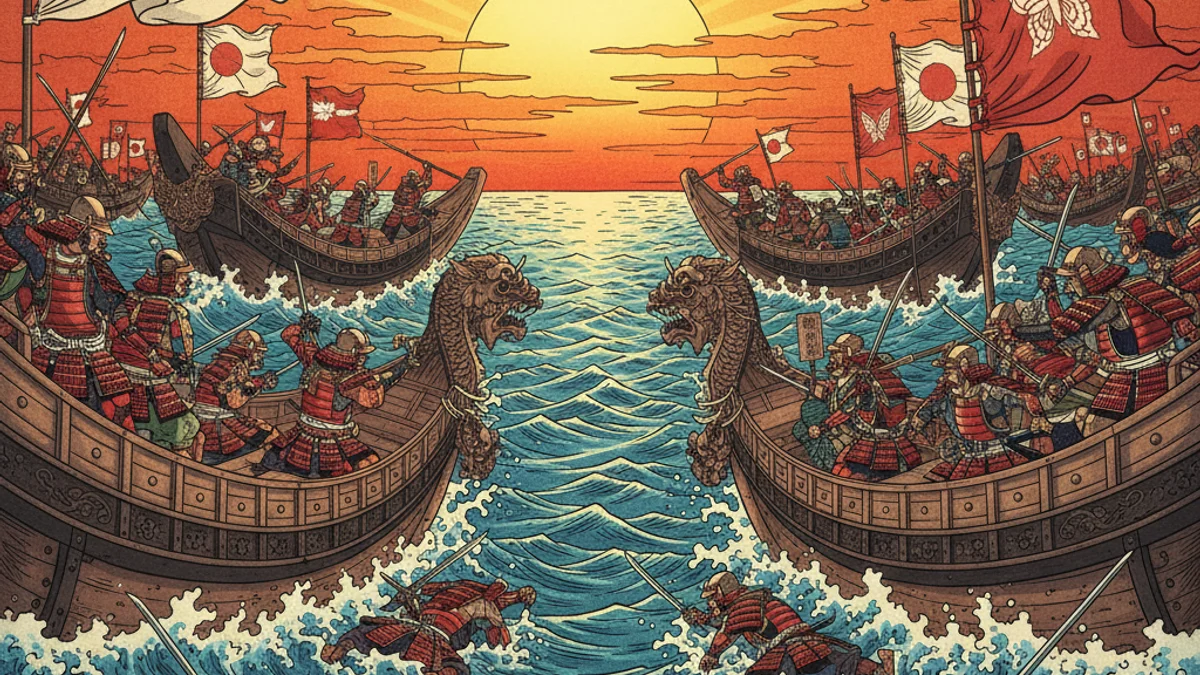
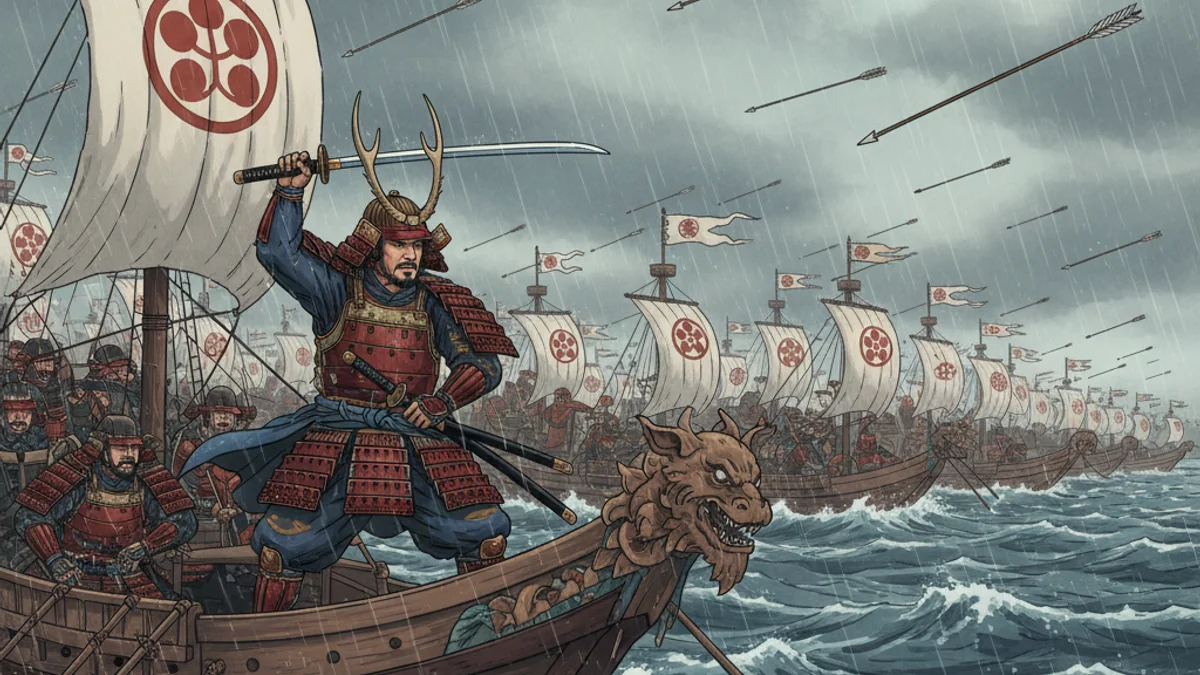
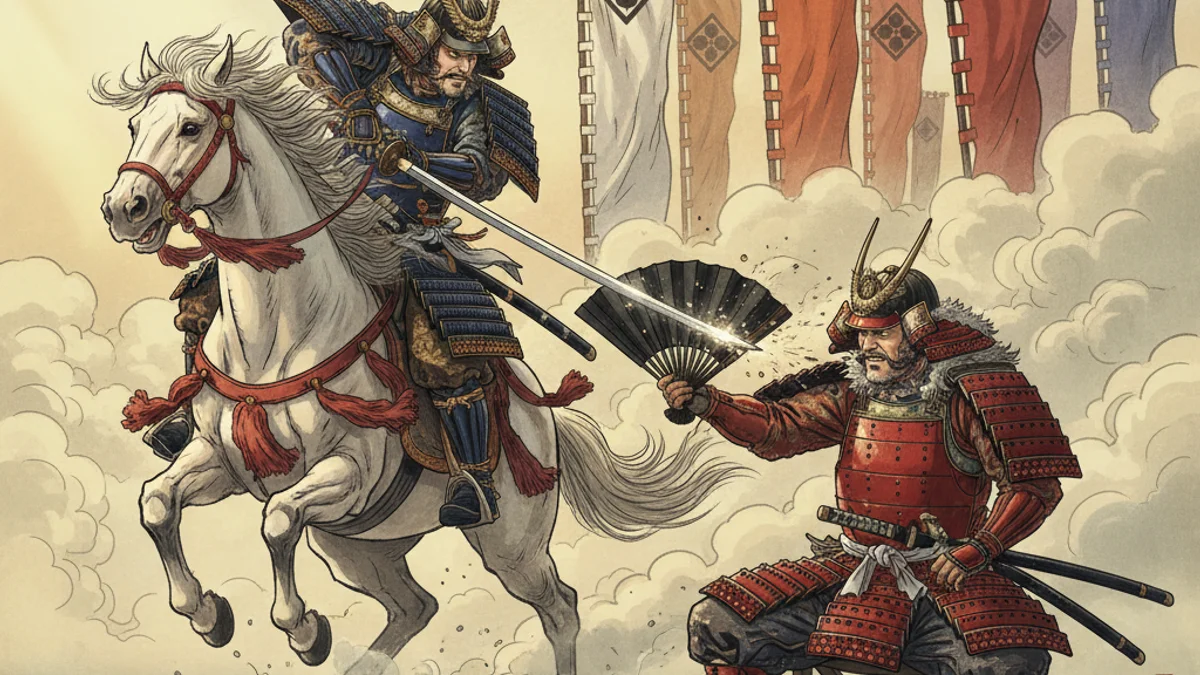
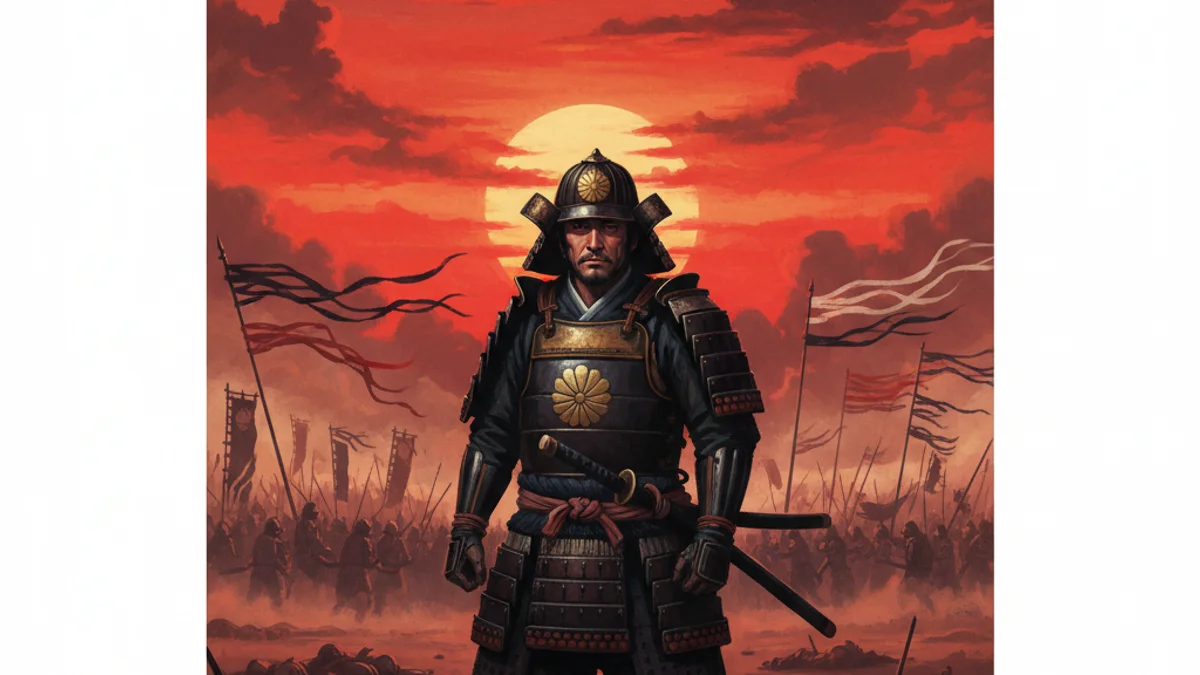
During the 14th century, Japan was torn by civil war between the northern and southern courts. Kusunoki Masashige, a brilliant tactician, remained steadfastly loyal to Emperor Go-Daigo. When the powerful rebel general Ashikaga Takauji marched on Kyoto with an overwhelming force, Masashige proposed a strategic retreat to lure the enemy into the mountains. However, the Emperor’s court, valuing pride over strategy, ordered Masashige to meet the massive army in open battle at Minatogawa. Knowing the command was a death sentence, Masashige did not waver. He shared a final cup of sake with his young son, Masatsura, instructing him to carry on the struggle for the Emperor should he fall. At the Battle of Minatogawa, Masashige and his small band of loyalists fought with legendary ferocity against impossible odds. When defeat became inevitable, Masashige and his brother Masasue committed ritual suicide. Before they died, Masasue asked his brother what his final wish was. Masashige replied that he wished to be reborn seven times to serve his Emperor and his country, cementing his legacy as the ultimate symbol of 'Bushido' and unwavering devotion.
The Moral
True loyalty is not found in following orders when success is certain, but in maintaining one's principles and devotion even when failure is inevitable.
“I would that I had seven lives to give for my country.”
Fun Fact
A bronze statue of Kusunoki Masashige stands outside the Tokyo Imperial Palace, marking him as a symbol of the ideal samurai.
Frequently Asked Questions
What is the moral of Kusunoki Masashige's Loyalty?
The moral is that true honor lies in unwavering loyalty to one's principles and leaders, even in the face of certain death. It emphasizes the 'Bushido' ideal where duty outweighs personal survival.
Who was Kusunoki Masashige in Japanese history?
He was a 14th-century samurai and military strategist who served Emperor Go-Daigo during the Nanboku-cho period. He is celebrated as the pinnacle of samurai loyalty and a national hero in Japan.
What happened at the Battle of Minatogawa?
Masashige was ordered to fight a numerically superior rebel force led by Ashikaga Takauji. Despite knowing his tactics were superior, he obeyed the Emperor's suicidal command and died in battle.
What does the 'Seven Lives' pledge mean?
Before committing seppuku, Masashige famously stated he wished to be reborn seven times to defend the Imperial cause. This 'Shichisai Hoko' became a rallying cry for Japanese loyalty for centuries.
Why didn't Masashige retreat if he knew he would lose?
As a samurai, Masashige placed the Emperor's direct commands above his own tactical judgment. Disobeying an Imperial order would have been seen as a greater failure than losing his life.
How is Kusunoki Masashige remembered today?
He is honored with a prominent bronze statue outside the Imperial Palace in Tokyo. He remains a symbol of the ideal 'scholar-warrior' and the most loyal subject in Japanese history.
Discussion (0)
Share your thoughts on this story
No comments yet. Be the first to share your thoughts!