
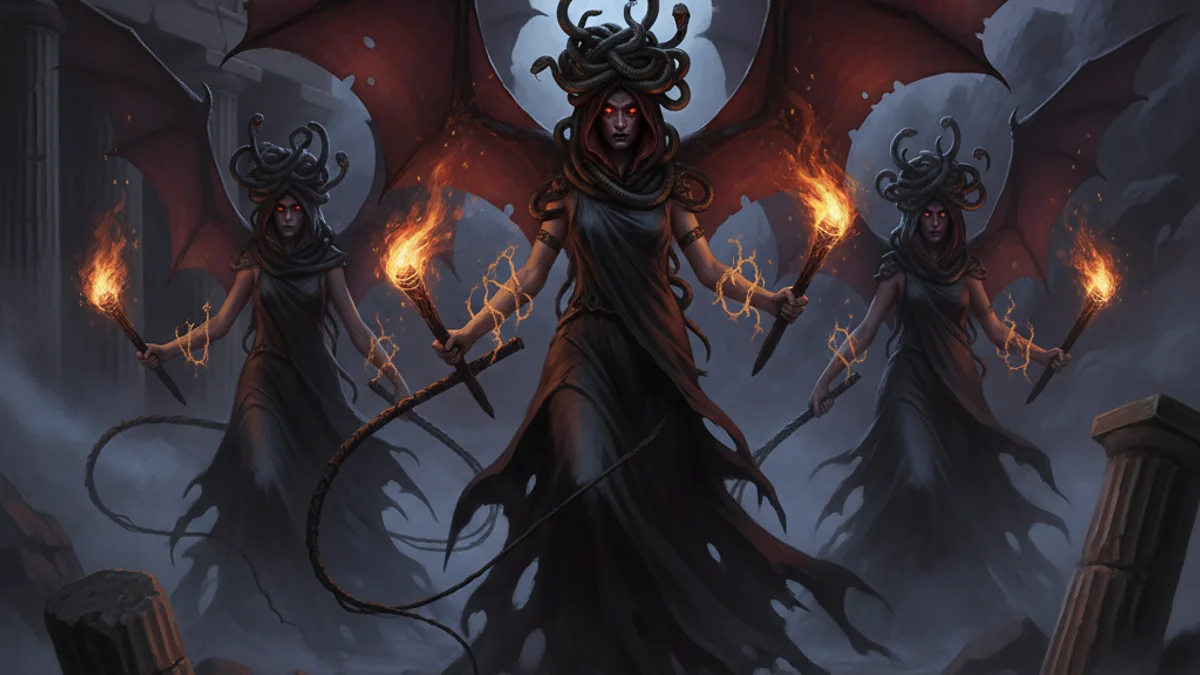
Born from the blood of the castrated Uranus, the Furies—Alecto, Megaera, and Tisiphone—were the chthonic deities of vengeance. With snakes for hair and bat-like wings, they rose from the underworld to hunt those who committed crimes against the natural order, particularly matricide and oath-breaking. They did not merely punish; they hounded their victims into madness, their shrieks echoing the weight of a guilty conscience. Their most famous pursuit was that of Orestes, who killed his mother Clytemnestra to avenge his father. Driven to the brink of insanity by their relentless torment, Orestes sought sanctuary in Athens. There, the goddess Athena presided over a trial, the first of its kind, to break the cycle of blood-feud. By her decree, the Furies were pacified and transformed into the Eumenides, the 'Kindly Ones,' protectors of the city, symbolizing the shift from primitive retribution to the rule of law.
True justice transcends simple blood-vengeance, requiring the wisdom of law and the weight of conscience to bring peace.
Questions about this story
What is the moral of The Furies?
The moral is that the cycle of endless revenge must eventually give way to structured justice and the rule of law. It also teaches that one's conscience and the consequences of moral crimes are inescapable forces.
Who are the three Furies in Greek mythology?
The three Furies, or Erinyes, are Alecto (the unceasing), Megaera (the jealous), and Tisiphone (the avenger of murder). Together they represented different aspects of divine retribution and punishment for moral failings.
How were the Furies born?
According to Hesiod's Theogony, the Furies were born from the drops of blood that fell onto the Earth (Gaia) when the Titan Cronus castrated his father, Uranus. This origin links them to the most primal and ancient forces of the universe.
What is the difference between the Furies and the Eumenides?
The Furies represent raw, terrifying vengeance and blood-feuds. After the trial of Orestes, Athena persuaded them to become the Eumenides, meaning 'The Kindly Ones,' shifting their role to protectors of justice and the city of Athens.
Advertisement

Good night.
