
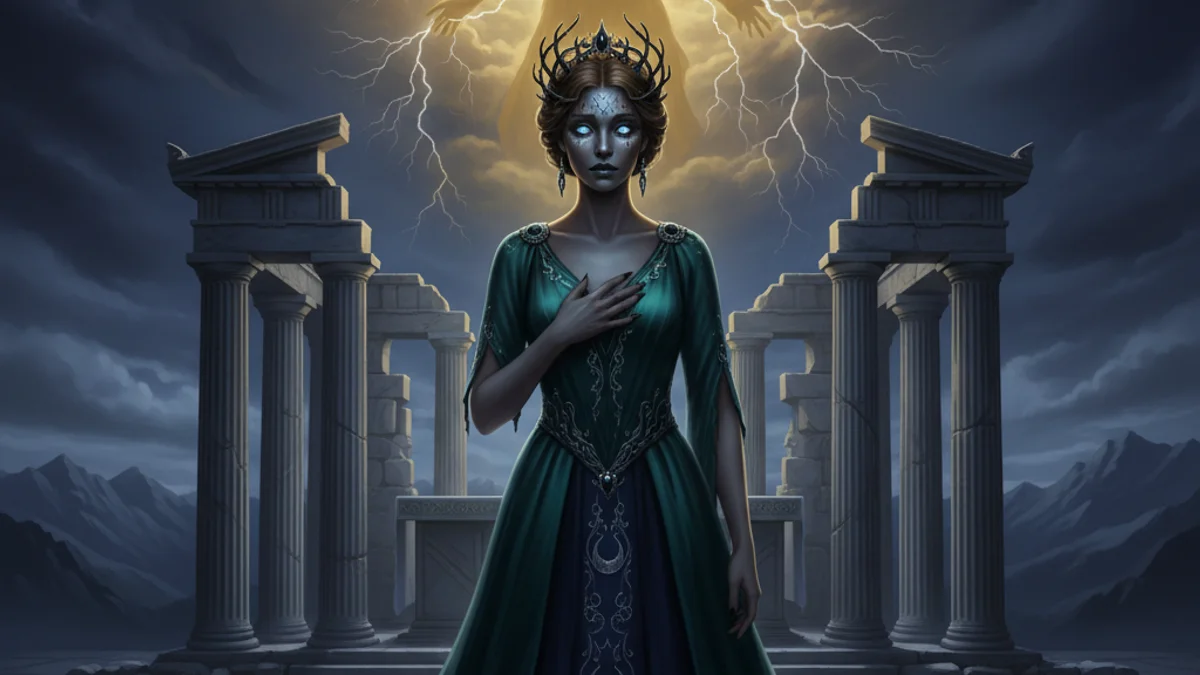
Lamia was once a queen of Libya, a woman of such breathtaking beauty that she captured the heart of Zeus. Their union produced several children, but their happiness was short-lived. Hera, the Queen of the Gods, soon discovered her husband’s infidelity. Consumed by divine jealousy, Hera struck with calculated cruelty, killing all of Lamia's children. Driven to the brink of madness by grief and Hera's spite, Lamia’s beauty withered away, replaced by a monstrous form. To ensure Lamia would never find peace, Hera cursed her with eternal wakefulness, so she could never close her eyes against the visions of her lost children. In her torment, Lamia became a creature of envy, preying upon the children of others. Pitying her, Zeus granted her the unique power to remove her eyes and place them in a jar, allowing her the only moments of rest and darkness she would ever know. Lamia remains a haunting figure, a warning of how the wrath of the powerful can transform a victim into a monster.
Unchecked jealousy and vengeance have the power to destroy innocence and transform even the most beautiful soul into a monster.
Questions about this story
What is the moral of Hera and Lamia?
The story serves as a warning that vengeance and jealousy can create a cycle of suffering that transforms victims into villains. It highlights how the innocent often pay the highest price for the conflicts of those in power.
Why did Hera punish Lamia so harshly?
Hera was the goddess of marriage and was notoriously vengeful toward Zeus's lovers. By killing Lamia's children and cursing her with insomnia, she sought to inflict the maximum emotional torment possible.
What power did Zeus give Lamia to help her?
Taking pity on her eternal suffering, Zeus gave Lamia the ability to remove her eyes from their sockets. This was the only way she could find rest and escape the haunting visions of her dead children.
What kind of creature did Lamia become?
Lamia transformed into a child-devouring demon, often depicted in later lore with a serpent's tail. She became a bogeyman figure used to frighten children into obedience.
Advertisement

Good night.
