
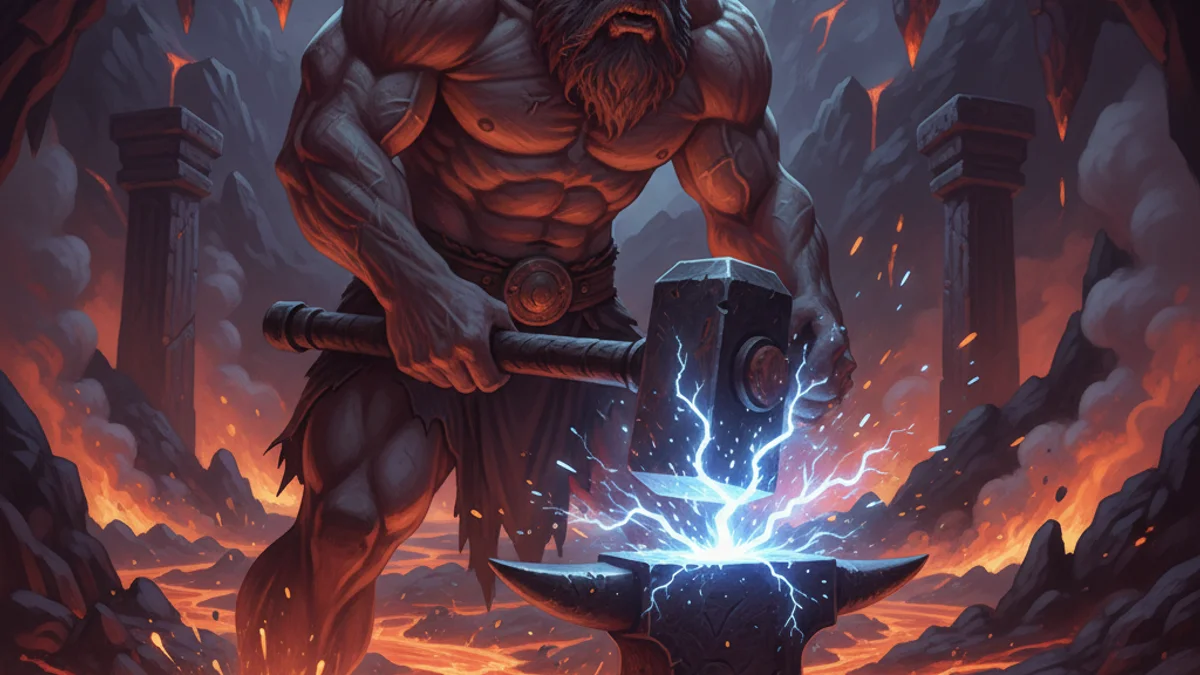
In the dawn of time, the Cyclopes were born of Uranus and Gaia—three giants, Brontes, Steropes, and Arges, each possessing a single, lidless eye centered in their forehead. Imprisoned in the dark abyss of Tartarus by their fearful father, they were eventually liberated by Zeus during his war against the Titans. In gratitude, these master smiths forged the iconic weapons of the gods: the thunderbolts of Zeus, the trident of Poseidon, and the helm of invisibility for Hades. Their craftsmanship secured the reign of the Olympians. Centuries later, a different race of Cyclopes appeared—savage, lawless shepherds. The most famous was Polyphemus, who trapped the hero Odysseus in his cave. While the elder Cyclopes were builders and creators, these later giants were monsters of destruction. Odysseus famously used his wits to blind Polyphemus and escape, proving that even the most terrifying physical power can be outmatched by a clever mind.
Raw strength and size are no match for superior intelligence, divine craftsmanship, and strategic thinking.
Questions about this story
What is the moral of The Cyclopes?
The moral is that brute force is inferior to intellect and skill. Whether it is the elder Cyclopes using their craft to arm the gods or Odysseus using his wits to escape Polyphemus, the stories emphasize brain over brawn.
Who were the three original Cyclopes?
The original three were Brontes (Thunderer), Steropes (Lightninger), and Arges (Bright). They were the sons of Uranus and Gaia and served as the divine blacksmiths who forged Zeus's thunderbolts.
How did Odysseus defeat the Cyclops Polyphemus?
Odysseus got Polyphemus drunk on wine and told the giant his name was 'Nobody.' When the giant fell asleep, Odysseus blinded him with a sharpened stake; when Polyphemus cried for help, he shouted 'Nobody is killing me,' so his kin didn't intervene.
What weapons did the Cyclopes create for the gods?
They forged the most powerful artifacts in Greek mythology: Zeus's thunderbolts, Poseidon's trident, and Hades' Cap of Invisibility, which were essential in winning the war against the Titans.
Advertisement
Good night.
