
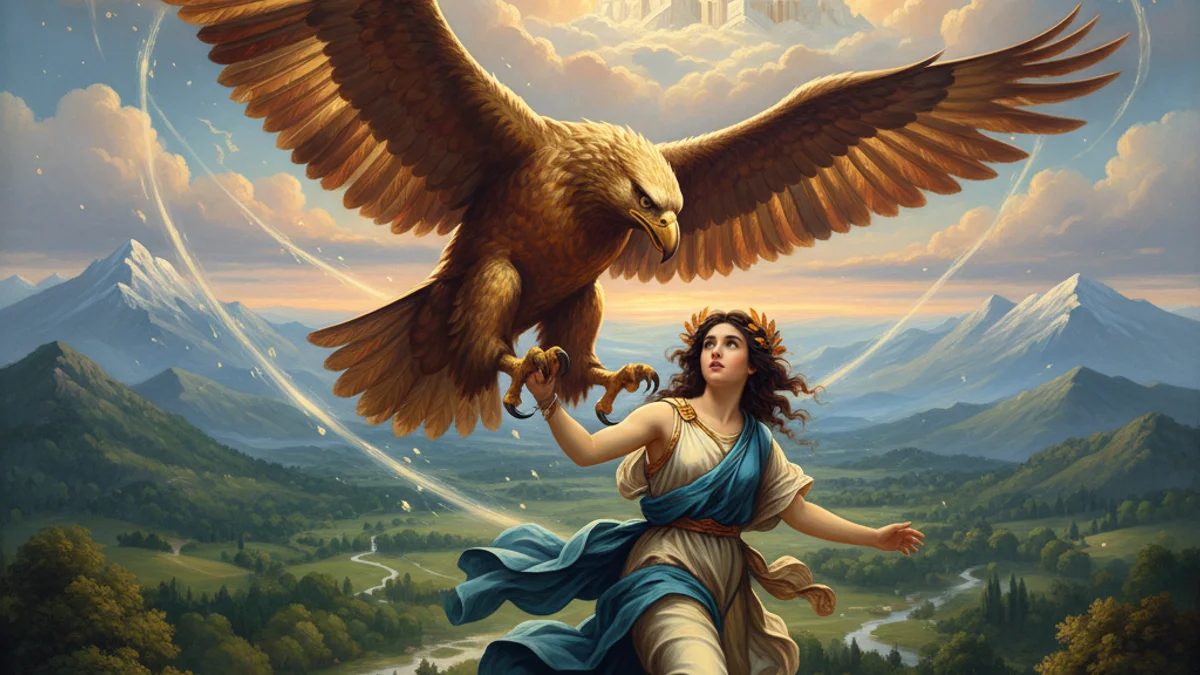
Ganymede was a prince of Troy, widely considered the most beautiful of all mortals. While he was tending his father's flocks on the slopes of Mount Ida, Zeus, the King of the Gods, became captivated by the youth's peerless grace. Transforming himself into a massive eagle with feathers like burnished gold, Zeus swept down from the heavens and snatched the boy from the earth. He carried Ganymede to the summit of Mount Olympus, where he was granted immortality and eternal youth. There, Ganymede replaced the goddess Hebe as the divine cupbearer, serving nectar and ambrosia to the deities from a golden ewer. To console Ganymede’s grieving father, King Tros, Zeus gifted him a pair of divine horses that could run over water. Ultimately, the youth was immortalized in the stars as the constellation Aquarius, the water-bearer.
The gods often claim what is most beautiful for themselves, proving that mortal excellence can lead to both a loss of earthly identity and an invitation to the eternal.
Questions about this story
What is the moral of Zeus and Ganymede?
The story suggests that divine favor is a double-edged sword that offers immortality at the cost of one's mortal life and family. It reflects the ancient Greek belief that the gods act on their own desires, regardless of human consequences.
Why did Zeus kidnap Ganymede?
Zeus was struck by Ganymede's incredible beauty while the boy was herding sheep on Mount Ida. He wanted the youth to live among the gods on Olympus as his personal favorite and divine cupbearer.
What happened to Ganymede on Mount Olympus?
Ganymede was granted eternal youth and immortality so that he could serve the gods forever. He took over the role of cupbearer, pouring nectar from a golden vessel during their celestial feasts.
How did Zeus compensate Ganymede's father?
Zeus sent Hermes to give King Tros a pair of immortal horses that were so fast they could run across water. He also informed the king that his son had become an immortal god, which eventually eased the father's grief.
Advertisement
Good night.
