
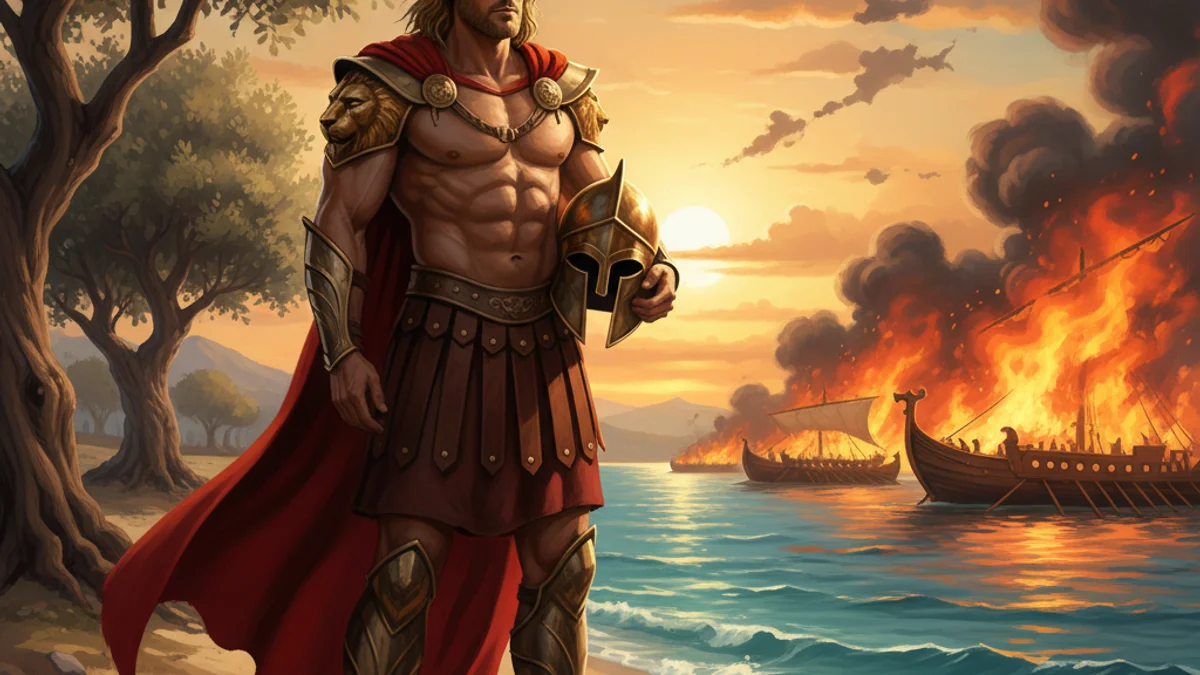
Before the Trojan War began, the sea-nymph Thetis revealed a profound prophecy to her son, Achilles. He was presented with a stark choice between two divergent fates. He could remain in his homeland, living a long, comfortable, and peaceful life, but his name would be forgotten the moment his lineage ended. Alternatively, he could sail for Troy and achieve kleos—eternal glory—though it would guarantee his death on the battlefield in the bloom of his youth. Initially, Achilles wavered, even attempting to hide among the daughters of King Lycomedes to avoid the call to arms. However, the pull of destiny and the death of his companion Patroclus eventually solidified his decision. Choosing the path of the hero, Achilles joined the siege of Troy, cementing his status as the greatest warrior of his age. He traded the warmth of old age for a name that would echo through the millennia, proving that for the Greeks, a life's value was measured not by its length, but by the greatness of the deeds performed within it.
The pursuit of greatness and a lasting legacy often requires the sacrifice of personal comfort and longevity.
Questions about this story
What is the moral of The Choice of Achilles?
The moral is that true greatness often comes at a high personal cost. It suggests that a meaningful legacy is sometimes worth more than a long, unremarkable existence.
Who told Achilles about his two possible fates?
His mother, the sea-nymph Thetis, revealed the prophecy to him. She knew that his destiny was tied to the Trojan War and warned him of the consequences of joining the fight.
What were the two paths Achilles could choose from?
He could choose a long, peaceful life in his homeland where he would be forgotten by history, or a short, violent life at Troy that would grant him immortal fame.
Why did Achilles eventually choose the path of glory?
While he initially hesitated, the death of his close friend Patroclus fueled his rage and desire for vengeance. This event ultimately drove him to accept his fate and seek glory on the battlefield.
Advertisement

Good night.
