
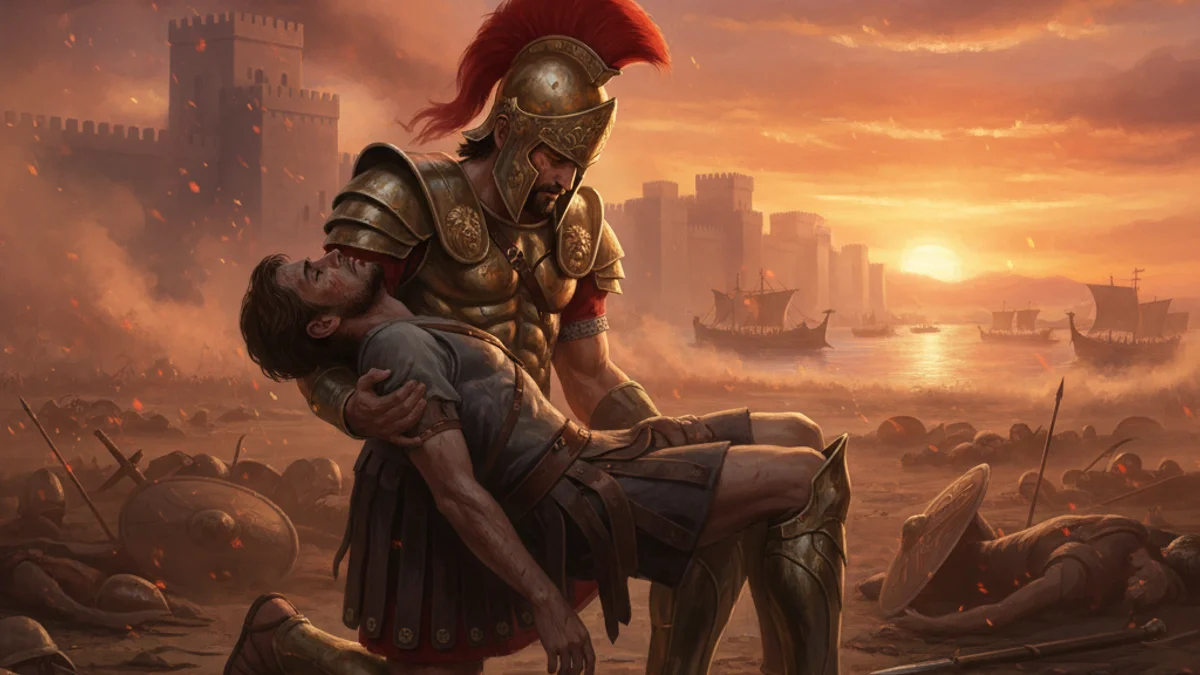
During the tenth year of the Trojan War, Achilles, the Greeks' greatest warrior, withdrew from battle after a bitter dispute with King Agamemnon. As the Trojans pushed the Greeks back to their ships, Patroclus, Achilles' beloved companion, could not bear to see his comrades fall. He begged Achilles for his armor, hoping to deceive the Trojans into believing the hero had returned. Achilles reluctantly agreed but warned Patroclus not to pursue the enemy too far. Donning the famous bronze armor, Patroclus led the Myrmidons and turned the tide of battle. However, fueled by glory, he ignored Achilles' warning and charged toward the walls of Troy. There, he was struck by Apollo and finally slain by Prince Hector. When news reached Achilles, his grief was so profound it shook the earth. Abandoning his pride, he returned to the field with a terrifying fury, eventually slaying Hector and dragging his body around the city. The death of Patroclus humanized the invincible Achilles, leading him toward his own tragic destiny.
The deepest bonds of love can drive us to both great sacrifice and devastating rage. It teaches that pride is often hollow when compared to the value of human connection.
Questions about this story
What is the moral of Achilles and Patroclus?
The story illustrates how personal pride and ego can lead to the loss of what we value most. It also highlights that even the strongest warriors are profoundly shaped by their love and grief for others.
Why did Patroclus wear Achilles' armor?
He wore the armor to trick the Trojans into thinking Achilles had returned to the fight, aiming to boost Greek morale and scare the enemy away from the ships. He did this because Achilles refused to fight due to a feud with Agamemnon.
Who killed Patroclus in the Trojan War?
Patroclus was killed by the Trojan Prince Hector, though he was first dazed by the god Apollo and wounded by the warrior Euphorbus. Hector delivered the final blow and stripped the armor from his body.
How did Achilles react to the death of Patroclus?
Achilles was devastated, weeping uncontrollably and refusing to eat or wash until he had avenged his friend. His grief transformed into a legendary rage that forced him back into the war to kill Hector.
Advertisement

Good night.
