
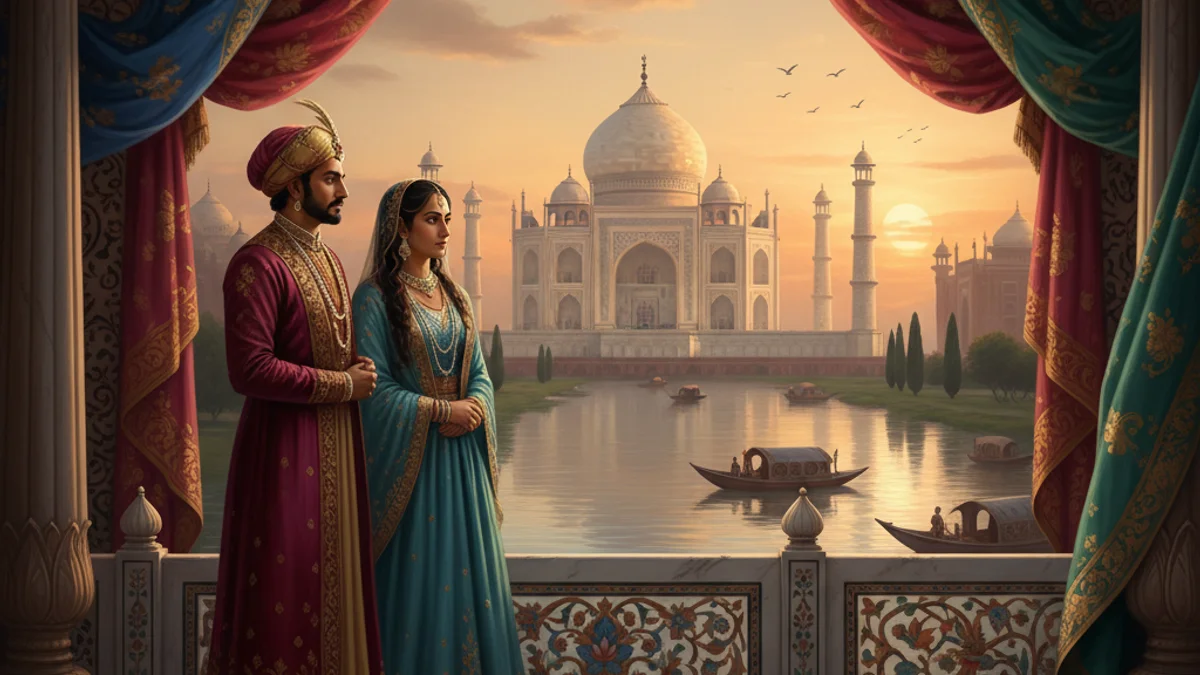
In the vibrant heart of the Mughal Empire, Prince Khurram, the future Emperor Shah Jahan, first encountered Arjumand Banu Begum at a bazaar. It was love at first sight, a connection that transcended political alliances. They married in 1612, and he bestowed upon her the title 'Mumtaz Mahal,' meaning 'the Exalted One of the Palace.' Their bond was inseparable; she was not only his beloved wife but also his closest confidante and political advisor, accompanying him even on military campaigns. In 1631, while giving birth to their fourteenth child, Mumtaz Mahal passed away. Devastated by the loss, the Emperor’s hair turned grey overnight. To fulfill his promise to build her a tomb that the world would never forget, he summoned the finest architects and craftsmen. For over twenty years, twenty thousand workers labored to create the Taj Mahal, a masterpiece of white marble that stands today as the ultimate symbol of eternal devotion.
True love is an eternal force that can inspire humanity to create beauty that transcends the passage of time and death.
Advertisement
Questions about this story
What is the moral of Shah Jahan and Mumtaz?
The story teaches that love is a powerful, enduring legacy that can manifest in acts of incredible beauty. It shows that while life is fleeting, the devotion we show to others can leave an immortal mark on the world.
Is the story of Shah Jahan and Mumtaz a true story?
Yes, it is a historical account from 17th-century India. Shah Jahan was the fifth Mughal Emperor, and he truly built the Taj Mahal as a mausoleum for his favorite wife, Mumtaz Mahal.
Why did Shah Jahan build the Taj Mahal?
He built it to honor a deathbed promise to Mumtaz Mahal. He wanted to create a monument that symbolized their eternal love and provided her with a final resting place of unparalleled beauty.
How did Mumtaz Mahal die?
Mumtaz Mahal died in 1631 in Burhanpur due to complications during the birth of her fourteenth child, a daughter named Gauhara Begum. Her death left the Emperor in a state of profound grief for the rest of his life.
Advertisement


