
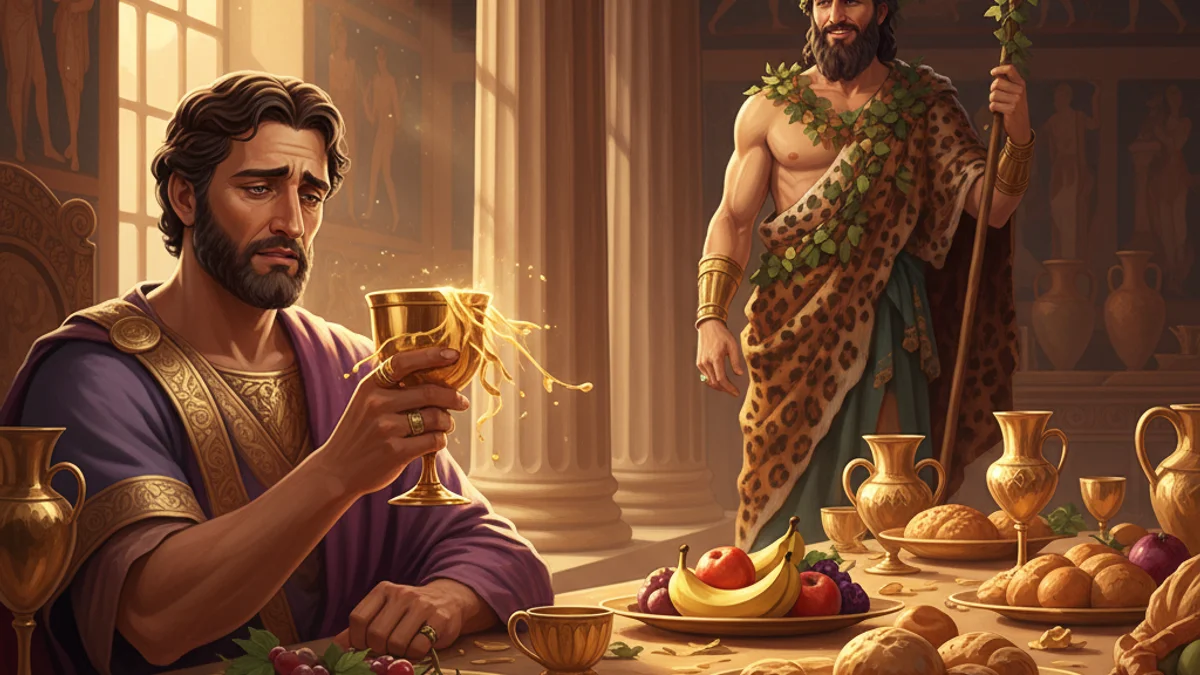
King Midas of Phrygia once found Silenus, the satyr mentor of Dionysus, lost and intoxicated in his rose gardens. Instead of punishing him, Midas treated him with great hospitality for ten days before returning him safely to the god. Grateful for the kindness shown to his teacher, Dionysus offered Midas any reward he desired. Driven by a thirst for wealth, Midas asked that everything he touched be turned into shimmering gold. Dionysus granted the wish, though he lamented the king's foolish choice. At first, Midas was overjoyed, turning stones, flowers, and palace walls into precious metal. However, his delight soon turned to horror. When he tried to eat, his bread and wine turned to hard gold, leaving him starving. In the most tragic accounts, his beloved daughter became a lifeless golden statue when he tried to comfort her. Desperate and weeping, Midas begged Dionysus to take back the curse. The god, showing mercy, told him to bathe in the River Pactolus. As Midas washed, the golden power left his body and flowed into the river sands, leaving them rich with gold and the king with a newfound appreciation for the simple gifts of life.
Greed can blind us to the true value of life's simple necessities, and having everything we want can often lead to losing everything we need.
Questions about this story
What is the moral of Dionysus and Midas?
The moral is that greed leads to ruin and that the most valuable things in life, such as food, water, and love, cannot be replaced by material wealth.
Who granted Midas the golden touch?
The Olympian god Dionysus granted the wish as a reward for Midas's hospitality toward the satyr Silenus.
How did King Midas get rid of the golden touch?
He followed Dionysus's instructions to wash himself in the waters of the River Pactolus, which transferred the golden power from his body to the river's sands.
What happened to Midas's daughter in the story?
In many versions of the myth, Midas accidentally turns his daughter into a gold statue when he reaches out to hug her, illustrating the tragic cost of his greed.
Advertisement

Good night.
