
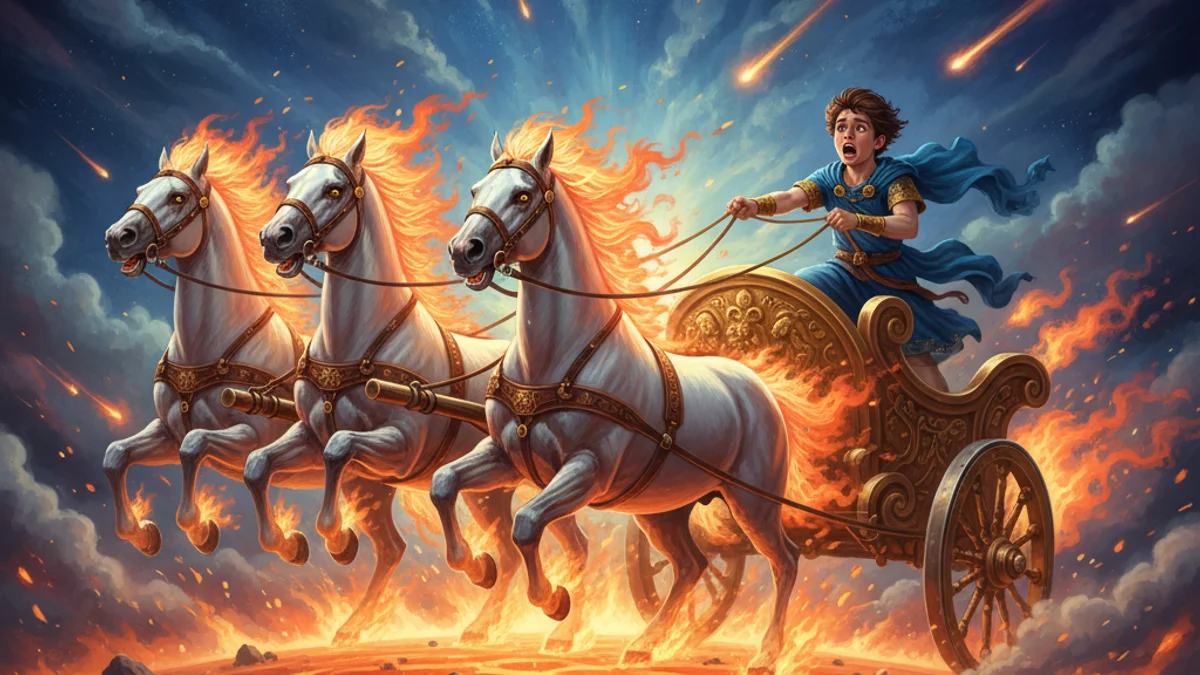
Phaethon, a mortal youth, journeyed to the golden palace of the sun to prove his divine lineage. His father, Helios, overjoyed to see him, swore by the River Styx to grant his son any wish. Phaethon immediately asked to drive the sun chariot across the sky for a single day. Helios, bound by his unbreakable oath, pleaded with the boy to reconsider, warning that even Zeus could not manage the wild, fire-breathing stallions. Phaethon refused to listen. As the horses felt a weak hand on the reins, they bolted from their path, soaring too high and freezing the earth, then plunging too low, scorching forests into deserts and boiling the seas. To save the universe from total destruction, Zeus was forced to strike the chariot with a thunderbolt. Phaethon fell like a shooting star into the river Eridanus, a tragic victim of his own hubris.
True wisdom lies in recognizing one's own limitations and heeding the warnings of those with more experience.
Questions about this story
What is the moral of Phaethon and the Sun Chariot?
The story warns against the dangers of hubris and overconfidence. It teaches that one must respect the limits of their abilities and listen to the counsel of the wise.
Who was Phaethon's father?
In most versions of the myth, Phaethon is the son of Helios, the Titan god who personifies the Sun, though later Roman stories sometimes identify him with Apollo.
Why did Helios let Phaethon drive the chariot?
Helios swore an unbreakable oath by the River Styx to grant his son any favor. Once the promise was made, he was divinely bound to honor it despite the danger.
What happened to the Earth when the chariot fell?
The chariot swung too close to the ground, drying up rivers, burning vast forests, and turning fertile lands into the Sahara Desert according to Greek legend.
Advertisement

Good night.
