
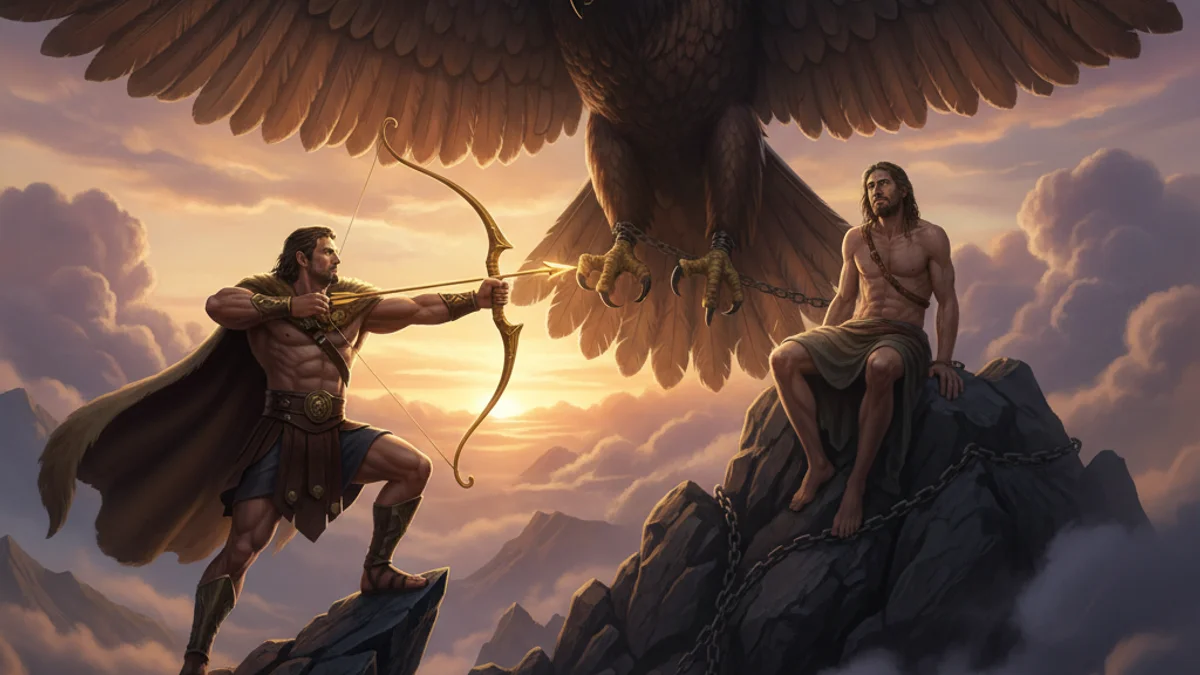
For centuries, the Titan Prometheus remained bound to a jagged peak in the Caucasus Mountains, his liver devoured daily by a giant eagle as punishment for gifting fire to humanity. Zeus had decreed this torment eternal, yet a prophecy whispered of a deliverer. During his eleventh labor, the hero Heracles ascended the desolate heights. Moved by the Titan's enduring spirit and the cruelty of his fate, Heracles drew his bow and pierced the heart of the eagle mid-flight. With a mighty blow, he shattered the unbreakable chains that held the Titan captive. Zeus, moved by his son’s bravery and seeking to finally end the ancient feud, allowed the Titan’s release. In gratitude, Prometheus provided Heracles with the vital wisdom needed to outwit Atlas and complete his labors, proving that even the harshest divine sentence can be undone by courage and compassion.
True heroism lies in the courage to challenge injustice and the compassion to relieve the suffering of others.
Questions about this story
What is the moral of Prometheus and Heracles?
The story emphasizes that even the most enduring suffering can be ended through heroic intervention and courage. It highlights the importance of empathy and the eventual reconciliation between rebels and authority.
Why was Prometheus punished by Zeus?
Prometheus was punished for stealing sacred fire from Mount Olympus and giving it to humanity. This act of defiance angered Zeus, who sentenced him to have his liver eaten daily by an eagle.
How did Heracles kill the eagle?
Heracles used his legendary archery skills to shoot the eagle with a deadly arrow, often said to be dipped in the venom of the Hydra. This ended the daily torture Prometheus had endured for generations.
Did Zeus forgive Prometheus after Heracles freed him?
While Zeus initially ordered the punishment, he eventually allowed the release to bring glory to his son, Heracles. The two were reconciled after Prometheus shared a prophecy that helped Zeus protect his throne.
Advertisement

Good night.
