
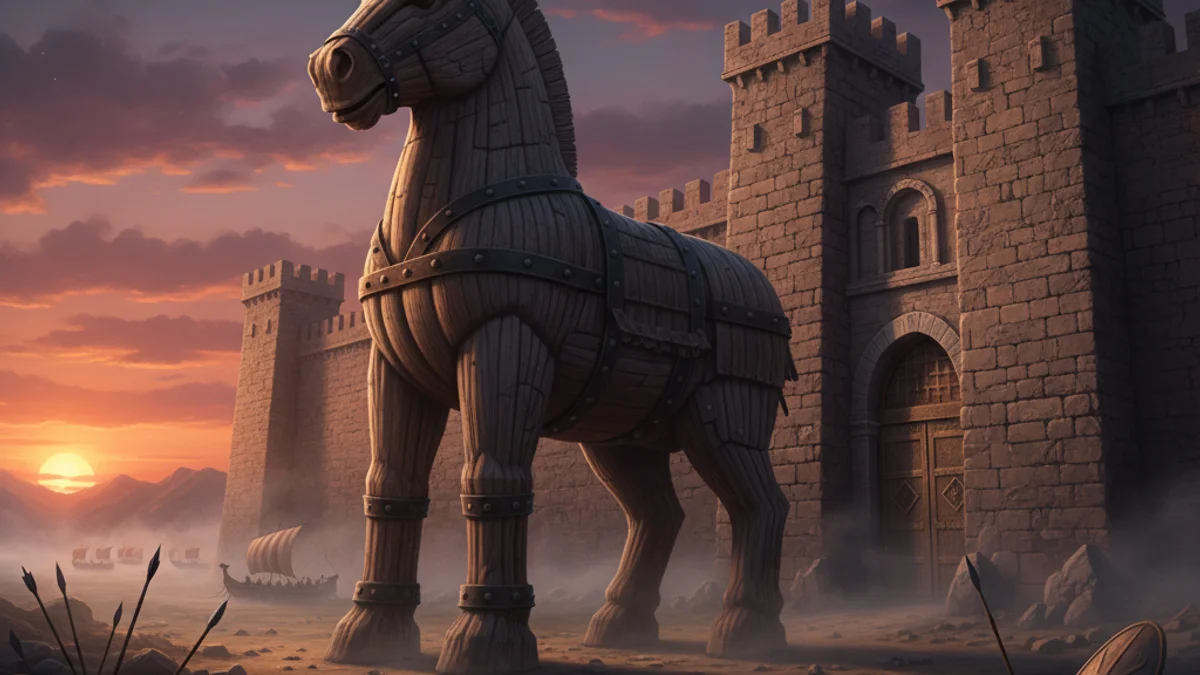
For ten long years, the Greeks laid siege to the mighty city of Troy to reclaim Helen. Despite the deaths of great heroes like Achilles and Hector, the city’s walls remained unbreached. Odysseus, the king of Ithaca, eventually devised a cunning plan to end the stalemate. The Greeks built a colossal wooden horse, hiding elite soldiers inside, while the rest of the army pretended to sail away in defeat. The Trojans, believing the horse was a sacred offering to Athena, ignored the warnings of the prophetess Cassandra and the priest Laocoön, pulling the structure inside their gates. Under the cover of darkness, the hidden Greeks emerged, opened the gates for their returned fleet, and burned Troy to the ground, ending the long war through a masterstroke of deception.
Deception can often achieve what brute force cannot, and one should always be wary of gifts offered by an enemy.
Advertisement
Questions about this story
What is the moral of The Fall of Troy?
The story teaches that intelligence and strategy are more powerful than strength alone. It also warns against the dangers of overconfidence and ignoring valid warnings from others.
Was the Trojan Horse a real historical event?
While archaeological evidence suggests that Troy was a real city that faced destruction, most historians believe the wooden horse is a mythological invention or a metaphor for a siege engine.
Who came up with the idea for the Trojan Horse?
The strategy was conceived by Odysseus, the famously clever King of Ithaca. His ingenuity finally broke the decade-long stalemate that the Greek army's physical might could not.
Who warned the Trojans not to take the horse?
The Trojans were warned by the priest Laocoön, who famously doubted the gift, and the prophetess Cassandra. However, due to a curse from Apollo, Cassandra's true prophecies were never believed.
Advertisement

