
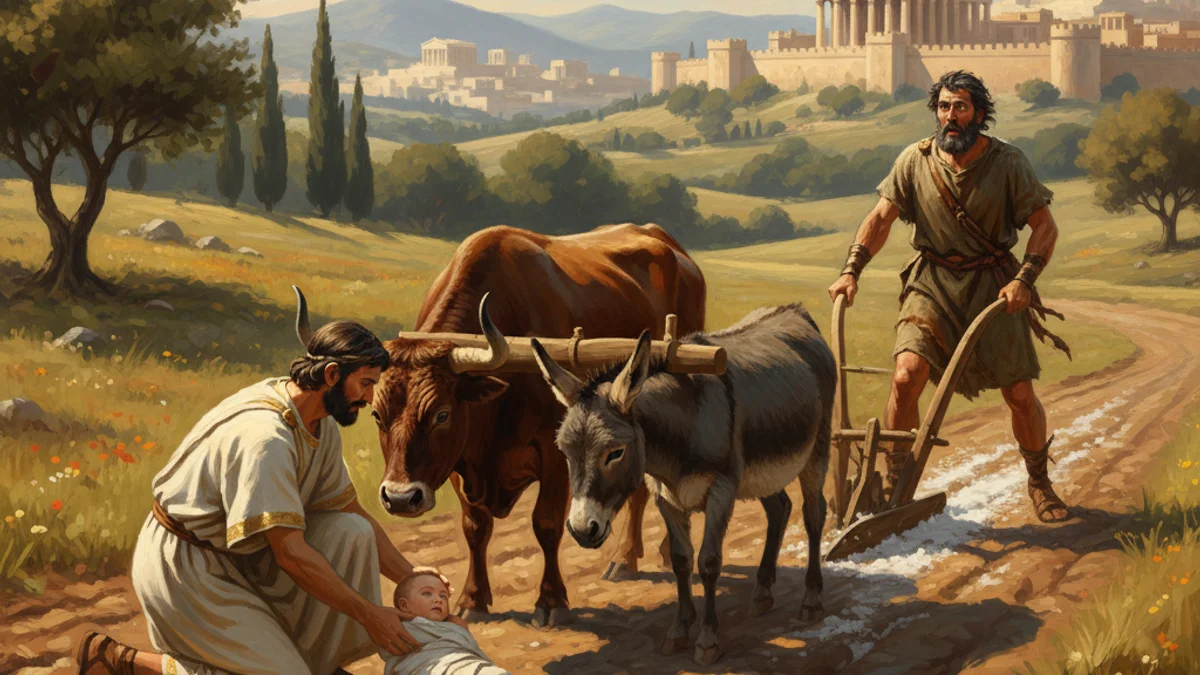
Palamedes was a Greek hero whose intellect rivaled the gods. He was credited with inventing the alphabet, dice, and the lighthouse. When the Trojan War began, Agamemnon sent Palamedes to Ithaca to recruit Odysseus, who was feigning madness to avoid leaving his family. Odysseus yoked an ox and a donkey together, plowing his fields with salt. Palamedes, sensing the ruse, snatched the infant Telemachus and placed him directly in the path of the sharp blade. Odysseus immediately swerved to save his son, proving his sanity. Forced to go to war, Odysseus harbored a bitter grudge. Years later at Troy, Odysseus planted a forged letter and a chest of gold in Palamedes’ tent, framing him for treason. Despite his innocence and brilliance, Palamedes was condemned and stoned to death by his own comrades, a victim of the very cleverness that had defined his life.
Brilliance and honesty are noble traits, but they can be dangerous when they wound the pride of powerful and vengeful people.
Questions about this story
What is the moral of Palamedes the Clever?
The story teaches that intelligence must be tempered with caution. Exposing the truth can sometimes lead to dangerous consequences when dealing with powerful, prideful enemies who do not wish to be unmasked.
How did Palamedes expose Odysseus's madness?
Palamedes placed Odysseus's infant son, Telemachus, in front of a plow while Odysseus was pretending to be insane. When Odysseus moved the plow to save the child, he revealed that he was actually sane and aware of his actions.
What inventions are attributed to Palamedes?
In Greek mythology, Palamedes is credited with inventing several letters of the alphabet, the game of dice, weights and measures, and the use of lighthouses for navigation at sea.
How did Odysseus get revenge on Palamedes?
Odysseus framed Palamedes for treason by hiding gold in his tent and forging a letter from King Priam of Troy. This planted evidence convinced the Greek leaders that Palamedes had been bribed to betray them.
Advertisement

Good night.
