
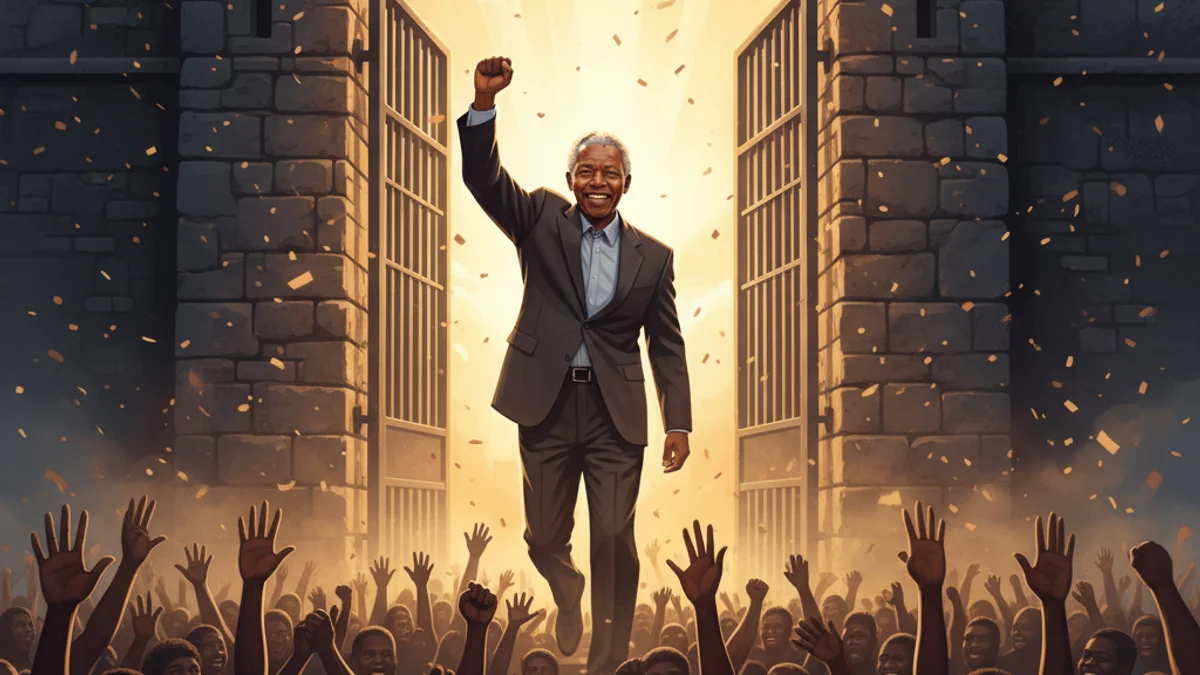
In the heart of South Africa, a young lawyer named Nelson Mandela saw his people bound by the chains of apartheid. He fought for equality, but his resistance led him to a small cell on Robben Island. For twenty-seven years, Mandela remained a prisoner, but his spirit was never confined. He spent his days breaking limestone and his nights studying, transforming his anger into a profound vision for reconciliation. When he finally walked out of the prison gates in 1990, the world held its breath. Instead of seeking revenge against his oppressors, Mandela extended a hand of peace. He led his nation through a peaceful transition to democracy, proving that the 'long walk' was not just about his personal liberty, but about the liberation of the human heart from hatred.
True freedom is not merely casting off one's chains, but living in a way that respects and enhances the freedom of others.
Questions about this story
What is the moral of Nelson Mandela's Long Walk?
The story teaches that forgiveness and reconciliation are more powerful than revenge. It emphasizes that true leadership requires the courage to unite enemies for the common good.
How many years did Nelson Mandela spend in prison?
Nelson Mandela spent a total of 27 years in prison, primarily on Robben Island, before his release in 1990. His resilience during this time became a symbol of the anti-apartheid movement.
What does the title 'Long Walk' signify?
It signifies the arduous and lengthy struggle against racial segregation and the ongoing journey toward true equality. It suggests that freedom is a process, not a destination.
Who was the South African president who released Mandela?
President F.W. de Klerk ordered the release of Nelson Mandela. The two men later shared the Nobel Peace Prize for their work in ending apartheid peacefully.
Advertisement
Good night.
