
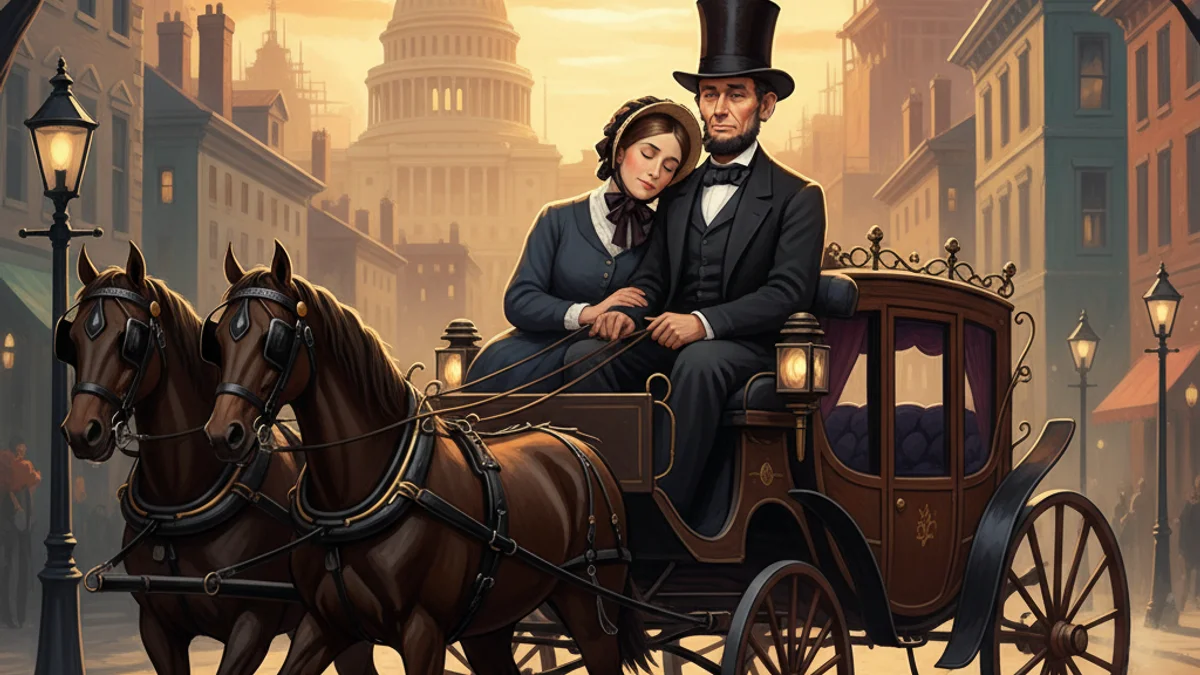
On April 14, 1865, the weight of the Civil War had finally begun to lift from Abraham Lincoln’s shoulders. The day began with a cheerful breakfast with his son Robert, recently returned from the front lines. Later, during a meeting with his Cabinet, colleagues noted the President seemed uncharacteristically lighthearted. In the afternoon, Abraham and Mary Todd Lincoln took a private carriage ride through Washington. Mary later recalled that he was singularly happy, telling her, 'I consider this day the war has come to a close.' He spoke of a future where they would travel to Europe and eventually return to Illinois to practice law. That evening, seeking a moment of levity, they attended a performance of 'Our American Cousin' at Ford's Theatre. As they sat in the presidential box, the man who had steered a nation through its darkest hour finally allowed himself a smile, unaware that his earthly journey would conclude before the dawn, leaving behind a legacy of union and freedom.
Even in the face of great tragedy, the pursuit of peace and the capacity for joy remain the highest human aspirations.
Questions about this story
What is the moral of Lincoln's Last Day?
The story emphasizes that even the most burdened leaders seek moments of peace and hope. It reminds us to cherish moments of happiness, as the future is never guaranteed.
What did Lincoln do on his final day?
He had breakfast with his son, held a Cabinet meeting, took a carriage ride with his wife, and attended a play at Ford's Theatre.
Was Lincoln happy on the day he died?
Yes, many historical accounts and Mary Todd Lincoln's own recollections suggest he was in an unusually joyful and optimistic mood following the end of the Civil War.
What play was Lincoln watching when he was assassinated?
Lincoln was watching the comedy 'Our American Cousin' at Ford's Theatre in Washington, D.C.
Advertisement
Good night.
