
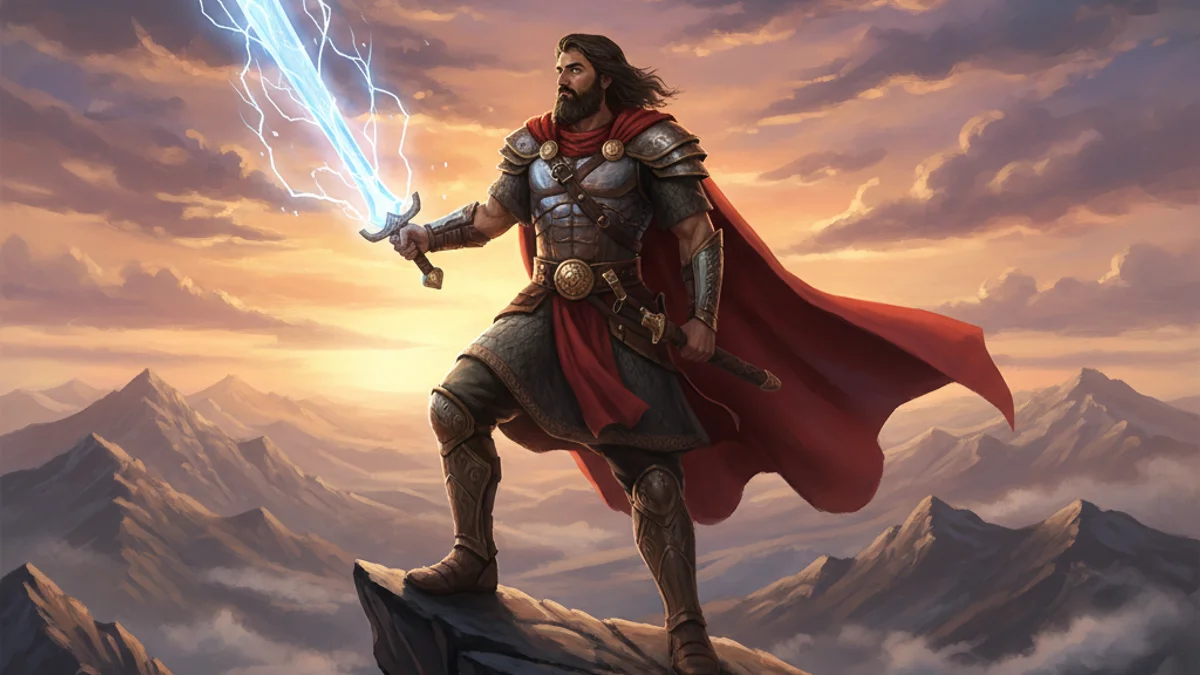
David, the son of Mher the Elder, grew up as an orphan in the city of Sassoun, possessing strength so immense he accidentally broke whatever he touched. Despite his simple nature as a shepherd, his divine power made him the only hope for his people against the cruelty of Melik of Egypt. When Melik demanded a heavy tribute of gold and livestock that Sassoun could not pay, he marched his massive army toward the Armenian highlands. David, armed with his father's magical horse, Jalali, and the legendary Lightning Sword, Tur Ketsaki, rode out alone to meet the invaders. In the final confrontation, Melik attempted to kill David through treachery, hiding in a deep pit covered by forty millstones. David allowed Melik three strikes, all of which the hero survived through divine protection. When David finally swung his Lightning Sword, the blow was so powerful it sliced through the millstones, the tyrant, and the earth itself. Victory was won, and David declared that Sassoun would remain free as long as its people had the courage to fight.
True strength lies in the courage to stand against tyranny and the humility to remain a servant of the people.
Advertisement
Questions about this story
What is the moral of David of Sassoun?
The story emphasizes that justice and courage can overcome even the most overwhelming odds. It teaches that a true leader fights for freedom and protects the vulnerable from oppression.
Who is David of Sassoun?
He is the central hero of Armenia's national epic, 'The Daredevils of Sassoun.' He represents the spirit of national resistance and the physical embodiment of the Armenian people's strength.
What is David's magical weapon?
David wields the 'Tur Ketsaki,' or the Lightning Sword, a divine weapon inherited from his father. It is capable of cutting through any material and glows with celestial light.
Is David of Sassoun based on a real person?
While the story is mythological, it is believed to be rooted in the 8th-century Armenian resistance against Arab Caliphate rule. It reflects historical struggles for independence.
Advertisement
