
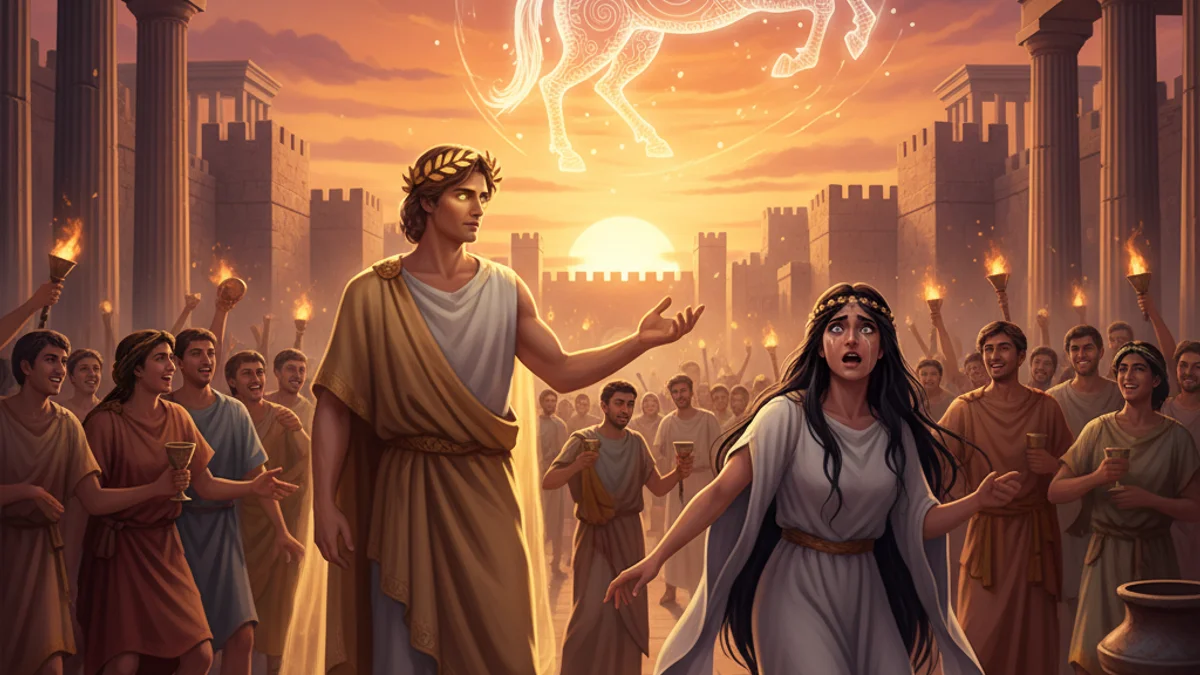
Apollo, the god of light and prophecy, was captivated by the beauty of Cassandra, the princess of Troy. To win her heart, he promised her the divine gift of seeing the future. Cassandra accepted the gift, but once the power was hers, she rejected the god’s romantic advances. Infuriated, Apollo could not revoke a gift once given, so he twisted it into a curse. He breathed into her mouth, decreeing that while she would always speak the truth, no one would ever believe her. Cassandra spent the rest of her life in agony, foreseeing the bloody fall of Troy and the trickery of the Trojan Horse. She screamed warnings to her people, but they dismissed her as a madwoman. Her truth-telling became her prison, and she watched helplessly as every one of her horrifying visions came to pass, leading to the destruction of her city and family.
Words are only as powerful as the trust behind them, and broken promises often carry a price far greater than the initial reward.
Questions about this story
What is the moral of Apollo and Cassandra?
The story warns that breaking promises to the divine carries dire consequences. It also illustrates the psychological torture of possessing truth that others refuse to acknowledge.
Why did Apollo curse Cassandra?
Apollo granted her the gift of prophecy in exchange for her love, but she rejected him after receiving the power. He cursed her so her truthful words would never be trusted.
What did Cassandra predict?
She most famously predicted the destruction of Troy and warned against the Trojan Horse. She also foretold the death of Agamemnon and her own tragic end.
How did Cassandra's curse affect the Trojan War?
Her curse ensured that the Trojans ignored every strategic warning she gave. Consequently, they brought the Greek's wooden horse inside their walls, leading to their total defeat.
Advertisement

Good night.
