Story Summary
Explore the legendary life of William Wallace, the Scottish hero who defied King Edward I. Discover his battle for freedom and enduring legacy in Scotland.
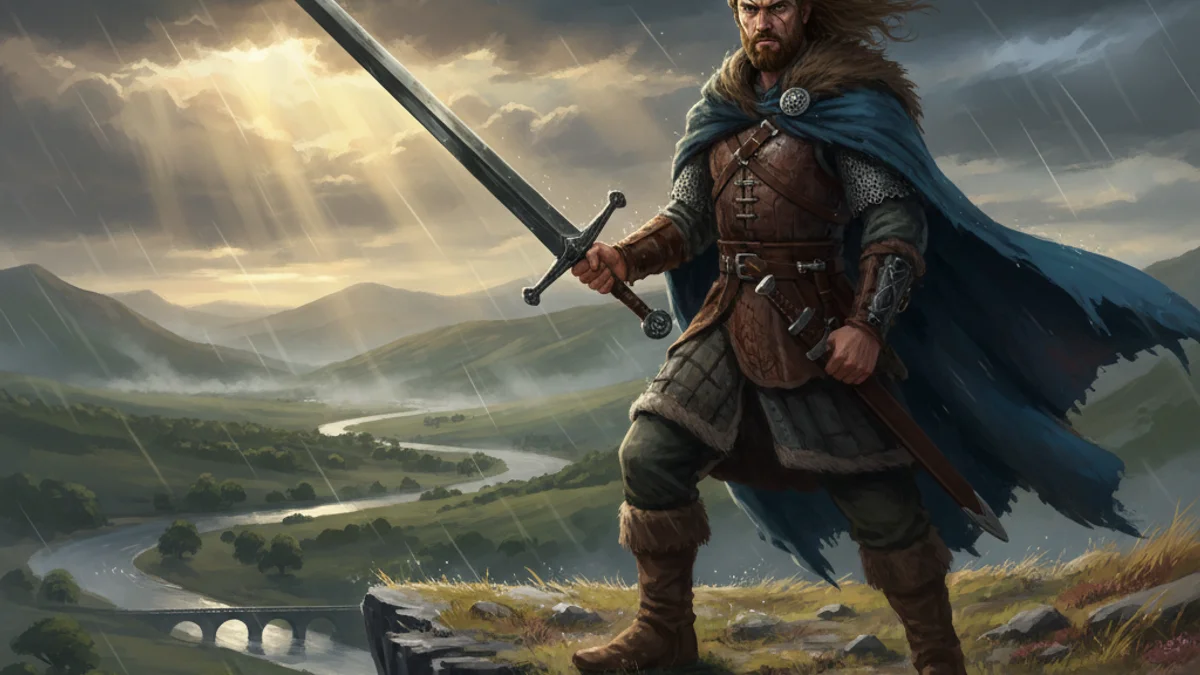
In the late 13th century, Scotland groaned under the iron fist of King Edward I of England, known as Longshanks. Among the common folk rose a man of extraordinary stature and even greater conviction: William Wallace. His rebellion began not with a crown, but with a spark of personal tragedy and a refusal to bow to foreign tyranny. Wallace gathered a ragtag army of peasants and low-born knights, defying the mighty English war machine. His greatest triumph came at the Battle of Stirling Bridge in 1297, where his tactical genius led the Scots to a stunning victory against a superior force. Though he was later defeated at the Battle of Falkirk and eventually betrayed by his own countrymen, Wallace refused to acknowledge Edward as his liege. Even in his final moments of brutal execution in London, his spirit remained unbroken. He died a martyr, but his sacrifice ignited the fire of Scottish independence that Robert the Bruce would eventually carry to completion.
The Moral
True leadership is born from the courage to stand for liberty when others bow, proving that a person's spirit can never be truly conquered.
“I could not be a traitor to Edward, for I was never his subject.”
Fun Fact
The 'Wallace Sword,' a massive 5-foot-4-inch claymore attributed to the hero, is still on public display today at the National Wallace Monument in Stirling.
Frequently Asked Questions
What is the moral of William Wallace?
The story teaches that freedom is worth the ultimate sacrifice and that one individual's conviction can inspire an entire nation to change its destiny. It highlights that integrity and loyalty to one's country are more valuable than life itself.
Was William Wallace a real person?
Yes, William Wallace was a historical Scottish knight who became a central leader during the Wars of Scottish Independence. While many legends have grown around him, his military campaigns and execution are well-documented historical facts.
What was William Wallace's greatest victory?
His most significant military achievement was the Battle of Stirling Bridge in 1297. Despite being heavily outnumbered, Wallace and Andrew Moray used the terrain to trap and defeat the English heavy cavalry.
How did William Wallace die?
Wallace was captured near Glasgow in 1305 after being betrayed by the Scottish noble John de Menteith. He was taken to London, tried for treason, and executed through the brutal method of being hanged, drawn, and quartered.
Is the movie Braveheart historically accurate?
While Braveheart popularized his story, it contains many historical inaccuracies regarding his clothing, the nature of his rebellion, and his relationships. The film captures the spirit of his defiance but takes significant creative liberties with the facts.
Why is William Wallace still remembered today?
He remains a symbol of Scottish national identity and resistance against oppression. His refusal to submit to English rule even under the threat of death made him a folk hero whose legacy spans over seven centuries.
Discussion (0)
Share your thoughts on this story
No comments yet. Be the first to share your thoughts!