Story Summary
Discover the timeless wisdom of The Fables of Bidpai. These ancient Arabic tales use animal allegories to teach profound lessons on leadership and virtue.
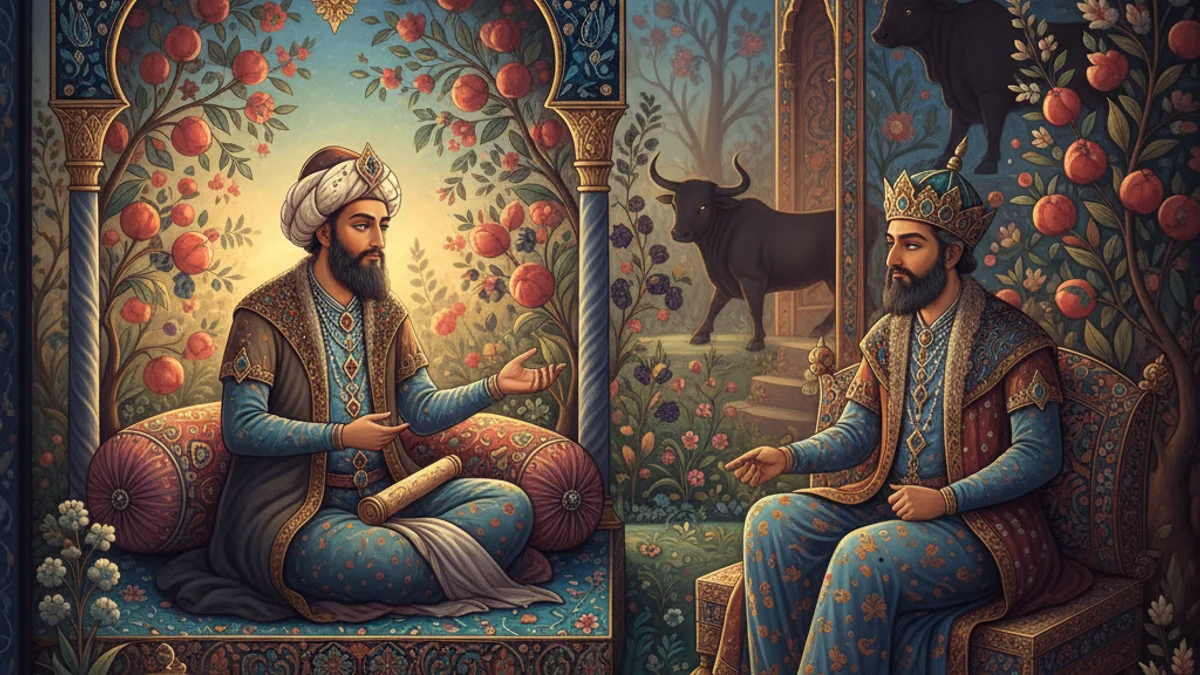
King Dabschelim, a ruler of ancient India, sought a way to preserve the wisdom of governance for future generations. He summoned the philosopher Bidpai and commanded him to write a book that would serve as a guide for kings. Bidpai retreated for a year and returned with a collection of fables featuring animals who spoke and acted with human complexity. Centered around the jackals Kalila and Dimna, the stories illustrated the dangers of flattery, the value of true friendship, and the consequences of greed. Through tales of a lion king misled by a conniving servant and a bull who paid the price for misplaced trust, Bidpai demonstrated that a kingdom's strength lies in the discernment and virtue of its leader. The King was so moved by the depth of these parables that he ordered the manuscript to be kept in the royal treasury as its most precious jewel.
The Moral
True wisdom lies in the ability to discern truth from deception and to govern one's actions with justice and caution.
“A wise man is he who sees the end of a matter at its beginning.”
Fun Fact
This collection, also known as Kalila and Dimna, was once one of the most widely translated books in the world, second only to the Bible in its reach during the Middle Ages.
Frequently Asked Questions
What is the moral of The Fables of Bidpai?
The moral focuses on political and social wisdom, emphasizing the need to be wary of flattery and the importance of loyalty. It teaches that a ruler or individual must look beneath the surface to find the truth.
What is the origin of these fables?
The stories originated in India as the Sanskrit Panchatantra. They were later translated into Middle Persian and then into Arabic by Ibn al-Muqaffa in the 8th century, becoming known as Kalila and Dimna.
Who are Kalila and Dimna?
Kalila and Dimna are two jackals who serve as the primary narrators in the most famous section of the fables. One is content and cautious, while the other is ambitious and manipulative, representing different human traits.
Why are animals used as characters?
Using animals allowed the philosopher Bidpai to provide moral and political advice to the King without being seen as critical or offensive. The allegorical nature made the lessons universal and easier to remember.
How did these stories reach the West?
The Arabic version was translated into Hebrew and Latin during the Middle Ages. These translations spread throughout Europe, influencing famous fabulists like Jean de La Fontaine and the Brothers Grimm.
What is the 'Mirror for Princes' genre?
The Fables of Bidpai is a classic example of this genre, which consists of literature written to advise rulers on how to govern effectively. It uses storytelling to impart complex ethical and strategic lessons.
Discussion (0)
Share your thoughts on this story
No comments yet. Be the first to share your thoughts!