Story Summary
Experience The Fimbulwinter, the three-year ice age signaling the end of the world in Norse mythology. Discover the cosmic herald of the impending Ragnarok.
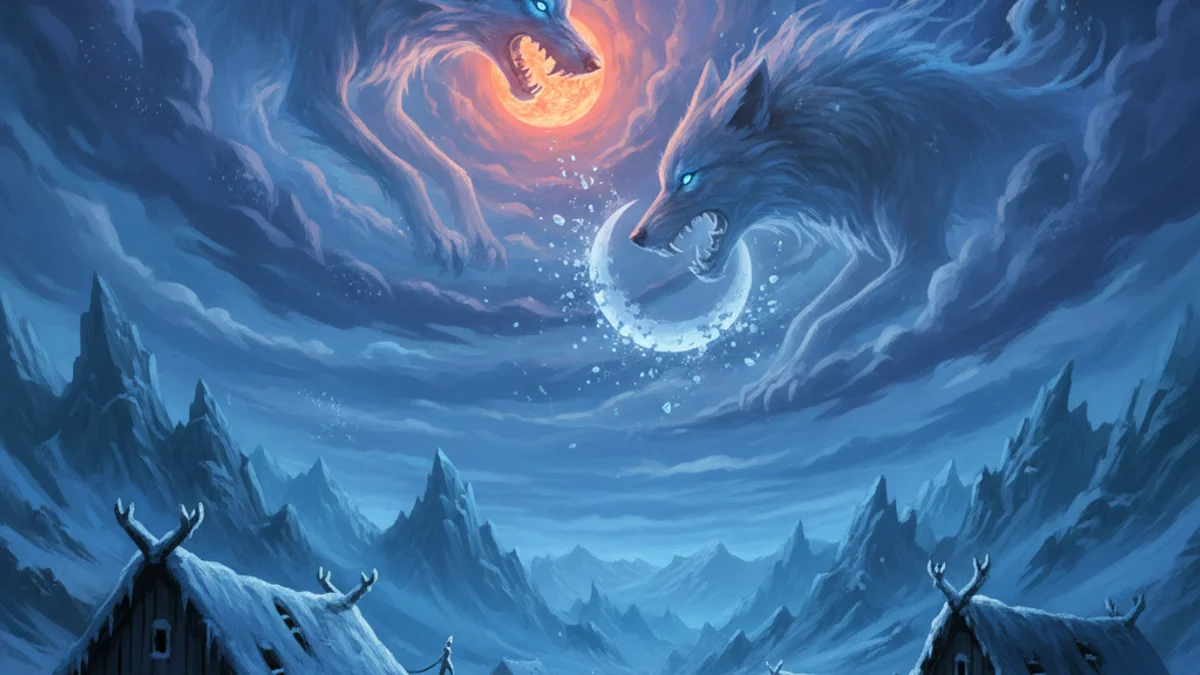
Before the gods and giants met for their final clash at Ragnarok, the world of Midgard fell into a long, suffocating silence known as the Fimbulwinter. It began not with a storm, but with a summer that never arrived. For three consecutive years, the sun provided no warmth, and the seasons lost their rhythm. Snow blew from all directions, and frost gripped the earth so tightly that the rivers turned to stone. In this perpetual twilight, the bonds of kinship snapped. Driven by hunger and desperation, brothers turned their swords against brothers, and fathers abandoned their children. The wolves Sköll and Hati finally caught their prey, devouring the sun and the moon, plunging the nine realms into absolute darkness. The Fimbulwinter was the Great Winter, the ultimate test of survival and the grim herald of the end, signaling that the age of the gods was drawing to its inevitable, icy close.
The Moral
Even the most stable civilizations are fragile when the fundamental laws of nature and morality break down.
“Brothers shall fight and fell each other, and sisters' sons shall kinship stain.”
Fun Fact
The Fimbulwinter is often cited by climate historians as a possible mythic interpretation of the 'Late Antique Little Ice Age' that devastated Scandinavia.
Frequently Asked Questions
What does Fimbulwinter mean in Norse mythology?
The term comes from Old Norse, meaning 'Great Winter.' It refers to the three-year-long period of continuous snow and ice that precedes the events of Ragnarok.
How long does the Fimbulwinter last?
It lasts for three consecutive winters with no summers in between. During this time, the world is consumed by war, greed, and a total breakdown of social order.
What causes the Fimbulwinter?
It is a cosmic event triggered by the approaching end of the world cycle. It is further marked by the wolves Sköll and Hati finally consuming the sun and the moon.
Who survives the Fimbulwinter?
While most of humanity perishes, two humans named Lif and Lifthrasir survive by hiding in the woods of Hoddmímir, eventually repopulating the new world after Ragnarok.
Is the Fimbulwinter based on a real event?
Some scholars suggest it may be a cultural memory of the volcanic winter of 536 AD, which caused a massive drop in temperatures across Europe and Asia.
What happens after the Fimbulwinter ends?
The end of the Fimbulwinter leads directly into the battle of Ragnarok, where the gods, giants, and monsters engage in a final conflict that destroys the current world.
Discussion (0)
Share your thoughts on this story
No comments yet. Be the first to share your thoughts!