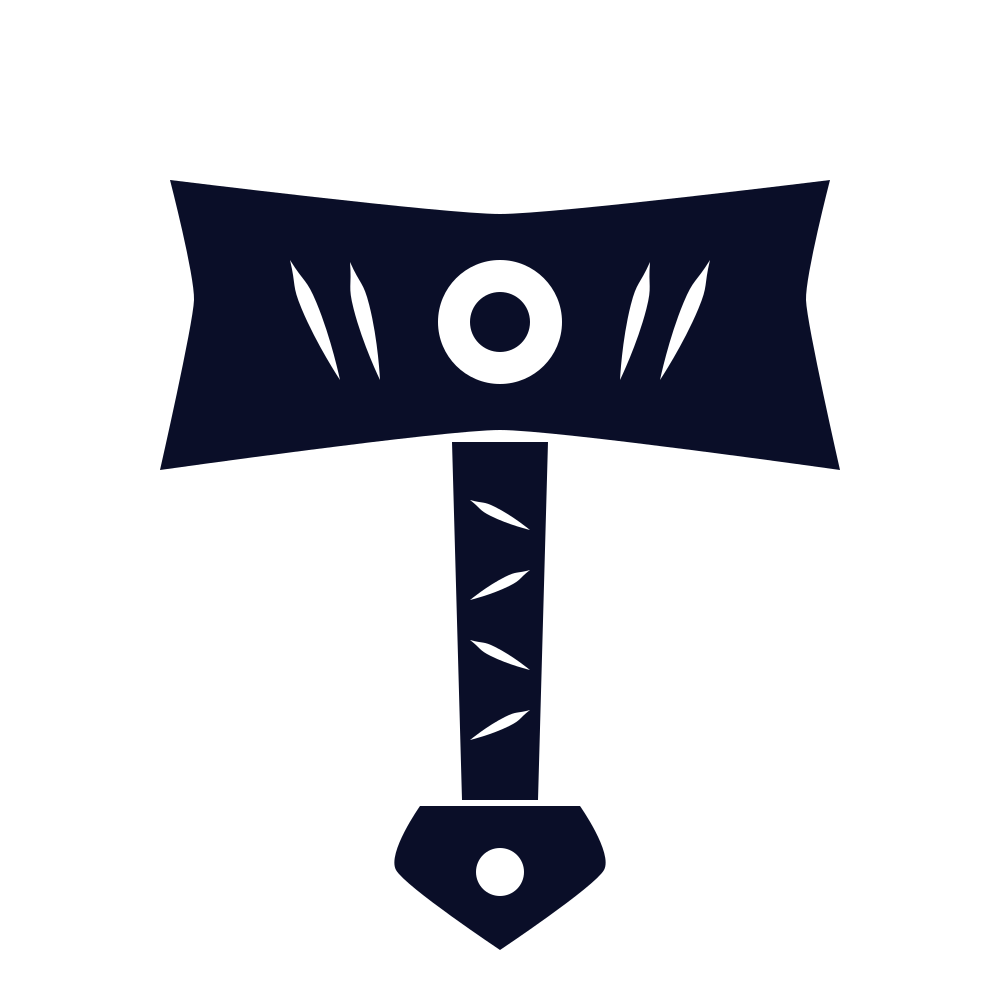
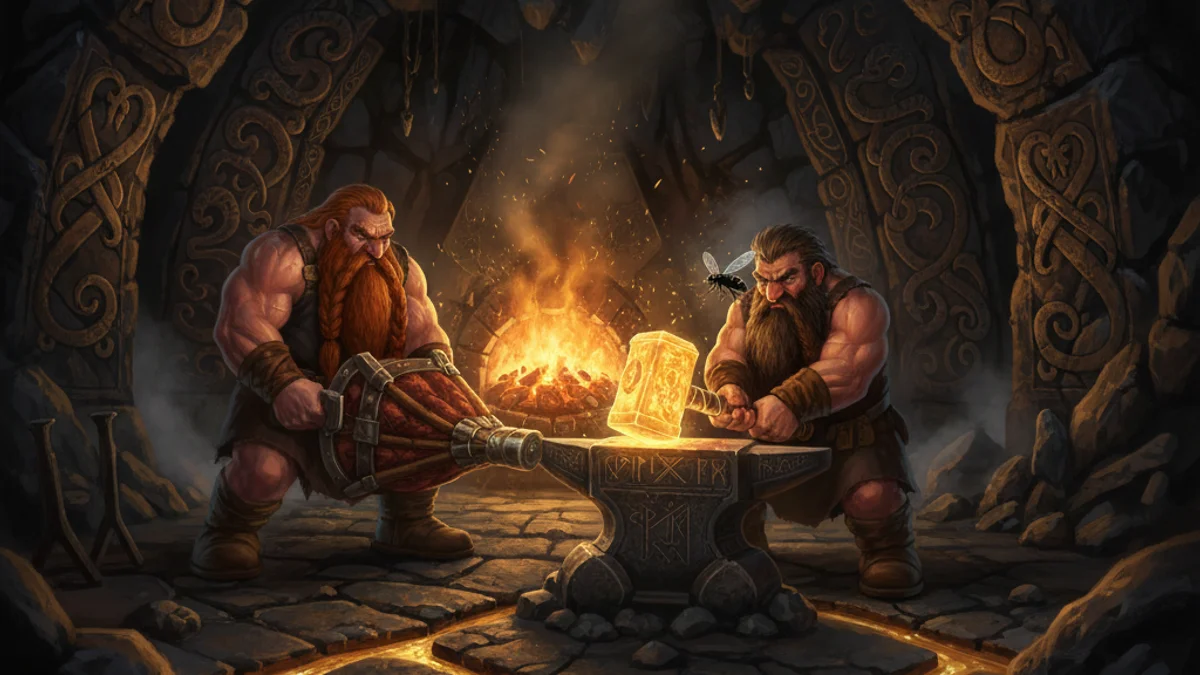
In a moment of chaotic mischief, Loki sheared off the beautiful golden hair of Sif, Thor’s wife. To avoid Thor’s wrath, Loki journeyed to Svartalfheim, convincing the Sons of Ivaldi to craft replacement hair of real gold, along with the spear Gungnir and the ship Skíðblaðnir. Ever the gambler, Loki then bet his head with the dwarves Brokkr and Eitri that they couldn't produce finer works. Despite Loki transforming into a gadfly to bite and distract them, the brothers forged the golden ring Draupnir, the boar Gullinbursti, and the mighty hammer Mjölnir. Though Mjölnir’s handle was short due to Loki’s interference, the gods judged the brothers' gifts superior. Loki saved his head through a clever verbal loophole—claiming the bet didn't include his neck—resulting in the dwarves sewing his lips shut as a punishment for his silver-tongued deceit.
Cleverness and wit can solve problems caused by recklessness, but deceit eventually leads to painful consequences and a loss of voice.
Questions about this story
What is the moral of Loki and the Dwarves' Treasures?
The story teaches that while quick thinking can fix immediate mistakes, habitual lying and arrogance eventually catch up to you. Loki’s attempt to cheat the dwarves resulted in a humiliating and painful physical silence.
Why did Loki cut off Sif's hair?
Loki cut Sif's hair primarily out of a desire for chaos and mischief, which was a common trait for the trickster god. He did not have a specific motive other than to provoke a reaction from Thor and the other Aesir.
What are the six treasures made by the dwarves?
The treasures include Sif’s golden hair, the spear Gungnir, the ship Skíðblaðnir, the multiplying ring Draupnir, the golden boar Gullinbursti, and the hammer Mjölnir. These items became the primary symbols of power for the major Norse gods.
Why is Mjölnir’s handle so short?
The handle is short because Loki transformed into a gadfly and bit the dwarf Brokkr on the eyelid while he was working the bellows. The pain caused Brokkr to stop pumping for a moment, causing the forge temperature to drop and the handle to come out stunted.
Advertisement
Good night.
