Story Summary
Discover the classic Sufi parable Nasrudin and the Lost Keys. Mulla Nasrudin searches for his keys under a lamp, teaching us a profound lesson on inner awareness.
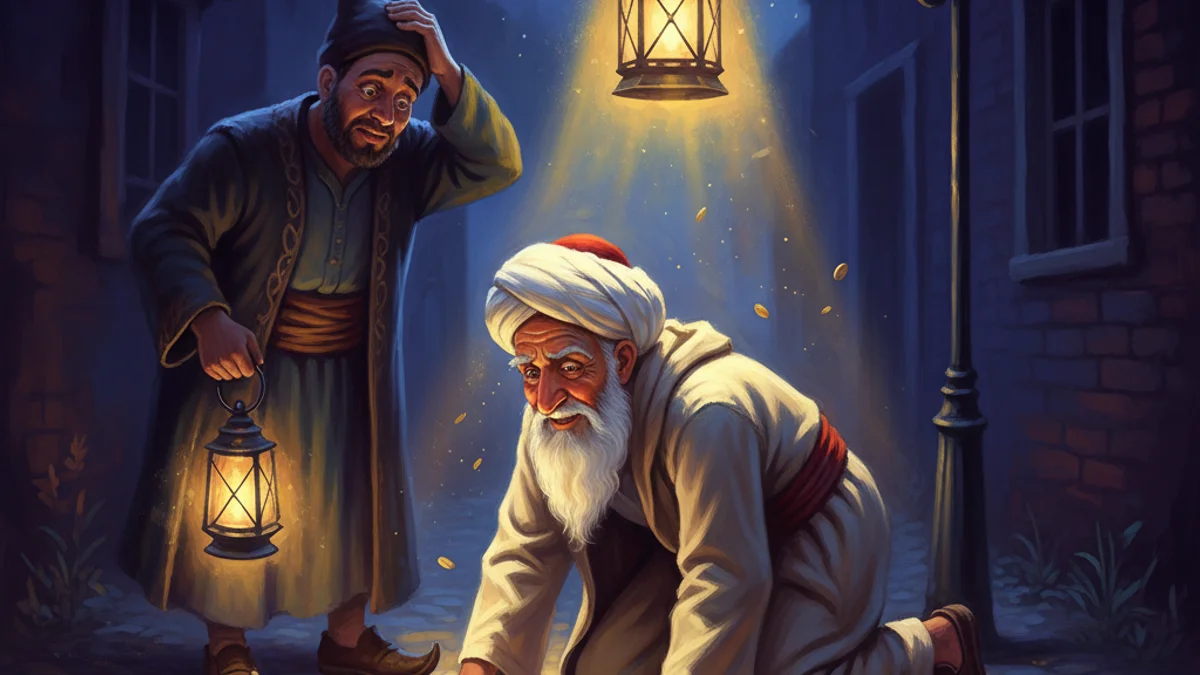
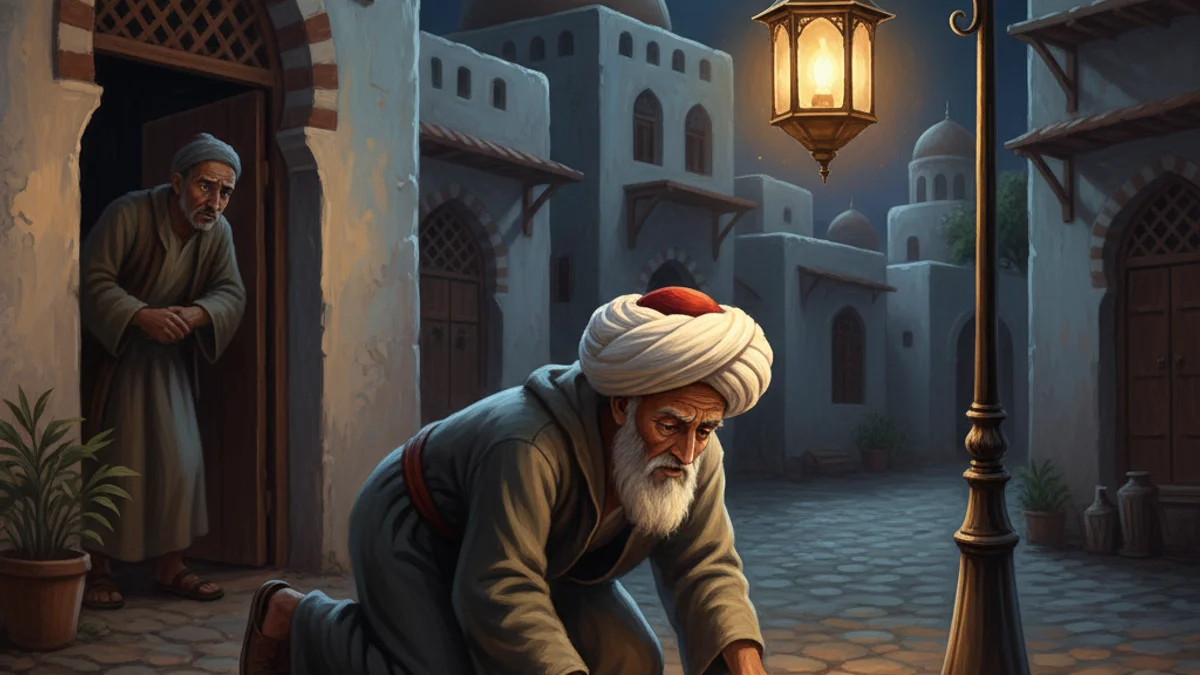
One evening, a neighbor found Mulla Nasrudin on his hands and knees, searching frantically for something on the ground beneath a street lamp. 'What have you lost, Mulla?' the neighbor asked. 'I have lost my keys,' Nasrudin replied. The neighbor joined him, and together they searched the cobblestones for a long time. Eventually, the neighbor asked, 'Where exactly did you drop them?' Nasrudin pointed toward his dark house. 'Over there, inside my home.' The neighbor stopped in disbelief. 'Then why are you looking for them out here under the street lamp?' Nasrudin looked up and replied matter-of-factly, 'Because there is much more light out here.'
The Moral
We often seek solutions in external, comfortable places even though the answers we need can only be found by looking within our own darkness.
“I am looking here because there is more light, even though I lost the keys in the dark.”
Fun Fact
Mulla Nasrudin is a legendary character celebrated in many countries, and UNESCO even declared 1996–1997 the International Nasreddin Hodja Year.
Frequently Asked Questions
What is the moral of Nasrudin and the Lost Keys?
The moral is that humans often look for happiness or solutions in easy, external places where it is 'bright,' rather than doing the difficult internal work where the problem actually exists.
Why did Nasrudin look for his keys under the street lamp?
He claimed he was looking there because the light was better, which serves as a satirical commentary on how people avoid looking into their own 'dark' or difficult personal spaces.
Who is Mulla Nasrudin in Sufi culture?
Nasrudin is a populist philosopher and 'wise fool' figure whose stories are used in Sufism to break down the ego and teach spiritual truths through humor and irony.
What do the keys symbolize in this story?
The keys typically symbolize the 'key' to happiness, truth, or enlightenment, which are often lost within the self but sought in the material world.
Is Nasrudin and the Lost Keys a true story?
It is a traditional teaching parable or folklore rather than a historical event, designed to provoke thought and self-reflection in the listener.
What is the spiritual meaning of 'the light' in this tale?
In this context, the light represents the superficial world or the ego's comfort zone, where things are obvious but ultimately disconnected from the source of the problem.
Discussion (0)
Share your thoughts on this story
No comments yet. Be the first to share your thoughts!