Story Summary
Discover The Chinese and Greek Artists, a Rumi parable where a painting contest reveals why a polished heart reflects more beauty than the most colorful canvas.
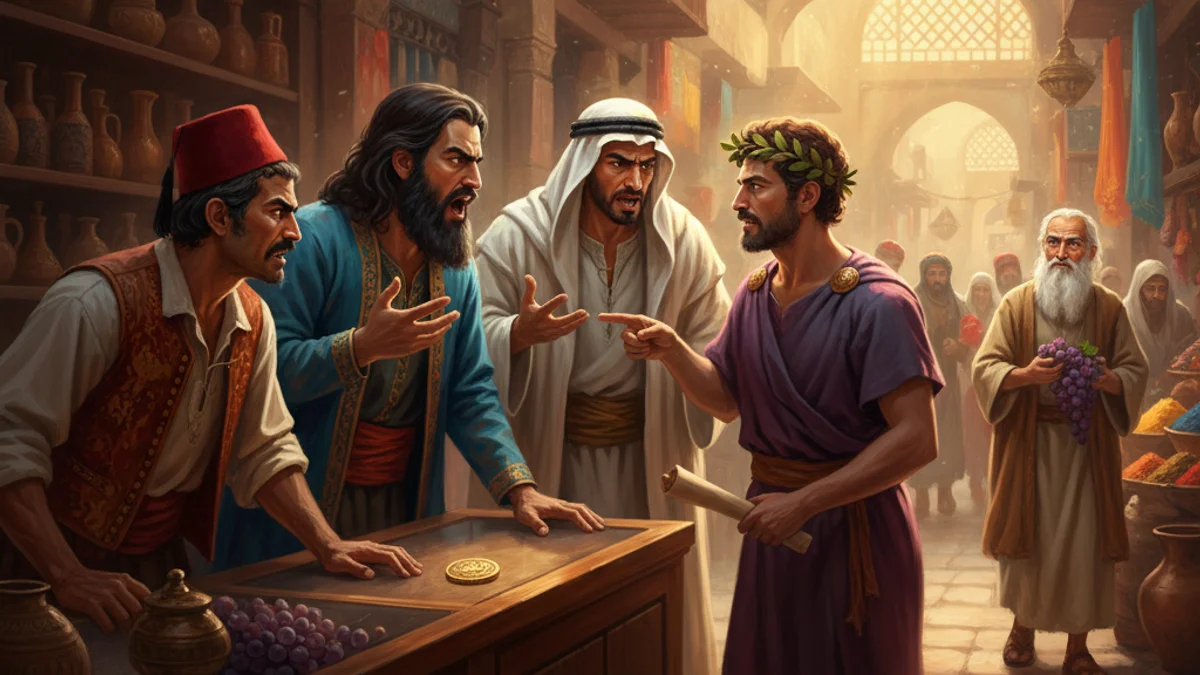
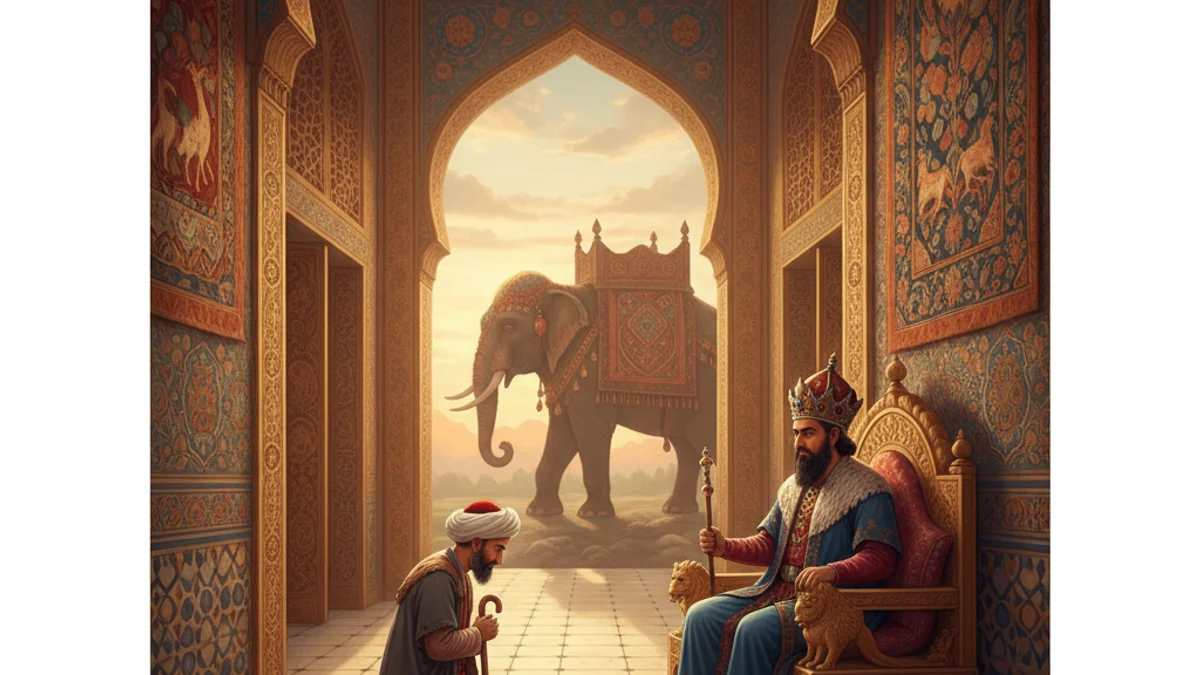
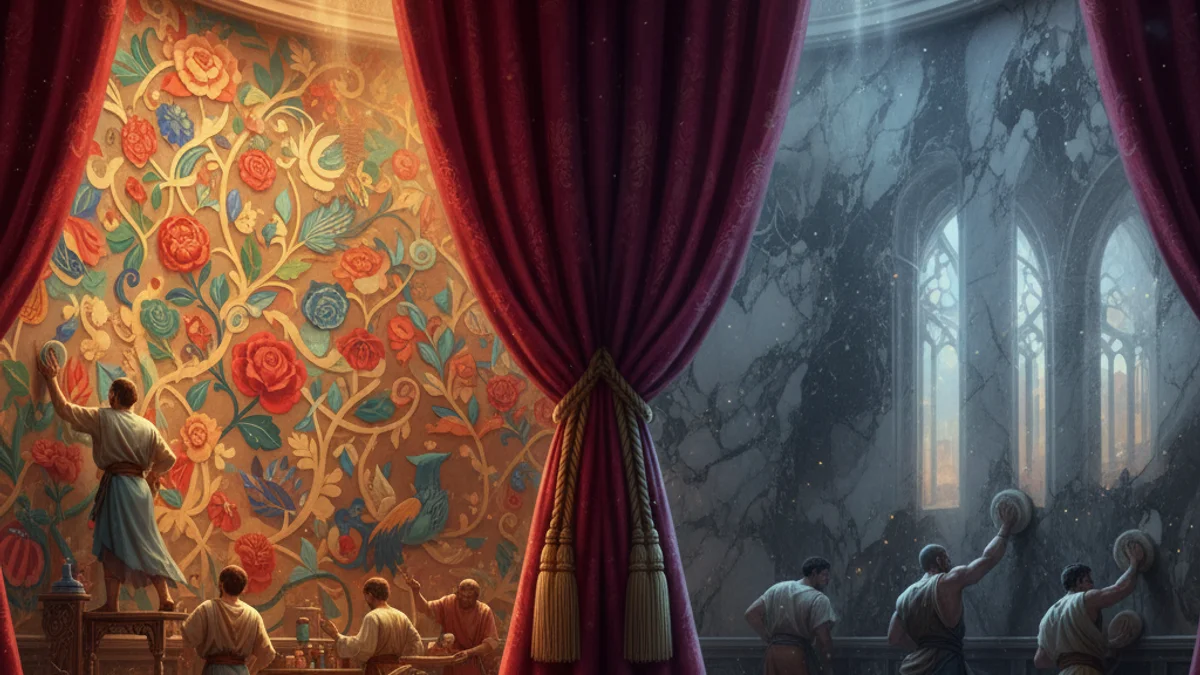
A Sultan once challenged the world's finest artists to a competition. He gathered Chinese painters, known for their vibrant techniques, and Greek artists, known for their wisdom. He gave them two facing walls in a grand hall, separated by a thick curtain. The Chinese artists requested a thousand different colors and intricate tools, spending weeks painting breathtaking, complex murals. In contrast, the Greeks requested nothing but polishing materials. They spent their time scrubbing and smoothing their wall with tireless devotion. When the deadline arrived, the Sultan pulled back the curtain. The Chinese mural was a masterpiece of color and form. However, the Greek wall had been polished into a perfect mirror. It reflected the Chinese art with such clarity and depth that the reflection appeared even more beautiful and luminous than the original. The Sultan stood in awe, realizing that the Greeks had won by purifying their surface to reflect the world's beauty without distortion.
The Moral
True spiritual wisdom is achieved not by accumulating external knowledge, but by purifying the heart until it can reflect the Divine truth.
“The Greeks are those who have polished their breasts and made them pure from greed, avarice, and hatred.”
Fun Fact
Rumi often used the metaphor of a mirror to describe the human soul, suggesting that 'rust' on the mirror represents our earthly sins and distractions.
Frequently Asked Questions
What is the moral of The Chinese and Greek Artists?
The story teaches that internal purification is superior to external ornamentation. A heart cleared of ego and desire reflects Divine beauty more perfectly than a mind cluttered with worldly information.
Who wrote the story of the Chinese and Greek painters?
This parable is famously recorded by the 13th-century Persian Sufi mystic Jalal ad-Din Rumi in his masterpiece, the Masnavi.
What do the Chinese artists symbolize in this parable?
The Chinese artists represent scholars and intellectuals who focus on the 'colors' of the world—learning, books, and external forms of knowledge that are beautiful but limited.
What do the Greek artists symbolize?
The Greeks represent the spiritual seekers or Sufis who focus on 'polishing the mirror of the heart' through meditation and discipline to reflect the light of Truth.
Why did the Greek wall look better than the Chinese wall?
Because the Greek wall was a perfect mirror, it captured the essence of the Chinese art while adding its own depth and clarity, showing that a pure heart enhances everything it perceives.
What is the significance of the curtain in the story?
The curtain represents the veil between different paths of understanding. Removing it symbolizes the moment of revelation where different approaches to truth are finally compared and understood.
Discussion (0)
Share your thoughts on this story
No comments yet. Be the first to share your thoughts!