Story Summary
Explore Ravana's Penance, the epic tale of the demon king's extreme sacrifice to Lord Brahma to gain invulnerability and the fatal flaw born of his arrogance.
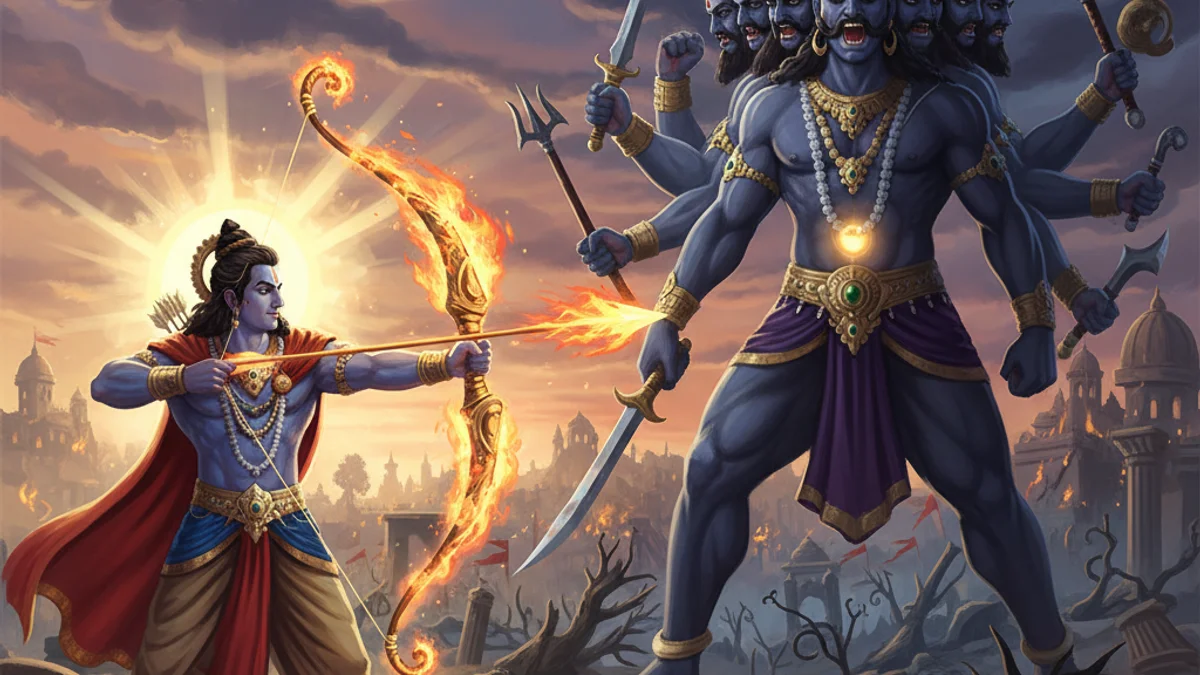
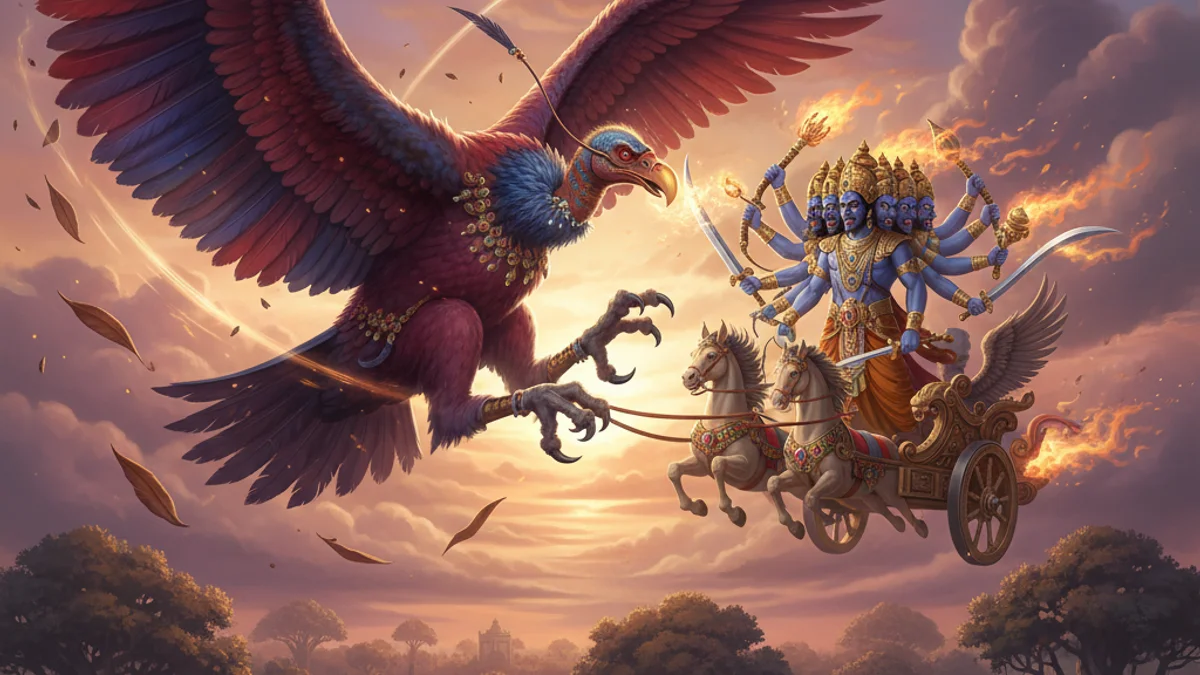
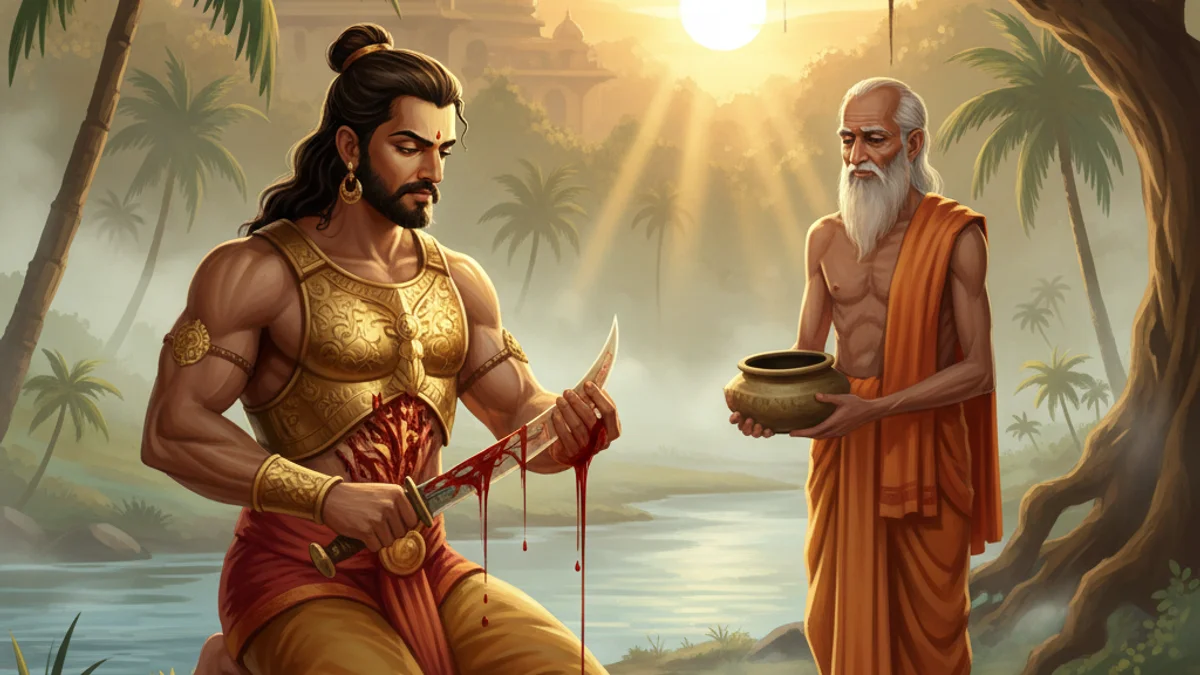
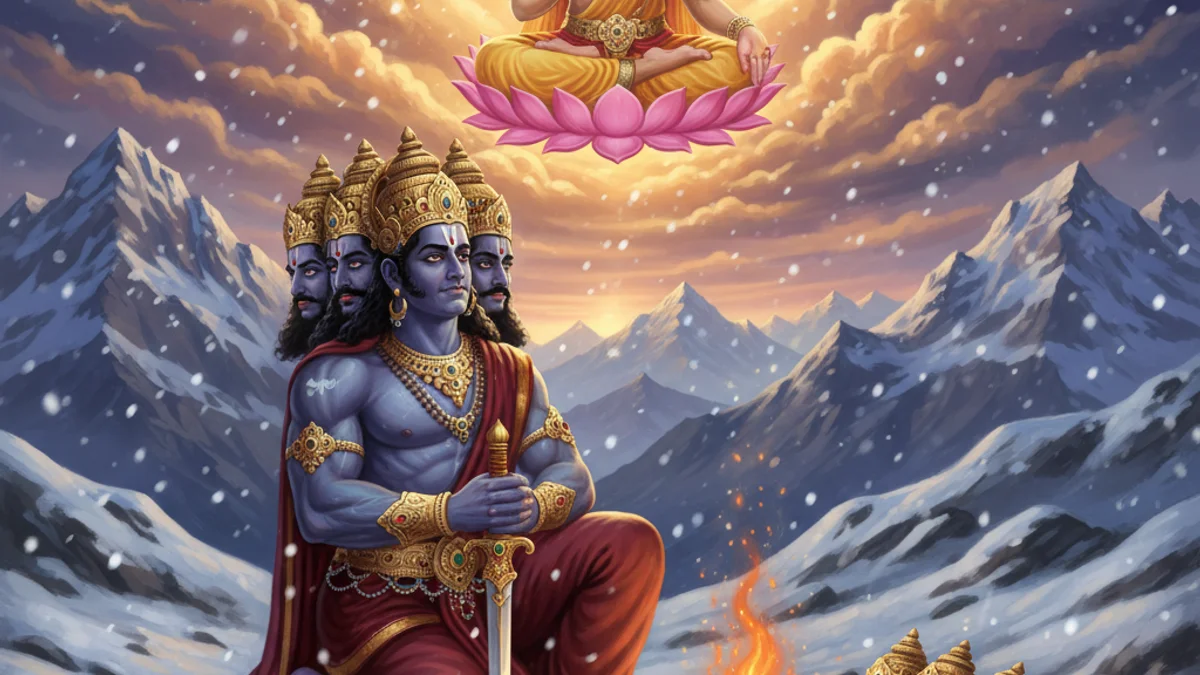
Seeking to become the undisputed master of the three worlds, the demon king Ravana retreated to the Himalayas to perform an arduous penance dedicated to Lord Brahma, the Creator. For thousands of years, Ravana practiced extreme austerities, standing amidst scorching fires and freezing winds. To demonstrate the depth of his devotion, he began to sacrifice his heads into the sacrificial fire, one by one. Each time a head was severed, it would regrow, and Ravana would offer it again. When he was about to cut off his tenth and final head, Lord Brahma appeared, deeply moved by such unparalleled determination. Brahma restored all ten of Ravana's heads and offered him a boon. Ravana asked for invulnerability against gods, demons, and celestial beings. In his supreme arrogance, however, he neglected to ask for protection against mere humans and animals, believing them to be beneath his concern. This oversight would eventually allow Lord Vishnu to take human form as Rama to defeat him.
The Moral
Arrogance and ego can turn even the greatest strength into a fatal weakness. True wisdom lies in respecting all beings, regardless of how insignificant they may seem.
“Power gained through sacrifice is easily lost through the blindness of pride.”
Fun Fact
Ravana is credited with composing the 'Shiva Tandava Stotram,' a powerful hymn of praise dedicated to Lord Shiva that is still widely recited today.
Frequently Asked Questions
What is the moral of Ravana's Penance?
The story teaches that arrogance often leads to one's downfall. Even the greatest power is meaningless if one dismisses the importance of humility and the potential strength of the seemingly weak.
Why did Ravana cut off his heads?
Ravana sacrificed his heads as a supreme sign of devotion and discipline during his penance. Each head represented his mastery over the Vedas and Shastras, signifying he was offering his entire intellect to the divine.
What boon did Ravana receive from Brahma?
He was granted invulnerability against all celestial beings, including gods and demons. However, he left himself vulnerable to humans and animals because he considered them too weak to be a threat.
Why is Ravana depicted with ten heads?
His ten heads symbolize his vast knowledge of the four Vedas and six Shastras. They are also said to represent the ten human emotions, such as anger, pride, and greed, over which he had command.
How did Ravana's boon lead to his death?
Because Ravana's boon did not protect him from humans, Lord Vishnu was able to manifest as the human avatar Rama. This specific loophole was the only way the gods could legally end his tyrannical rule.
Was Ravana only a demon, or did he have other qualities?
Despite being a demon king, Ravana was a highly learned scholar, a master musician of the veena, and a profound devotee of Lord Shiva. His character represents the duality of great intellect paired with a massive ego.
Discussion (0)
Share your thoughts on this story
No comments yet. Be the first to share your thoughts!