Story Summary
Discover the myth of Ganesha and the Moon. After Chandra mocks Ganesha's appearance, a divine curse is cast, explaining the lunar phases and the value of humility.
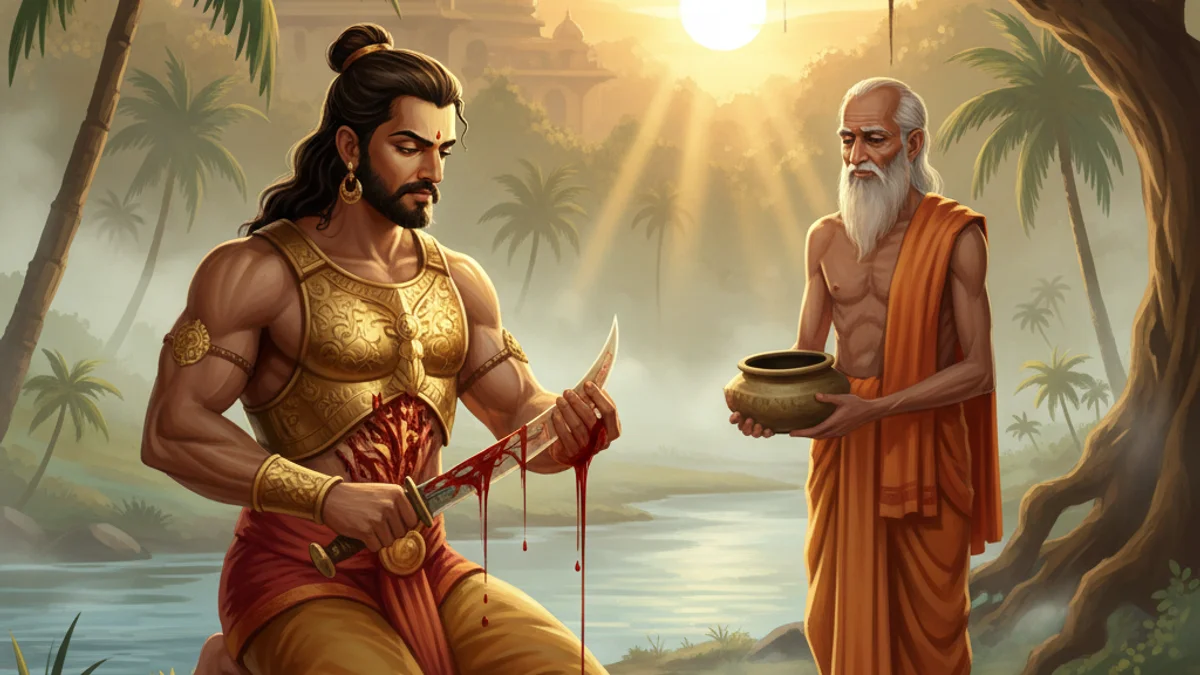
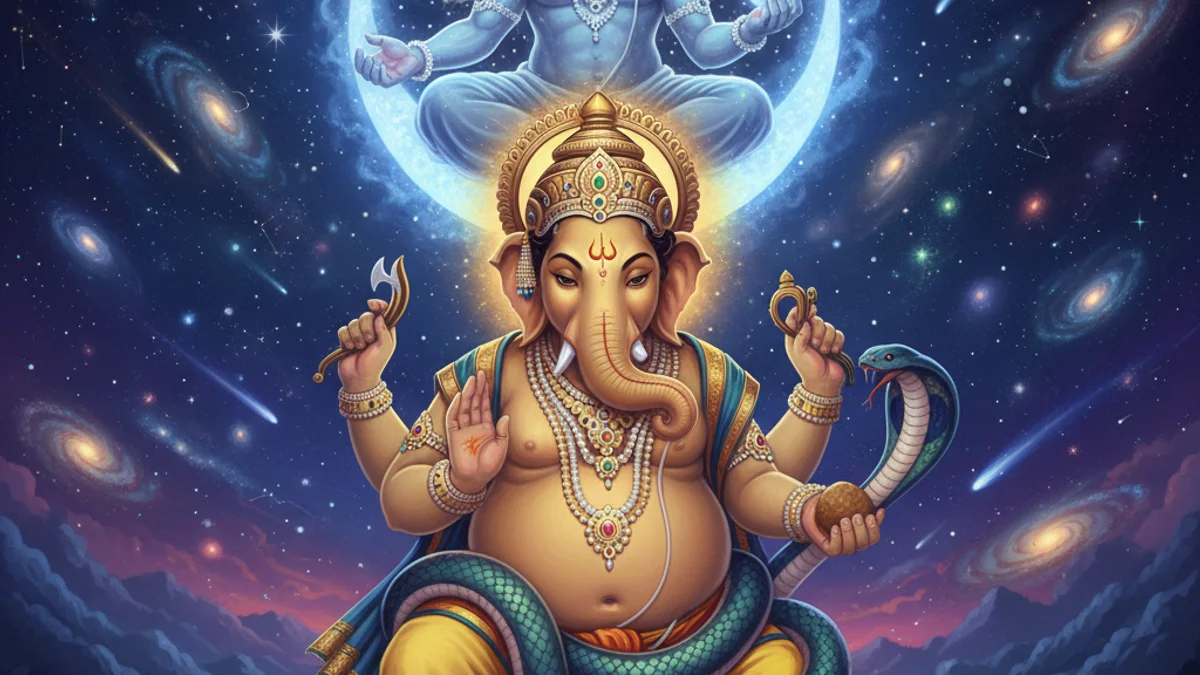
One moonlit night, Lord Ganesha was returning home after a grand feast where he had eaten many delicious modaks. As he rode atop his tiny mount, the mouse Mushika, a snake suddenly crossed their path. Startled, the mouse tripped, and Ganesha fell, causing his overstuffed belly to burst open. Ganesha calmly tucked the sweets back in and tied his stomach together using the snake as a belt. Witnessing this clumsy scene from the heavens, Chandra, the Moon God, laughed mockingly at Ganesha's appearance. Angered by Chandra's vanity and cruelty, Ganesha broke off one of his tusks and hurled it at the Moon, cursing him to never be seen again. Darkness engulfed the world. Realizing his mistake, Chandra begged for forgiveness. Softening his stance, Ganesha modified the curse: the Moon would no longer be invisible forever, but would instead wax and wane, reaching full brightness before disappearing and starting again, serving as a permanent reminder of humility.
The Moral
Arrogance and vanity lead to a fall; one should never mock the physical appearance or misfortunes of others.
“Pride makes a man blind to the divinity in others.”
Fun Fact
This legend is the reason why Ganesha is often called 'Vighnaharta' (remover of obstacles) and why he is depicted with a snake around his belly in many traditional idols.
Frequently Asked Questions
What is the moral of Ganesha and the Moon?
The story teaches that pride and vanity are destructive. It emphasizes that mocking others' perceived flaws or accidents is a sign of weakness, and true strength lies in humility.
Why does the moon wax and wane according to Hindu mythology?
The phases of the moon are attributed to Ganesha's curse on Chandra. Because the Moon God mocked Ganesha, he was cursed to lose his light and regain it slowly over fifteen-day cycles.
Why is it forbidden to look at the moon on Ganesh Chaturthi?
It is believed that anyone who looks at the moon on this day will face false accusations or social disgrace. This tradition stems from the original curse Ganesha placed on the Moon for his arrogance.
What did Ganesha use to tie his stomach back together?
In the legend, Ganesha used a snake that had startled his mouse to tie his belly back together after he fell. This is why Ganesha is often depicted with a serpent around his waist.
Who is Chandra in Hindu mythology?
Chandra is the lunar deity and one of the nine planets (Navagraha) in Hinduism. He is often depicted as fair, handsome, and riding a chariot across the night sky.
How did Ganesha break his tusk in this story?
In this specific version of the myth, Ganesha broke off his own tusk in a fit of rage to hurl it at the Moon as part of the curse, though other legends offer different explanations for his single tusk.
Discussion (0)
Share your thoughts on this story
No comments yet. Be the first to share your thoughts!