Story Summary
In the Brothers Grimm story The Fisherman and His Wife, a magical fish grants increasingly grand wishes until greed returns a couple to their humble beginnings.
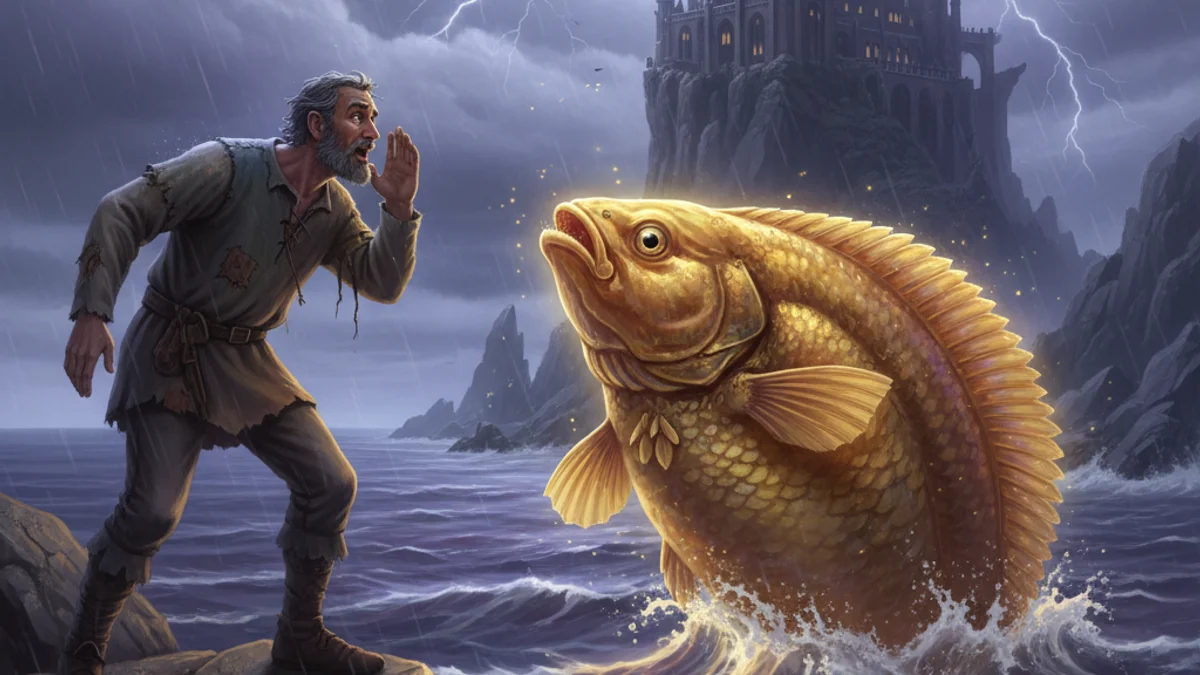
A poor fisherman once caught an enchanted flounder that claimed to be a prince. He kindly released it, but when he told his wife, Ilsebill, she insisted he return and ask the fish for a small cottage to replace their wretched hovel. The fish granted the wish immediately. However, Ilsebill’s greed grew insatiable. She soon demanded a stone castle, then to be King, then Emperor, and even Pope. Each time the fisherman returned to the shore, the sea grew darker, more turbulent, and more ominous. Finally, Ilsebill demanded the power to control the sun and moon, wanting to be like God himself. Displeased by her bottomless hubris, the flounder revoked every gift, sending the couple back to their miserable, dirty hovel where they were left to live out their days.
The Moral
Greed and a lack of gratitude for what one has will eventually lead to the loss of everything.
“Flounder, flounder in the sea, come, I pray thee, here to me; for my wife, good Ilsebill, wills not as I'd have her will.”
Fun Fact
The story was originally recorded in 'Plattdeutsch' (Low German), and the original text uses the term 'piss-putt' to describe their wretched hovel, which is often softened in modern translations.
Frequently Asked Questions
What is the moral of The Fisherman and His Wife?
The moral is that greed and discontent lead to ruin. It teaches that one should be grateful for what they have rather than constantly seeking more power and wealth.
Who wrote the story of The Fisherman and His Wife?
The story was collected and published by the Brothers Grimm in their famous 1812 collection, 'Children's and Household Tales.' It was originally told in a Low German dialect.
What was the final wish that caused the couple to lose everything?
The final wish was for the wife to become like God, so she could command the sun and moon to rise and set. This ultimate act of hubris caused the fish to take back all previous gifts.
Why does the sea change color throughout the story?
The sea's transition from clear and green to dark, boiling, and black symbolizes the fish's growing anger and the moral decay caused by the wife's increasing greed.
What is the wife's name in the story?
In most traditional versions of the story, the fisherman's wife is named Ilsebill. She is the driving force behind the demands made to the enchanted fish.
What happened to the fisherman at the end?
The fisherman and his wife ended up exactly where they started, sitting in their original 'piss-pot' hovel. They lost their castle, their titles, and their wealth due to their inability to be satisfied.
Discussion (0)
Share your thoughts on this story
No comments yet. Be the first to share your thoughts!