Story Summary
In the Sufi parable Nasrudin at the Tea House, the Mulla uses a hilarious dining mishap to expose the shallow social prejudices of his hosts and neighbors.
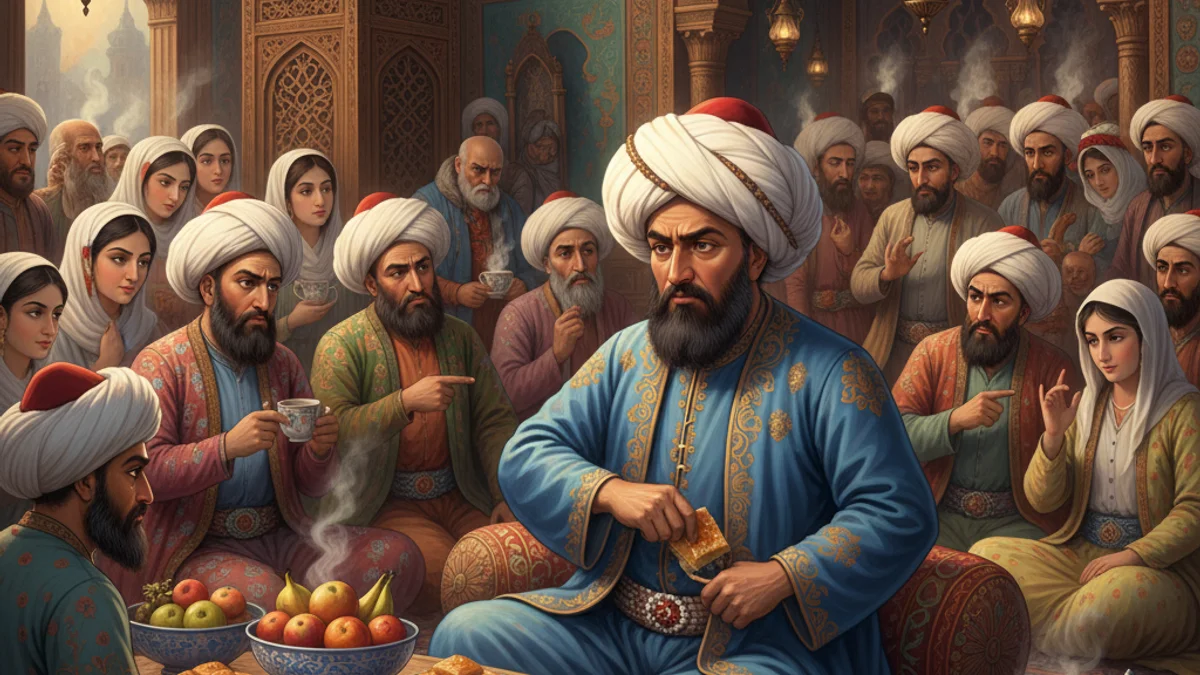
One afternoon, Mulla Nasrudin was invited to a gathering at a prestigious tea house. He arrived wearing his old, tattered clothes, looking like a common laborer. The host and the guests ignored him, leaving him to sit in a dusty corner while the finest tea and sweets were served to those in silken robes. Nasrudin quietly slipped out, went home, and donned his most magnificent fur-lined coat and a regal turban. When he returned, the host bowed low and escorted him to the seat of honor, serving him the choicest delicacies. To everyone's shock, Nasrudin began crumbling the cakes and pouring the tea into the sleeves and pockets of his coat. 'Eat, my coat, eat!' he proclaimed. When the confused host asked for an explanation, Nasrudin replied, 'When I came in rags, you offered me nothing. When I came in this coat, you offered me everything. It is clear the food was intended for the coat, not for the man.'
The Moral
We should judge people by their inner worth and character rather than their outward appearance or material wealth.
“Eat, my coat, eat! For the invitation was clearly for you, not for me.”
Fun Fact
Mulla Nasrudin is recognized by UNESCO as a personage of international cultural heritage, and his tales have been told for over 800 years.
Frequently Asked Questions
What is the moral of Nasrudin at the Tea House?
The moral is that society often mistakenly equates clothing and wealth with personal value. Nasrudin's actions highlight the absurdity of judging a person's merit based on their outward appearance.
Who is Mulla Nasrudin?
Mulla Nasrudin is a legendary Sufi satirical figure known across the Middle East, Central Asia, and the Balkans. He is a 'wise fool' who uses humor and eccentric behavior to teach profound spiritual and social lessons.
Why did Nasrudin feed his coat?
He fed his coat to demonstrate that the hospitality he received was based solely on his expensive clothing. Since he was ignored when dressed poorly, he concluded that the invitation was for the coat, not himself.
What does the tea house represent in this story?
The tea house represents a microcosm of society where social hierarchies and superficial judgments are common. It serves as the stage where the Mulla's satirical performance reveals the hypocrisy of the elite.
Is this story part of Sufism?
Yes, Nasrudin stories are a staple of Sufi teaching. They are designed to break down the ego and challenge the rigid, logical mind to perceive a deeper, more spiritual truth through humor.
Why is this tale also called 'Eat, My Fur Coat'?
Depending on the region and translation, the story is often titled 'Eat, My Fur Coat' because the coat is the central prop Nasrudin uses to mock the vanity of his hosts.
Discussion (0)
Share your thoughts on this story
No comments yet. Be the first to share your thoughts!