Story Summary
Discover the story of Ekalavya's Devotion, where a tribal prince's legendary sacrifice and focus redefined the relationship between a student and his teacher.
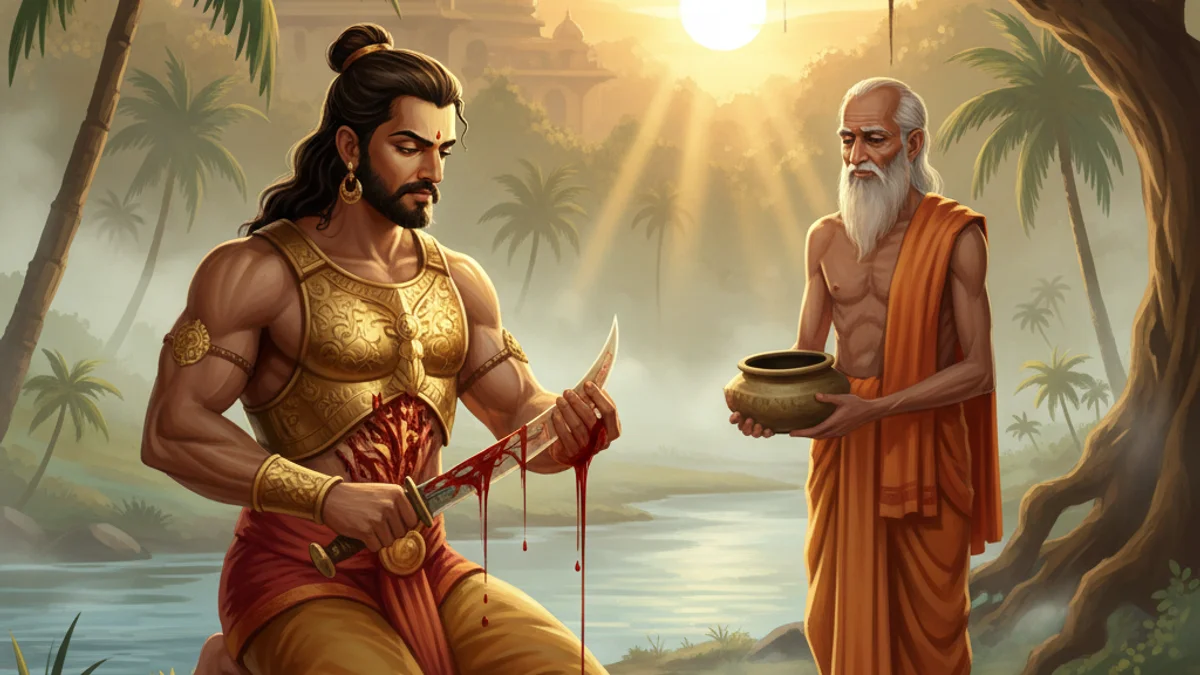
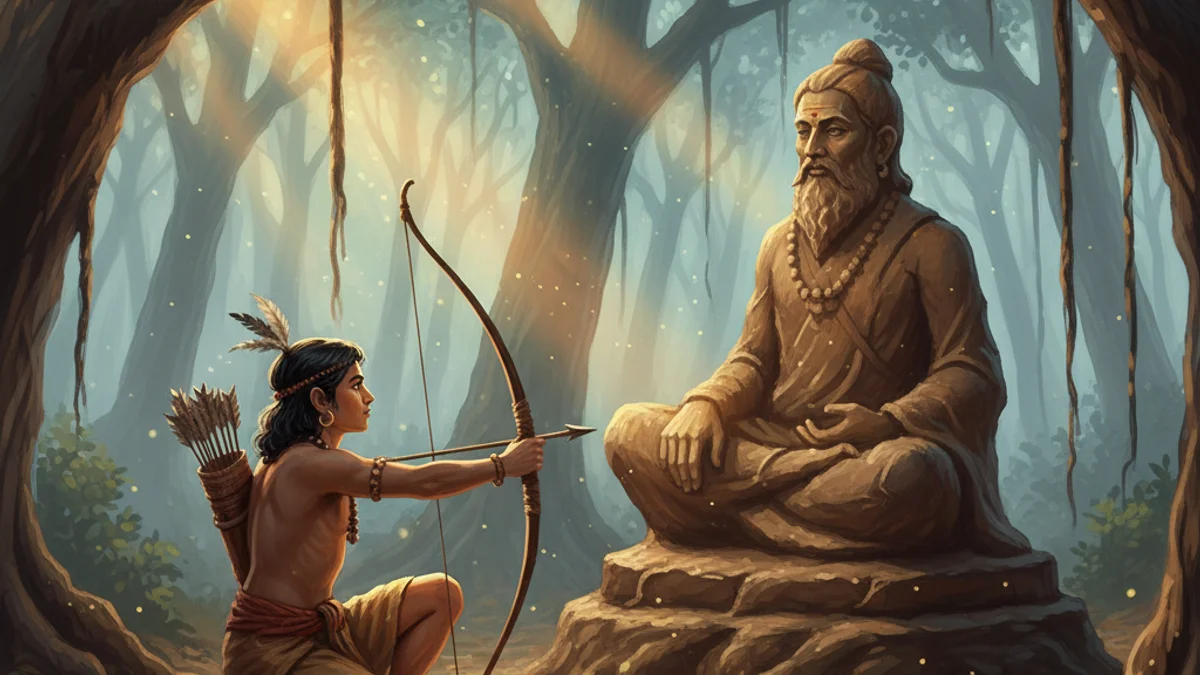
Ekalavya, a young prince of the Nishada tribe, possessed a burning desire to master the art of archery. He approached the great Guru Dronacharya, the teacher of the Pandavas and Kauravas, seeking guidance. However, Drona refused him, citing his commitment to teaching only the royal Kshatriya warriors. Undeterred, Ekalavya retreated into the deep forest. He fashioned a clay idol of Dronacharya, treating it as his living master. Every day, with supreme faith and rigorous discipline, he practiced his craft before the statue. His skill grew so immense that he eventually surpassed even Arjuna, Drona's most gifted pupil. One day, Dronacharya discovered Ekalavya’s prowess and realized that his promise to make Arjuna the world's greatest archer was in jeopardy. He asked Ekalavya for his Guru Dakshina—the traditional fee for a teacher. He demanded Ekalavya's right thumb. Without a second thought or a shred of resentment, Ekalavya sliced off his thumb and laid it at the feet of the master's statue, proving that true devotion knows no bounds.
The Moral
True mastery is achieved through unwavering self-discipline and faith, and the bond between a student and teacher is sacred regardless of formal recognition.
“The guru is not merely a person, but the light of knowledge that the student carries within.”
Fun Fact
In modern India, the government presents the Ekalavya Award to outstanding sportspeople to honor the virtues of hard work, discipline, and performance.
Frequently Asked Questions
What is the moral of Ekalavya's Devotion?
The story emphasizes that self-taught mastery through dedication is possible. It also highlights the extreme limits of loyalty and the sacrifices one might make for their ideals and mentors.
Why did Dronacharya refuse to teach Ekalavya?
Dronacharya was the royal tutor for the Kuru princes and was bound by social hierarchy and state duty. He had also promised Arjuna that he would be the greatest archer in the world.
How did Ekalavya learn archery without a teacher?
Ekalavya practiced in front of a clay idol of Dronacharya. His absolute faith in the image as his guru allowed him to channel his focus and learn through intense self-observation and practice.
Why did Dronacharya ask for Ekalavya's thumb?
Drona asked for the right thumb because, in ancient archery, the thumb was essential for drawing the bowstring. By taking the thumb, he ensured Arjuna remained the unrivaled archer while accepting Ekalavya's skill.
Did Ekalavya ever use a bow again?
Yes, despite losing his thumb, Ekalavya practiced using his forefinger and middle finger. Legend says he remained a formidable warrior and archer even with his physical limitation.
What does Ekalavya symbolize in Indian culture?
Ekalavya is a symbol of the 'Ideal Student' and 'Self-Made Success.' He represents those who achieve greatness through perseverance despite being denied opportunities by traditional institutions.
Discussion (0)
Share your thoughts on this story
No comments yet. Be the first to share your thoughts!