Story Summary
Discover the classic Japanese tale of The Rolling Rice Balls. Follow a kind woodcutter into a hidden mouse kingdom where generosity leads to golden rewards.
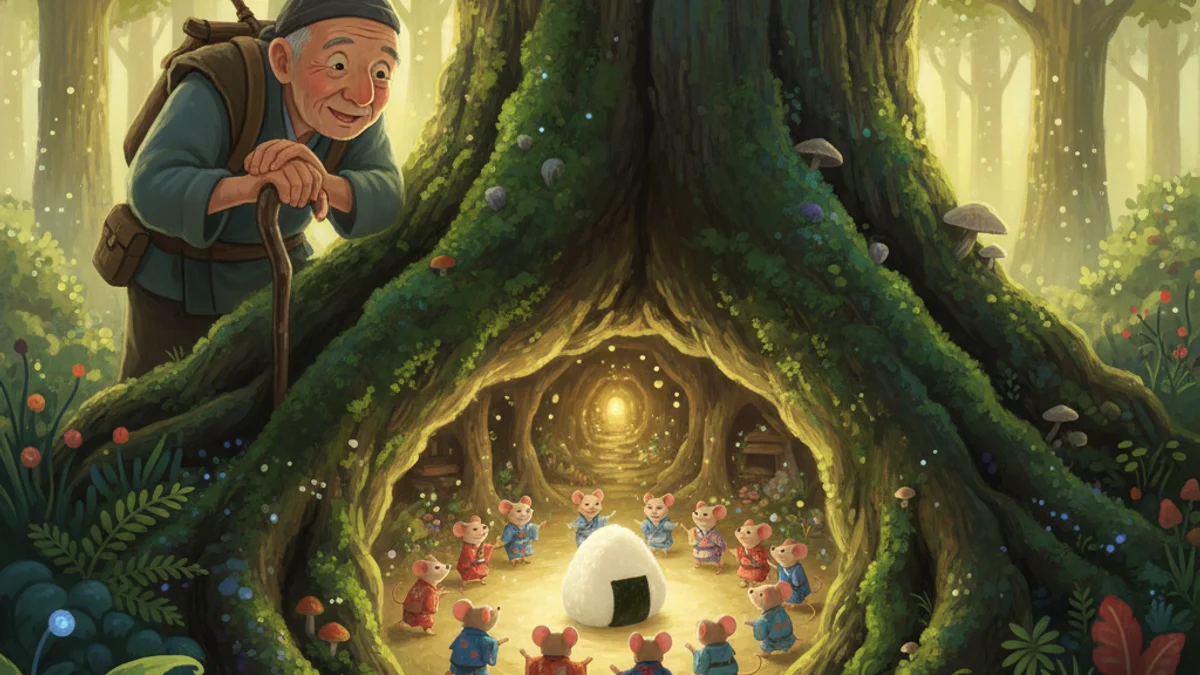
Once, a kind old woodcutter sat to eat lunch when a rice ball slipped from his hand and rolled down a hole in the earth. From the depths, he heard tiny, melodic voices singing, "Omusubi kororin, sutten ten!" Intrigued, he dropped another piece of food down the hole. Suddenly, the ground gave way, and he tumbled into a hidden kingdom of mice. The mice thanked him for the delicious gifts and treated him to a grand feast with music and dancing. When it was time to leave, they gave him a small wooden box filled with gold coins. Seeing the woodcutter’s new wealth, a greedy neighbor deliberately threw rice balls into the hole and jumped in. Hoping to steal all the treasure, he barked like a cat to scare the mice away. Terrified, the mice vanished instantly, the lights went out, and the magical tunnels collapsed, leaving the greedy man trapped in the dark with nothing but his own regret.
The Moral
True kindness is rewarded with unexpected fortune, while greed and trickery only lead to misfortune and loss.
“Omusubi kororin, sutten ten! A rice ball rolls and falls right in!”
Fun Fact
The song 'Omusubi kororin, sutten ten' is a famous rhythmic chant in Japan, and the story is often used in kindergarten plays due to its repetitive, musical nature.
Frequently Asked Questions
What is the moral of The Rolling Rice Balls?
The story teaches that genuine generosity and respect are rewarded, whereas greed and malicious intent result in failure. It emphasizes that good things come to those with a pure heart who do not seek to exploit others.
What does Omusubi Kororin mean?
Omusubi Kororin is the original Japanese title. 'Omusubi' means rice ball, and 'kororin' is a Japanese onomatopoeia describing the sound or movement of something small and round rolling away.
Who are the main characters in The Rolling Rice Balls?
The story features a kind old woodcutter who accidentally shares his food, a colony of magical musical mice who reward him, and a greedy neighbor who serves as a foil by trying to steal the treasure.
What happened to the greedy neighbor in the end?
Unlike the woodcutter, the greedy neighbor tried to trick the mice by imitating a cat to scare them. This caused the magic to vanish and the tunnels to close, leaving him stuck in the dirt with no treasure at all.
Why do the mice give the woodcutter a gift?
The mice are grateful for the rice balls that fell into their home, viewing them as a delicious gift. They reward the woodcutter’s unintentional kindness and his polite, humble behavior during his visit to their kingdom.
Is The Rolling Rice Balls a real Japanese legend?
Yes, it is one of the most famous 'mukashibanashi' or traditional Japanese folktales. It has been passed down for generations to teach children the cultural values of honesty, kindness, and the dangers of greed.
Discussion (0)
Share your thoughts on this story
No comments yet. Be the first to share your thoughts!