Story Summary
Experience the wit of Nasrudin and the Donkey. A humorous Sufi parable about a man who loses his mount only to realize he is sitting on it the whole time.
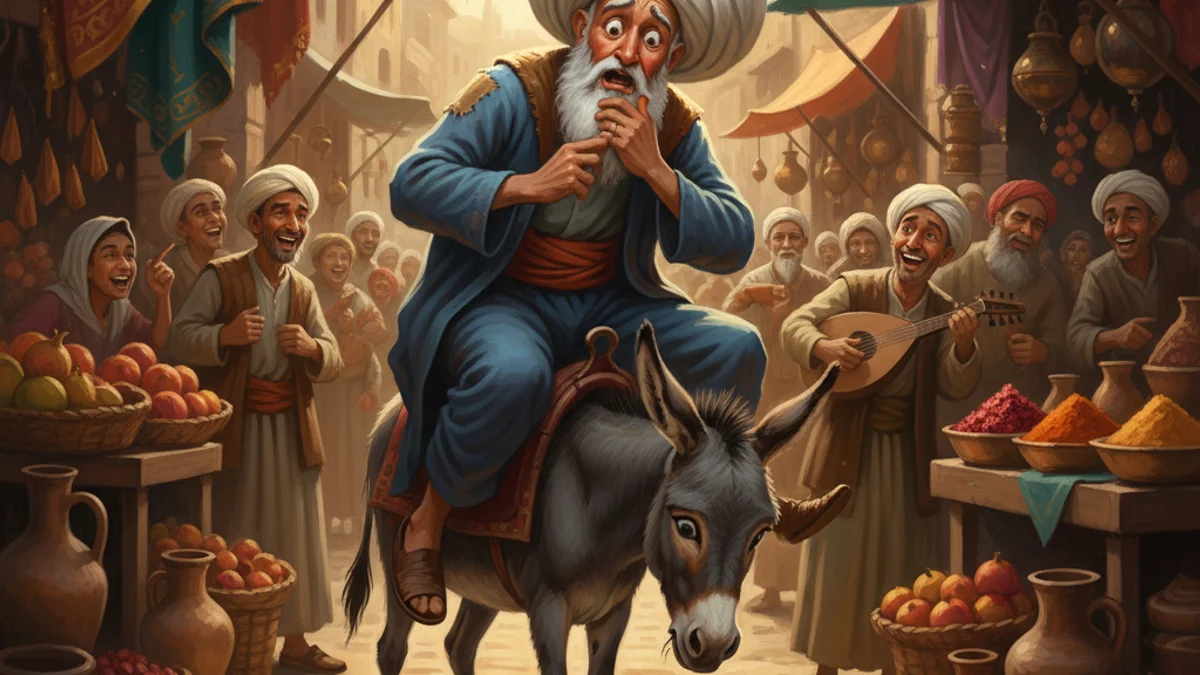
One day, Mulla Nasrudin was frantically running through the village square, shouting at the top of his lungs, 'Help! Help! I have lost my donkey! Has anyone seen my donkey?' The villagers watched in bewilderment as the Mulla dashed from house to house, his face red with exertion and worry. Finally, an old friend stepped into his path and stopped him. 'Mulla,' the friend said, 'what is wrong with you? Look down!' Nasrudin looked down and realized he was sitting firmly on the back of the very donkey he was looking for. He wiped the sweat from his brow and sighed with great relief. 'Oh, thank you, my friend!' Nasrudin exclaimed. 'I was so busy searching for the donkey that I completely forgot I was already riding him.'
The Moral
We often search the world for peace, truth, or happiness, failing to realize that what we seek is already within us or right beneath us.
“I was so busy searching for the donkey that I forgot I was already riding him.”
Fun Fact
Mulla Nasrudin is known by many names, including Nasreddin Hodja in Turkey and Juha in Arab traditions, with thousands of stories attributed to him.
Frequently Asked Questions
What is the moral of Nasrudin and the Donkey?
The moral is that humans often overlook the obvious truths or blessings they already possess while searching for them externally. It serves as a reminder to be mindful and present in our own lives.
Who is Mulla Nasrudin in Sufi literature?
Mulla Nasrudin is a 13th-century philosopher and trickster character found in folklore across the Middle East and Balkans. He is used by Sufis to teach spiritual lessons through humor and irony.
What does the donkey symbolize in this story?
In many Sufi parables, the donkey represents the physical body or the ego. Nasrudin forgetting he is riding the donkey symbolizes how the spirit often forgets the vessel it inhabits.
Why are Nasrudin stories called 'teaching stories'?
They are called teaching stories because they use 'crazy wisdom' to bypass the logical mind. By laughing at the Mulla's absurdity, the reader gains a sudden insight into their own foolishness or spiritual state.
Is Nasrudin and the Donkey a true story?
While Nasreddin Hodja may have been a real historical figure from Turkey, the stories are legendary folk tales passed down orally. They are meant for moral instruction rather than historical accuracy.
What is the cultural significance of Mulla Nasrudin?
Nasrudin is a UNESCO-recognized cultural figure, celebrated as a symbol of wit and wisdom. His stories are shared across dozens of countries, transcending religious and linguistic barriers.
Discussion (0)
Share your thoughts on this story
No comments yet. Be the first to share your thoughts!