
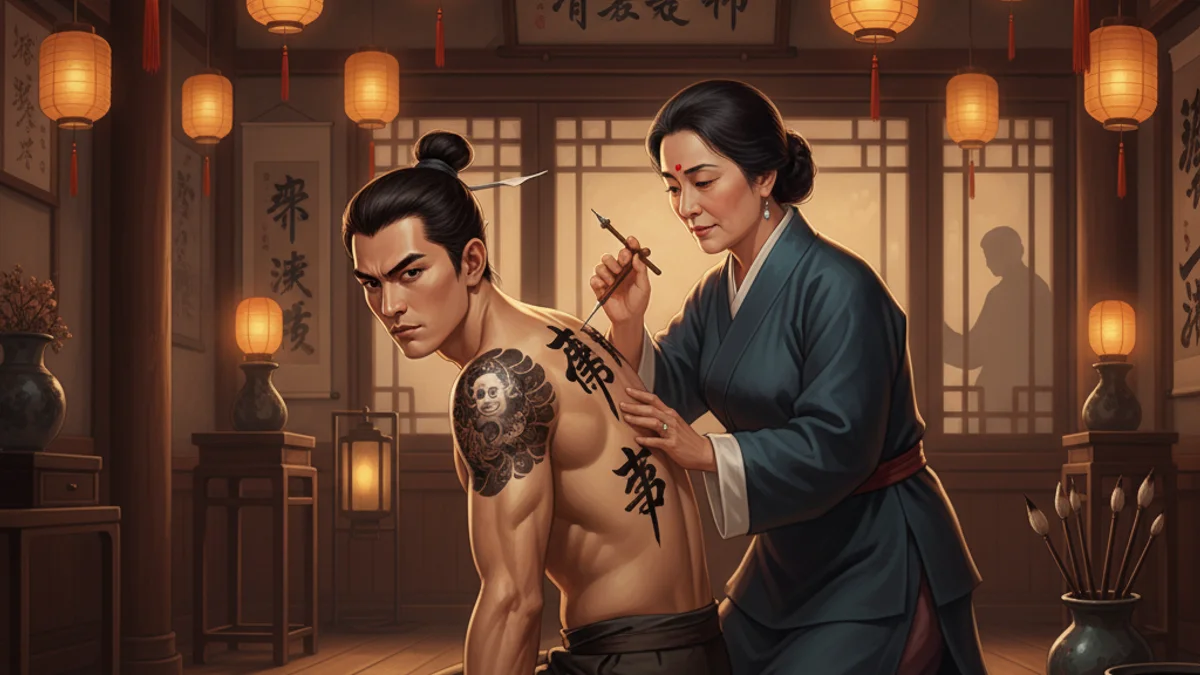
During the Southern Song Dynasty, the Jin invaders threatened to dismantle the empire. A young man named Yue Fei wished to join the army, but his aging mother, Lady Yao, worried about the corruption within the imperial court. She feared her son might be tempted by wealth or swayed by treasonous officials. To ensure his heart remained pure, she asked Yue Fei to kneel and, using a needle and ink, tattooed four large Chinese characters onto the skin of his back: 'Jìn Zhōng Bào Guó'—Serve the country with utmost loyalty. Yue Fei rose through the ranks to become a legendary general, winning spectacular victories against the invaders. Even when he was eventually betrayed by the treacherous minister Qin Hui and faced with false charges of treason, he remained steadfast. Before his execution, he revealed the tattoo to his accusers, proving his lifelong devotion. Today, Yue Fei is remembered as China's greatest symbol of unwavering patriotism.
True loyalty is a commitment of the soul that remains steadfast even in the face of betrayal or personal sacrifice.
Questions about this story
What is the moral of Yue Fei's Tattoo?
The moral is that true patriotism and loyalty are sacred duties that must be upheld regardless of personal cost or political pressure.
What do the four characters on Yue Fei's back mean?
The characters 'Jìn Zhōng Bào Guó' translate to 'Serve the country with utmost loyalty' or 'Repay the country with total devotion.'
Who tattooed Yue Fei's back in the legend?
In popular legend and literature, it was his mother, Lady Yao, who performed the tattooing to ensure his integrity as a soldier.
Was Yue Fei a real historical person?
Yes, Yue Fei was a prominent military general during the Southern Song Dynasty known for his successful campaigns against the Jurchen Jin dynasty.
Advertisement
Good night.
