
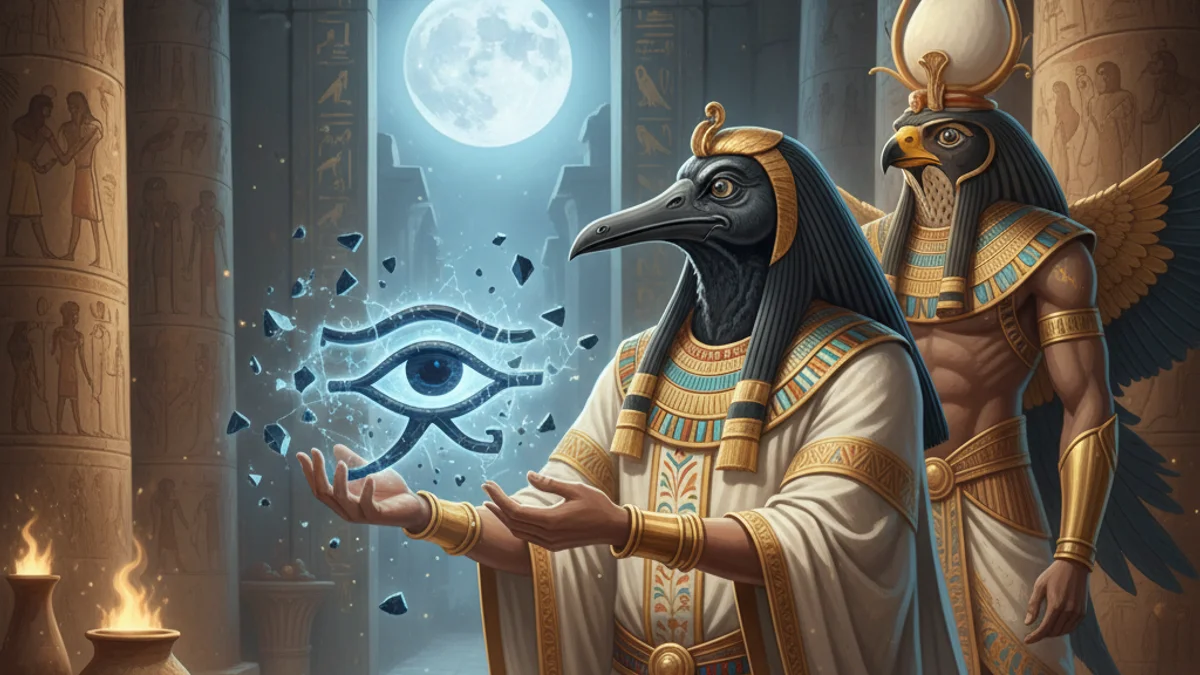
In the great struggle for the throne of Egypt, the falcon-headed god Horus engaged in a series of brutal battles with his uncle, Set. During one fierce encounter, Set tore out Horus's left eye and scattered it into six pieces across the land. The world fell into a shadow of imbalance, as the left eye represented the moon. Thoth, the ibis-headed god of wisdom and magic, witnessed the injustice and set out to find the fragments. With divine patience, Thoth gathered the shattered pieces from the corners of the earth. Using his mystical powers, he mended the eye, restoring it to its full power and giving it back to Horus. This restored eye, known as the Wedjat or the Eye of Horus, became a potent symbol of healing, protection, and sacrifice, proving that even what is broken can be made whole through wisdom.
Wisdom and divine intervention can restore balance and heal even the most profound wounds.
Questions about this story
What is the moral of Thoth Heals the Eye of Horus?
The story teaches that through wisdom and magic, harmony can be restored after conflict. It highlights the importance of healing and the belief that integrity can be regained even after great loss.
What does the Eye of Horus represent?
The Eye of Horus, or the Wedjat, represents protection, royal power, and good health. In this myth, it specifically symbolizes the moon and the process of restoration after destruction.
Why did Set tear out the eye of Horus?
Set and Horus were locked in a long-standing war for the throne of Egypt. Set blinded Horus as an act of aggression to weaken his nephew and assert his own dominance over the gods.
How did Thoth find the pieces of the eye?
As the god of wisdom and magic, Thoth used his divine insight to track the six scattered fragments across Egypt. He meticulously reassembled them to create a perfected whole.
Advertisement
Good night.
