
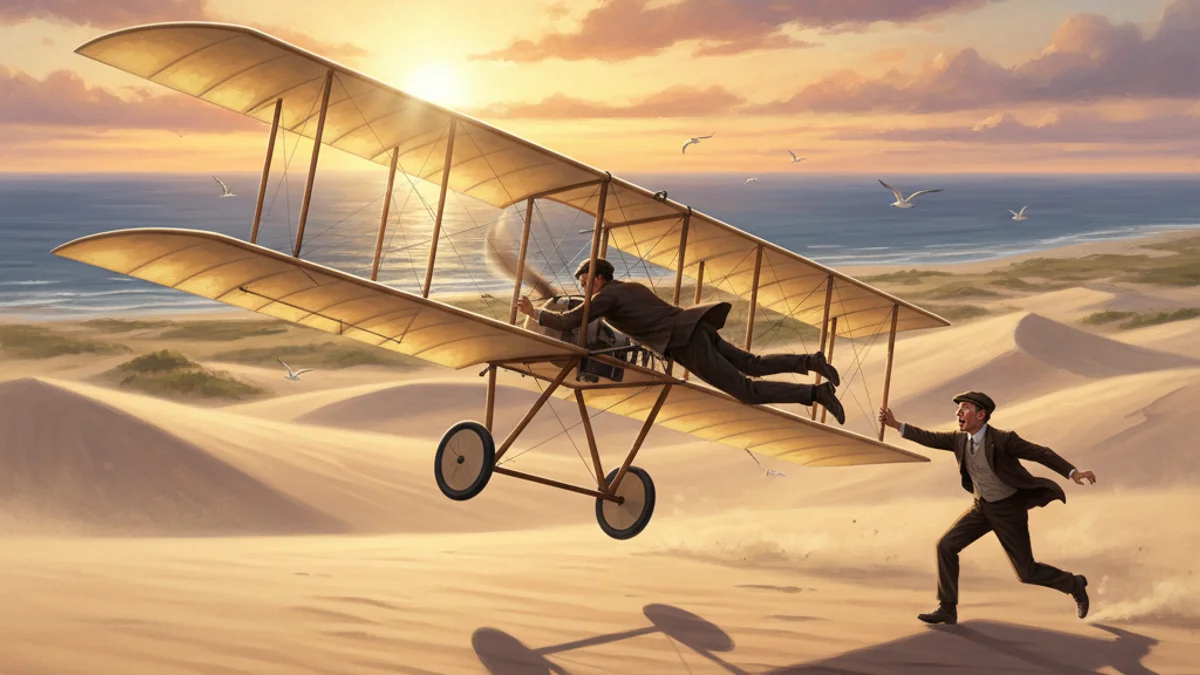
In the small bicycle shop of Orville and Wilbur Wright in Dayton, Ohio, a revolutionary dream was taking shape. While the world believed human flight was a physical impossibility, the brothers spent years studying the mechanics of birds and experimenting with gliders. On December 17, 1903, amidst the windswept dunes of Kitty Hawk, North Carolina, they prepared their wood-and-canvas creation, the Wright Flyer. With Orville at the controls, the machine groaned against the wind and suddenly lifted. For twelve historic seconds, the craft defied gravity, covering 120 feet. It was the first time a piloted, powered machine had achieved sustained flight. They flew three more times that day, with Wilbur managing a final flight of 59 seconds. In that cold morning air, the brothers didn't just fly a plane; they collapsed the distances of the world forever, proving that with meticulous calculation and unwavering grit, humanity could touch the sky.
Success is born from rigorous scientific preparation and the courage to pursue a vision that others deem impossible.
Questions about this story
What is the moral of The Wright Brothers' Flight?
The moral is that persistence, experimentation, and a refusal to accept the 'impossible' lead to world-changing innovation. It highlights the value of the scientific method combined with unwavering personal belief.
Where did the first flight take place?
The historic first flight occurred at Kitty Hawk, North Carolina, specifically on the dunes known as Kill Devil Hills. They chose this location for its consistent winds and soft sandy landings.
How long did the very first flight last?
The first powered flight, piloted by Orville Wright, lasted exactly 12 seconds and covered a distance of 120 feet. Though short, it was the first time a machine had flown under its own power.
What were the Wright brothers' jobs before building planes?
Before becoming aviation pioneers, the brothers owned and operated a bicycle repair and manufacturing shop. Their experience with gears, chains, and balance was crucial in designing the Flyer.
Advertisement


Good night.
