
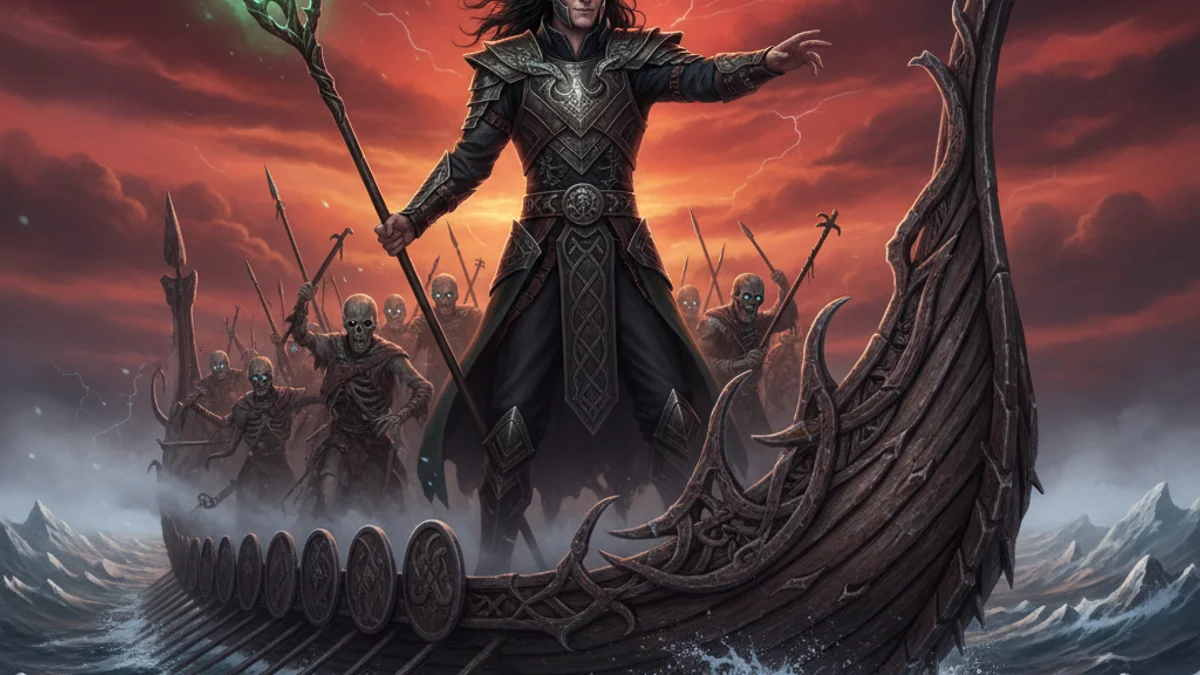
As the Fimbulwinter gripped the world in ice, the bonds of the trickster god Loki finally snapped. Free from his cavernous prison, Loki sought vengeance against the Aesir who had bound him. He traveled to the cold, misty realm of Hel, where his daughter Hela reigned over those who died of age and sickness. Loki took command of Naglfar, a monstrous ship constructed entirely from the untrimmed fingernails and toenails of the dead. With a crew of pale, silent ghosts and the giants of Muspellheim at his back, Loki steered the vessel across the churning seas toward the battlefield of Vigrid. The sky split open as the dead invaded the world of the living. Loki, no longer a jester but a general of ruin, led his ghastly legion into the final conflict of Ragnarok, fulfilling the prophecy that the gods' own foster-brother would usher in their ultimate destruction.
Betrayal and unresolved resentment can grow into a force capable of destroying even the most powerful foundations.
Questions about this story
What is the moral of Loki Leads the Dead?
The story illustrates that the consequences of one's actions and the weight of long-held grudges can eventually lead to a total collapse of order. It serves as a warning that suppressing a threat through cruelty rather than resolution can result in ultimate destruction.
What is Naglfar in Norse mythology?
Naglfar is a legendary ship made entirely from the fingernails and toenails of the dead. According to the myths, it will float during Ragnarok to carry the forces of chaos to battle the gods.
Why did Loki lead the army of the dead?
Loki led the army of the dead out of a desire for revenge against the Aesir gods for his long imprisonment and the death of his children. His transition from a mischievous trickster to a leader of the dead represents his complete descent into villainy.
Who fights Loki during the final battle of Ragnarok?
Loki's primary adversary during the final battle is Heimdall, the watchman of the gods. The two are fated to slay each other, ensuring that neither the trickster nor the guardian survives the end of the world.
Advertisement

Good night.
