
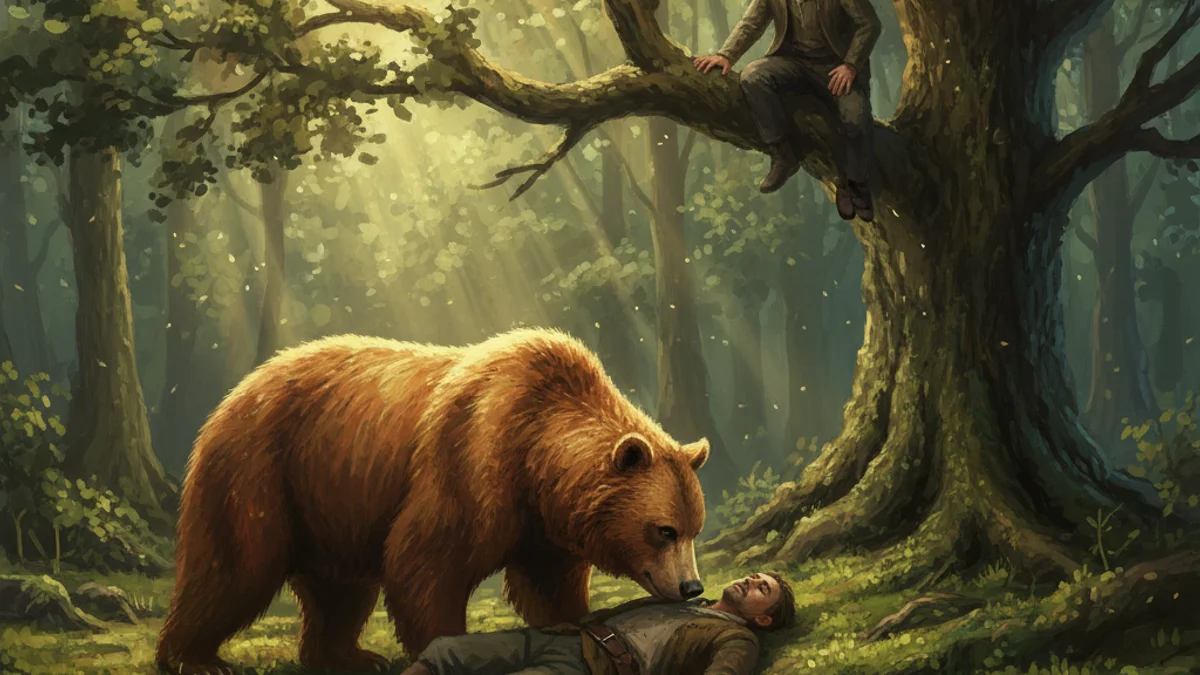
Two friends were walking through a dense forest when a large bear suddenly emerged from the brush. Terrified, one man quickly scrambled up a tall tree, thinking only of his own safety. The other, realizing he could not climb in time, fell to the ground and held his breath, pretending to be dead, for he had heard that bears do not touch corpses. The bear approached, sniffing his ear, neck, and face for a long time before eventually wandering back into the woods. When the danger had passed, the first man descended and jokingly asked, 'What secret did the bear whisper in your ear?' His friend looked him in the eye and replied gravely, 'He told me never to travel with a companion who deserts you at the first sign of peril.'
True friendship is tested in times of adversity, and a companion who abandons you in danger is no friend at all.
Advertisement
Questions about this story
What is the moral of The Two Friends and the Bear?
The moral is that true friendship is revealed through hardship. A person who prioritizes their own safety over a companion's life lacks the loyalty required for genuine friendship.
Is this story originally by Rumi or Aesop?
While the story appears in Aesop's Fables, Rumi adapted it in his 'Mathnawi' to provide spiritual insight. In the Sufi tradition, it serves as a lesson on choosing spiritual companions who will support your soul during trials.
Why did the bear not eat the man on the ground?
In many folklore traditions, it was believed that bears would not eat a dead body. The man used this folk wisdom to save himself by playing dead and remaining perfectly still.
What does the bear represent in the Sufi context?
In Sufi parables, the bear can represent the sudden trials of life or the base instincts of the world. It acts as a catalyst that reveals the hidden character of the two friends.
Advertisement


