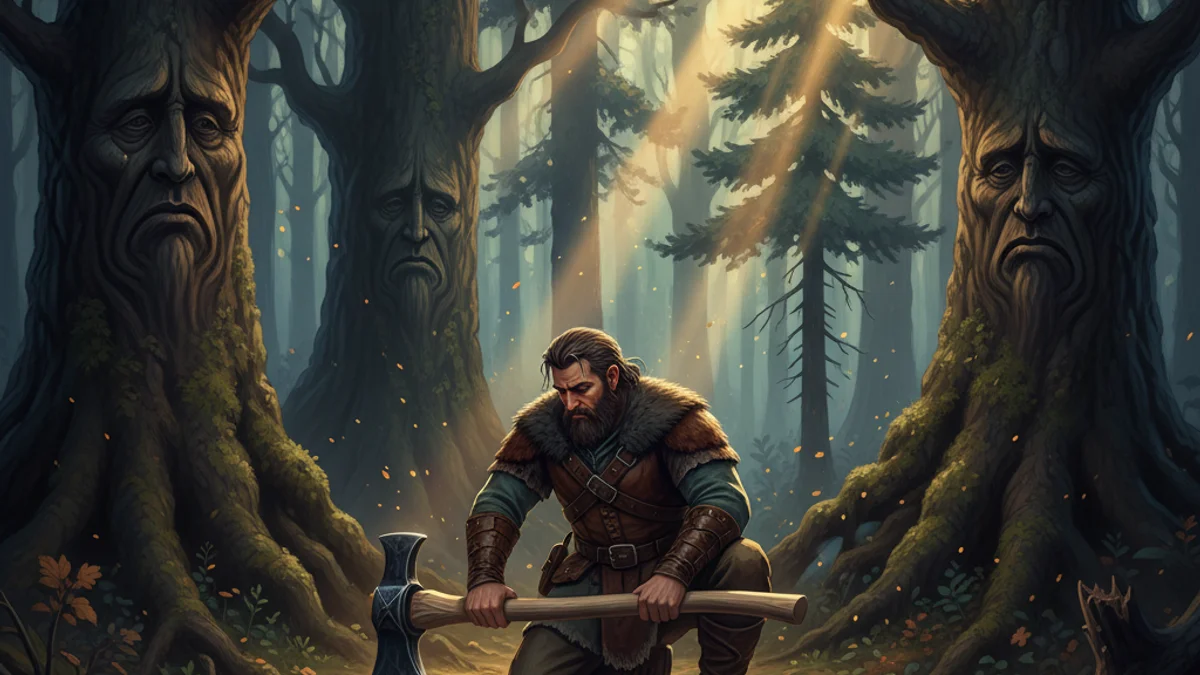
A woodman once entered a vast forest and petitioned the trees to grant him a small piece of wood to make a handle for his axe. The elder trees, thinking the request modest and harmless, held a council and agreed that the plain, humble ash tree should provide the wood. No sooner had the woodman fitted the new handle than he began to swing his axe with newfound vigor, felling the noble oaks and tall pines one by one. As the great trees crashed to the earth, an old oak whispered to a neighbor with his final breath, 'By sacrificing our humble brother to appease the woodman, we have sealed our own fate and provided the very tool for our destruction.'
When we betray the rights of others to satisfy an enemy, we ultimately invite our own ruin.
Questions about this story
What is the moral of The Trees and the Axe?
The moral is that by betraying our neighbors or those we consider insignificant, we provide the tools for our own destruction. It serves as a stern warning against shortsightedness and a lack of community solidarity.
Who is the author of this fable?
The story is traditionally attributed to Aesop, the legendary Greek storyteller. It is part of the Aesopic tradition, which uses nature-based metaphors to impart ethical and practical life lessons.
Why did the trees help the woodman?
The trees viewed the woodman's request as minor and harmless, believing that sacrificing a 'lesser' tree like the ash would satisfy him. They failed to realize the axe head was useless without the handle they provided.
What does the axe handle symbolize?
The axe handle symbolizes the cooperation or resources we provide to those who may harm us. It represents the 'missing link' that enables an enemy to carry out their destructive intentions.
Advertisement
Read it in another language
- الأشجار والفأس · العربية
- Die Bäume und die Axt · Deutsch
- Los Árboles y el Hacha. · Español
- درختها و تبر · فارسی
- Les Arbres et la Hache. · Français
- पेड़ और कुल्हाड़ी। · हिन्दी
- Gli alberi e l'ascia. · Italiano
- As Árvores e o Machado. · Português
- Деревья и Топор. · Русский
- చెట్లు మరియు గొడ్డలి · తెలుగు
- Ang mga Puno at ang Palakol · Tagalog
- Дерева та Сокира. · Українська
- 树与斧头 · 中文


Good night.
