
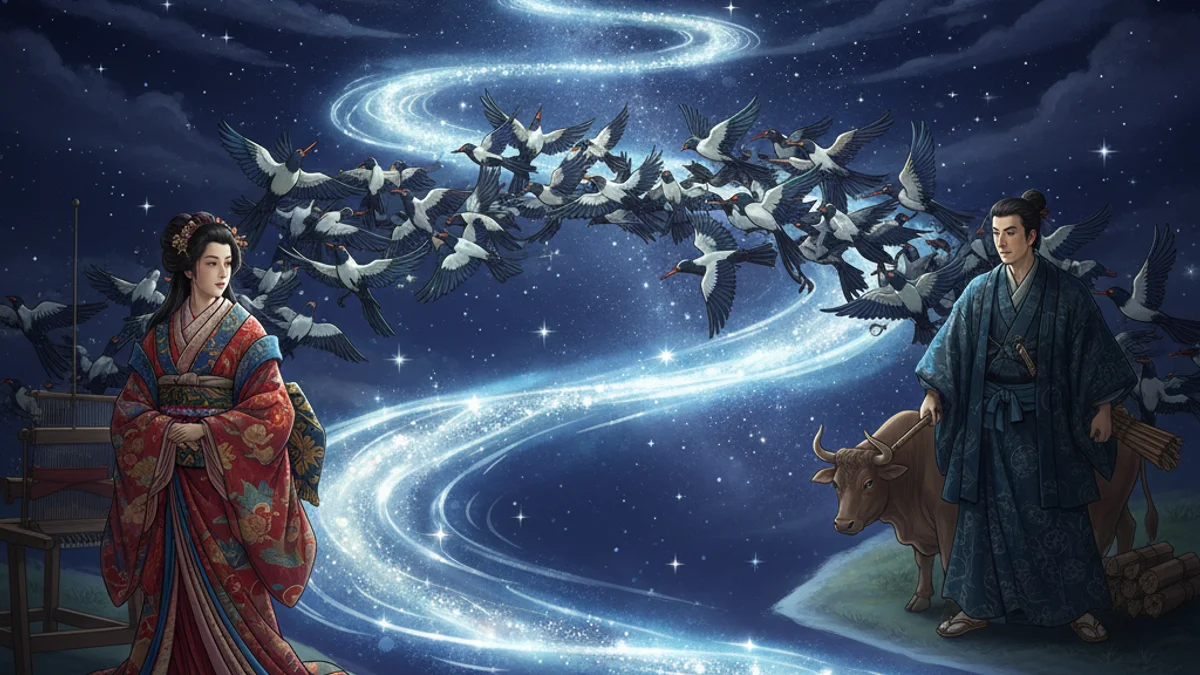
Orihime, the daughter of the Sky King, wove shimmering cloth by the banks of the Heavenly River, the Milky Way. On the opposite shore lived Hikoboshi, a hardworking cowherd. When the Sky King introduced them, they fell instantly in love and married. However, their happiness became a distraction; Orihime stopped weaving, and Hikoboshi’s cows wandered off. Enraged by their negligence, the Sky King separated them, placing one on each side of the river. Distraught, the lovers pleaded for mercy. Moved by their tears, the King allowed them to meet just once a year on the seventh night of the seventh month. Each year, if the sky is clear, magpies form a bridge with their wings, allowing the two stars to reunite in a brief, joyful embrace.
True love requires the balance of devotion and responsibility, and perseverance can bridge even the widest divides.
Questions about this story
What is the moral of The Tanabata Legend?
The story teaches that one must balance personal happiness with duty and responsibility. It also serves as a testament to the power of hope and the endurance of love despite physical separation.
What happens if it rains on Tanabata?
If it rains, the Heavenly River is said to overflow, preventing the magpies from forming a bridge. The lovers must then wait another full year to see each other, with the rain representing their tears.
Who are the two main stars in the Tanabata story?
The legend is based on real stars in the night sky. Orihime is the star Vega, and Hikoboshi is the star Altair, which are separated by the Milky Way galaxy.
How do people celebrate Tanabata today?
People celebrate by writing wishes on colorful strips of paper called tanzaku and hanging them on bamboo branches. The festival features large parades, decorations, and traditional foods like somen noodles.
Advertisement

Good night.
